
By Jo Medico
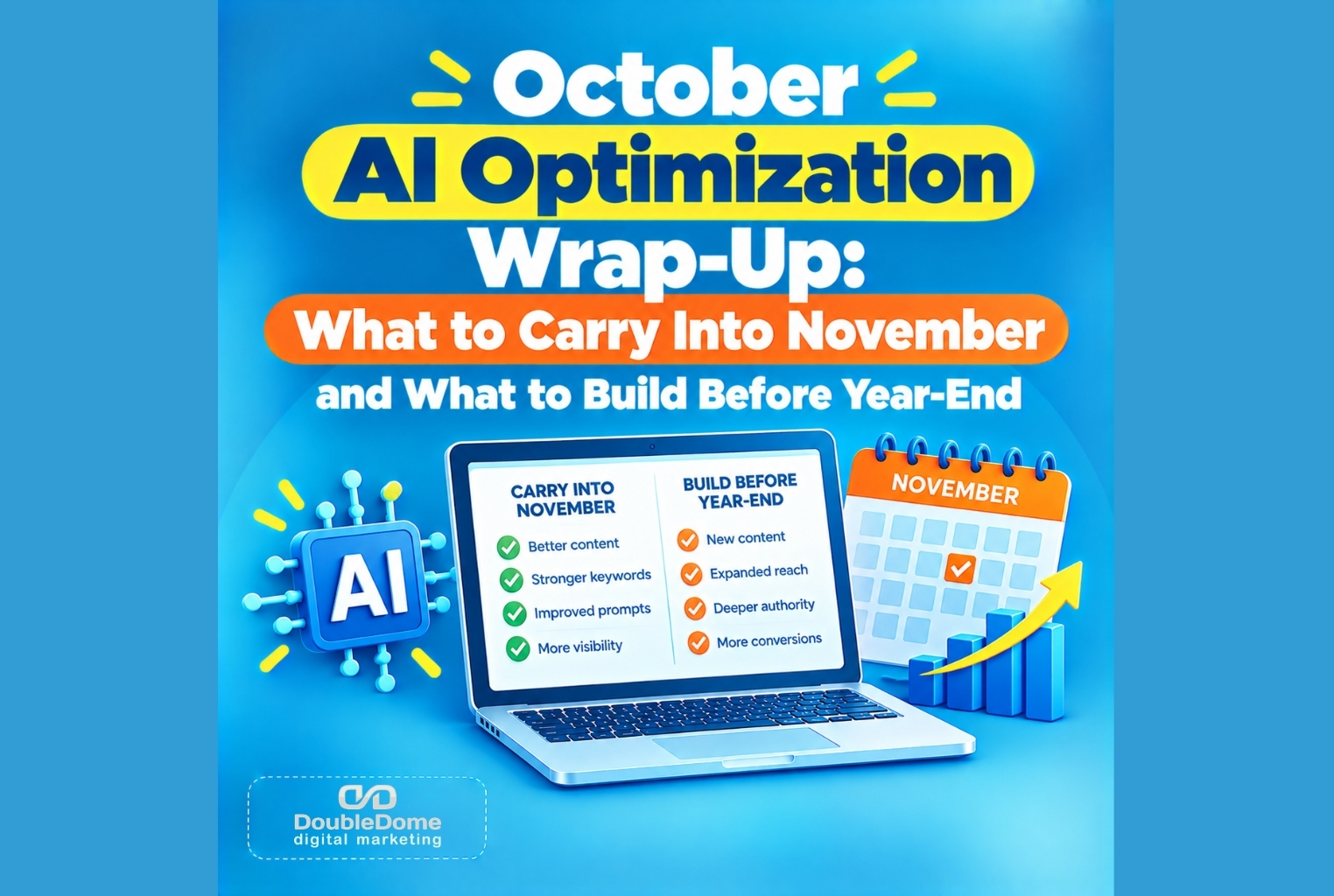
An October AI Optimization Wrap-Up provides a diagnostic review of Generative Engine Optimization (GEO) efforts across three categories: active citations to scale, indexed technical schema that needs time to compound, and visibility gaps to resolve before December. Conducting this audit in late October ensures B2B organizations correct entity inconsistencies and build machine-readable assets in time to capture peak year-end buyer decisions.
As October closes, marketing directors managing Generative Engine Optimization (GEO) initiatives reach a pivotal checkpoint. You have spent the early fall updating entity profiles, deploying structured markup, and refining your brand’s digital presence for AI search. Now, executive leadership wants proof of traction before approving final year-end budgets.
Evaluating AI search visibility requires looking past traditional organic traffic metrics to measure actual citation share and entity trust across conversational models.
In 2026, privacy regulations, cookie deprecation, and browser tracking restrictions make relying on client-side attribution pixels a liability. Meanwhile, conversational AI engines like ChatGPT, Google Gemini, and Perplexity natively resolve enterprise buyer queries directly on screen. An honest October AI optimization review tells you where to concentrate effort for maximum year-end impact. We run it, give you the unfiltered assessment, and build the November-December plan from the findings. Completing an objective October AI Optimization Wrap-Up separates temporary noise from compounding authority, giving your leadership clean, trustworthy data on how your brand appears when buyers seek solutions.
Attribution can sometimes feel like a marketing game of Clue. Everyone has a theory, nobody is completely sure, and somehow Google Ads is always in the room.
The 3 Evaluation Categories for Your Late-October Review
To turn broad AI search experimentation into a repeatable revenue channel, categorize your October audit findings into three operational buckets:
1. What Is Working (Active Citations to Scale)
- Diagnostic Focus: Identify which service lines, case studies, or regional locations are actively cited as a Preferred Answer inside ChatGPT, Gemini, and Perplexity.
- Key Questions: Which commercial prompts consistently trigger brand recommendations? What specific statistics ($X spend yielding$Y in pipeline) do the language models quote?
- Action: Double down on these winning topic clusters by adding related sub-service pages and fresh customer review proof points.
2. What Is Built but Compounding (Assets in the Indexing Pipeline)
- Diagnostic Focus: Review recently deployed JSON-LD schema markup, technical FAQ blocks, and long-form authority guides published in mid-October.
- Key Questions: Are search crawlers successfully parsing the structured code? Has the knowledge graph recognized the entity relationships between your organization and its primary services?
- Action: Maintain these assets without unnecessary tampering. Large Language Model retrieval pipelines often take 30 to 45 days to incorporate newly structured site facts into their retrieval-augmented generation (RAG) datasets.
3. What Is Still Missing (High-Impact Year-End Gaps)
- Diagnostic Focus: Locate the critical decision-making content that competitors provide but your website lacks.
- Key Questions: Does your site lack a transparent “Investment & ROI” page? Are external directory profiles on Bing Places or Apple Maps outdated?
- Action: Build and deploy these missing assets before November 15 to ensure they index in time for the final December buying push.
SEO is more like planting an orchard than buying groceries. The payoff can be substantial, but nobody gets apples tomorrow.
Strategic Blueprint: The October-to-November Planning Template
Use this diagnostic template to document your AI optimization progress and prioritize engineering resources for the final two months of the year:
End-of-October AI Review Matrix
| Audit Category | Evaluation Checklist Item | Current Status & Diagnostic Finding | Priority Action for November/December |
| What’s Working | Brand Citation Frequency | Cited in 4 of 10 category prompt tests. | Publish 2 supporting case studies with verified ROI. |
| What’s Working | Sentiment & Capability Accuracy | Positive framing; pricing data is accurate. | Expand client review requests on third-party hubs. |
| Compounding | Service Page JSON-LD Schema | Code validated; indexing in Google Search Console. | Leave markup intact; monitor rich result appearance. |
| Compounding | Comprehensive FAQ Modules | Live on 5 core hubs; answering top buyer queries. | Link internal blog posts to FAQ hubs to pass authority. |
| Missing Gaps | Transparent Investment Page | Missing; pricing hidden behind form walls. | Build a dedicated ROI & Investment page by Nov 10. |
| Missing Gaps | Bing Places & Directory Sync | Outdated address details on Microsoft nodes. | Re-verify NAP data to strengthen ChatGPT search data. |
Many websites collect leads the way a bucket collects water after someone forgot to put the bottom in.
Technical Foundations That Ensure Data You Can Trust
Documenting AI search presence is meaningless if incoming leads cannot be tracked accurately back to source campaigns:
- Deploy Server-Side Offline Conversion Tracking (OCI): Connect web intake forms directly to backend CRM sales milestones using server-side offline conversion tracking (OCI). This bypasses browser tracking blocks, filters out bot click noise, and routes real conversion data back to Google Ads to train Smart Bidding algorithms on high-value enterprise buyers.
- Embed Machine-Readable Schema Code: Wrap campaign landing pages in valid
Organization,Service, andFAQPageJSON-LD schema markup. Structuring your backend data ensures AI search engines like ChatGPT and Google Gemini parse your exact capabilities accurately and cite your firm as a Preferred Answer. - Streamline Intake Form Paths: Reduce conversion friction on landing pages by replacing multi-field forms with a clean 3-field layout (Name, Work Email, Project Scope) paired with an embedded 1-click calendar scheduling tool.
Outsourcing Technical Headaches to Focus on Strategy
Running prompt evaluations, fixing schema syntax errors, managing directory nodes, and configuring server-side conversion webhooks requires continuous technical execution. For a busy marketing director, spending hours debugging tracking tags, running prompt tests, or managing site scripts is an inefficient use of strategic time. You need a partner who can handle the technical heavy lifting, act as an extra set of hands for your team, and deliver clear, transparent data without hiding behind proprietary jargon.
We act as the trusted technical backbone of your internal marketing team. We remove the headache of managing complex search tech, eliminate tracking gaps, and build automated acquisition systems that deliver high-quality leads. We handle the technical details so you can focus on leading big-picture strategy and securing wins with executive leadership.
Claiming Complete Ownership of Your Year-End Pipeline
Maximizing your fourth-quarter revenue requires stepping away from vague speculation and reviewing your AI search visibility with diagnostic precision. Committing your organization to a disciplined October AI Optimization Wrap-Up guarantees that your team stops guessing how AI assistants represent your business and starts managing a predictable, revenue-focused acquisition engine.
If you are ready to document your AI optimization progress, eliminate technical tracking headaches, and present a clear, data-backed strategy to leadership, let’s conduct your review together. We will resolve your visibility gaps, deploy machine-readable schema, and deliver clean data you can trust.
Book an October AI Optimization Review Session with DoubleDome today.
Frequently Asked Questions
What is an October AI Optimization Wrap-Up and why is it conducted in late October?
An October AI Optimization Wrap-Up is an operational audit that evaluates which AI citations are driving results, which structured assets need time to compound, and which content gaps must be closed before December. Late October is the ideal checkpoint because fixes deployed before mid-November index in time to influence year-end buying decisions.
How does server-side offline conversion tracking (OCI) support AI optimization reporting?
Server-side OCI routes encrypted CRM sales milestones (such as qualified calls or signed contracts) directly back to campaign reporting dashboards. This bypasses browser privacy blocks, providing verified, reliable data to prove marketing ROI to executive leadership.
How does structured schema markup help pages appear in conversational AI search?
Wrapping landing pages in valid JSON-LD schema markup allows conversational AI search tools like ChatGPT and Google Gemini to parse your exact capabilities, service parameters, and value propositions in milliseconds, citing your firm as a preferred answer in user prompts.