

By Jo Medico
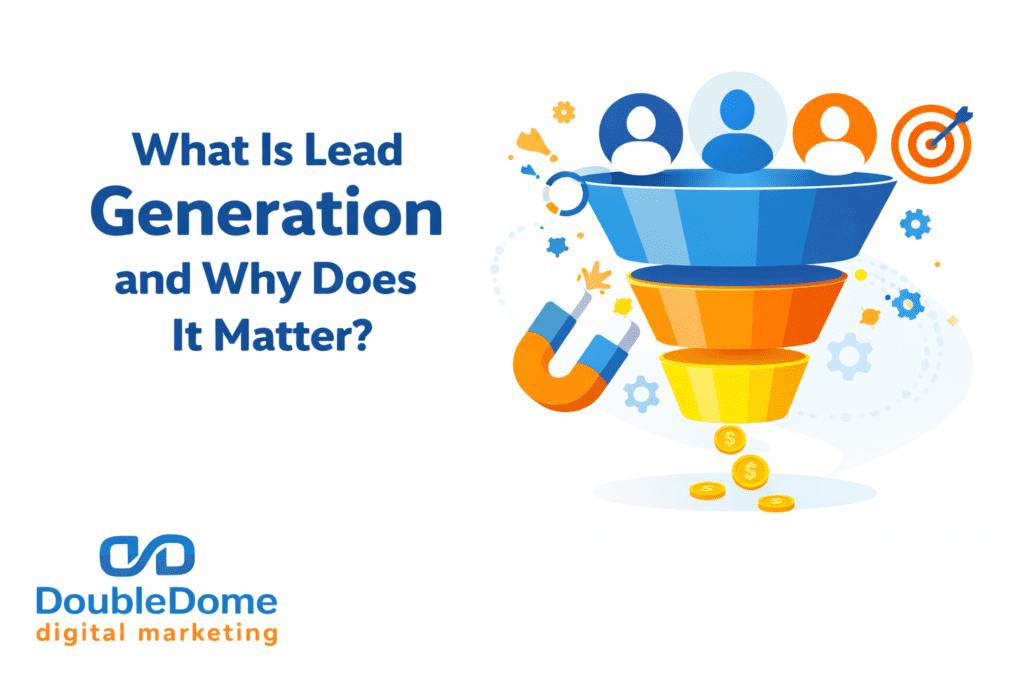
Lead generation is the system your business uses to consistently attract, qualify, and convert potential customers into real revenue. In 2026, it matters more than ever because AI-driven search, privacy changes, and declining organic clicks mean businesses must own their demand, not rent it from ads or algorithms.
What is lead generation? Lead generation is the process of identifying, attracting, and converting potential customers into qualified prospects who are likely to buy. It matters because modern buyers rely on AI answers, brand trust, and relevance, making predictable, owned lead flow essential for sustainable growth.
Why Lead Generation Matters More Than Ever in 2026
1. AI Is Replacing Clicks, Not Buyers
AI tools like ChatGPT and Google Gemini now summarize answers instantly. Fewer users click websites, but buying decisions still happen. Businesses that structure content and authority for AI visibility win demand before the click.
2. Traffic ≠ Customers
Ranking #1 doesn’t matter if:
- The visitor isn’t qualified
- The click is a bot
- There’s no follow-up system
Lead generation focuses on buyer intent, not raw traffic volume.
3. Ownership Beats Renting
Paid ads can generate leads—but the moment you stop paying, demand stops. Strong lead generation systems build:
- Brand recognition
- Retargetable audiences
- First-party data you actually own
4. Accountability Is Now Non-Negotiable
Modern decision-makers expect transparency. Lead generation matters because it connects:
- Marketing activity → pipeline → revenue
- Strategy → execution → measurable outcomes
How Modern Lead Generation Actually Works
The 2026 Lead Generation Framework
Effective lead generation today combines three layers:
Demand Creation
- Authority content optimized for SEO + AI answers
- Thought leadership that builds trust before contact
- Brand signals that position you as the safe choice
Demand Capture
- High-intent landing pages
- Smart forms and qualification logic
- Conversion paths designed for humans, not algorithms
Demand Conversion
- CRM integration
- Sales enablement data
- Closed-loop reporting from lead to revenue
This is why asking what is lead generation without discussing systems misses the point.
Traditional vs Modern Lead Generation (Comparison)
| Feature | Traditional Lead Generation | Modern Lead Generation |
| Primary Focus | Traffic volume and click-through rates | Revenue generation and high-intent signals |
| Core Metrics | CPC (Cost Per Click) and total impressions | Cost per qualified lead and conversion value |
| Data Strategy | Reliance on third-party cookies | Ownership of first-party data |
| Key Channels | Heavy reliance on paid advertisements | Multi-channel: SEO, AI, Brand, and Paid |
| Longevity | Instant cessation when budget stops | Compounding value that grows over time |
Key Benefits of a Strong Lead Generation System
- Predictable pipeline growth
- Higher-quality leads with buying intent
- Reduced wasted ad spend
- Visibility in AI-generated answers
- Clear ROI reporting for leadership
This is why lead generation isn’t a marketing tactic—it’s a growth asset.
Stop Chasing Clicks, Start Owning Demand
If you’re still asking what is lead generation the old way, you’re already behind. In 2026, the businesses that win don’t chase algorithms—they build systems that make them the obvious choice, no matter how technology shifts.
At DoubleDome Digital Marketing, we don’t sell fluff, dashboards with no meaning, or mysterious “proprietary systems.”
We build revenue-focused lead generation engines designed to:
- Make your brand the preferred answer in AI search
- Deliver qualified leads, not wasted clicks
- Show exactly how much you spent—and how much you made
Ready to stop renting traffic and start owning your lead flow? Contact DoubleDome Digital Marketing and build a system that works while you sleep.
Book your free strategy call today!
FAQ: Lead Generation Explained
What is lead generation in simple terms?
Lead generation is the process of turning interested prospects into qualified potential customers who are likely to buy.
Why is lead generation important for businesses?
It creates a predictable flow of customers, reduces reliance on ads, and ties marketing efforts directly to revenue.
How has lead generation changed in 2026?
It now prioritizes AI visibility, first-party data, buyer intent, and measurable ROI over traffic volume.
What are the best lead generation channels today?
SEO optimized for AI answers, high-intent content, paid media with strict qualification, and CRM-driven follow-up.
How do you measure lead generation success?
By tracking cost per qualified lead, conversion rate to sale, and total revenue generated—not clicks.