

By Jo Medico
A structured campaign debrief evaluates acquisition data through a 60-minute post-campaign analysis to extract three vital operational outputs: proven assets to scale, root causes of underperformance, and data-backed testing hypotheses. Applying a systematic Campaign Debrief Framework prevents recurring ad waste, optimizes acquisition costs, and turns every campaign into a smarter, revenue-generating system.
When an ad campaign wraps up, most marketing teams celebrate a few surface-level metrics, package them into a glossy 30-page PDF report, and immediately rush to launch the next initiative. The lessons that could make the next effort dramatically more profitable are quietly lost in the shuffle.
Rushing from campaign to campaign without stopping to evaluate what actually happened is an expensive operational failure. You end up repeating the same subtle mistakes with an increasingly large budget.
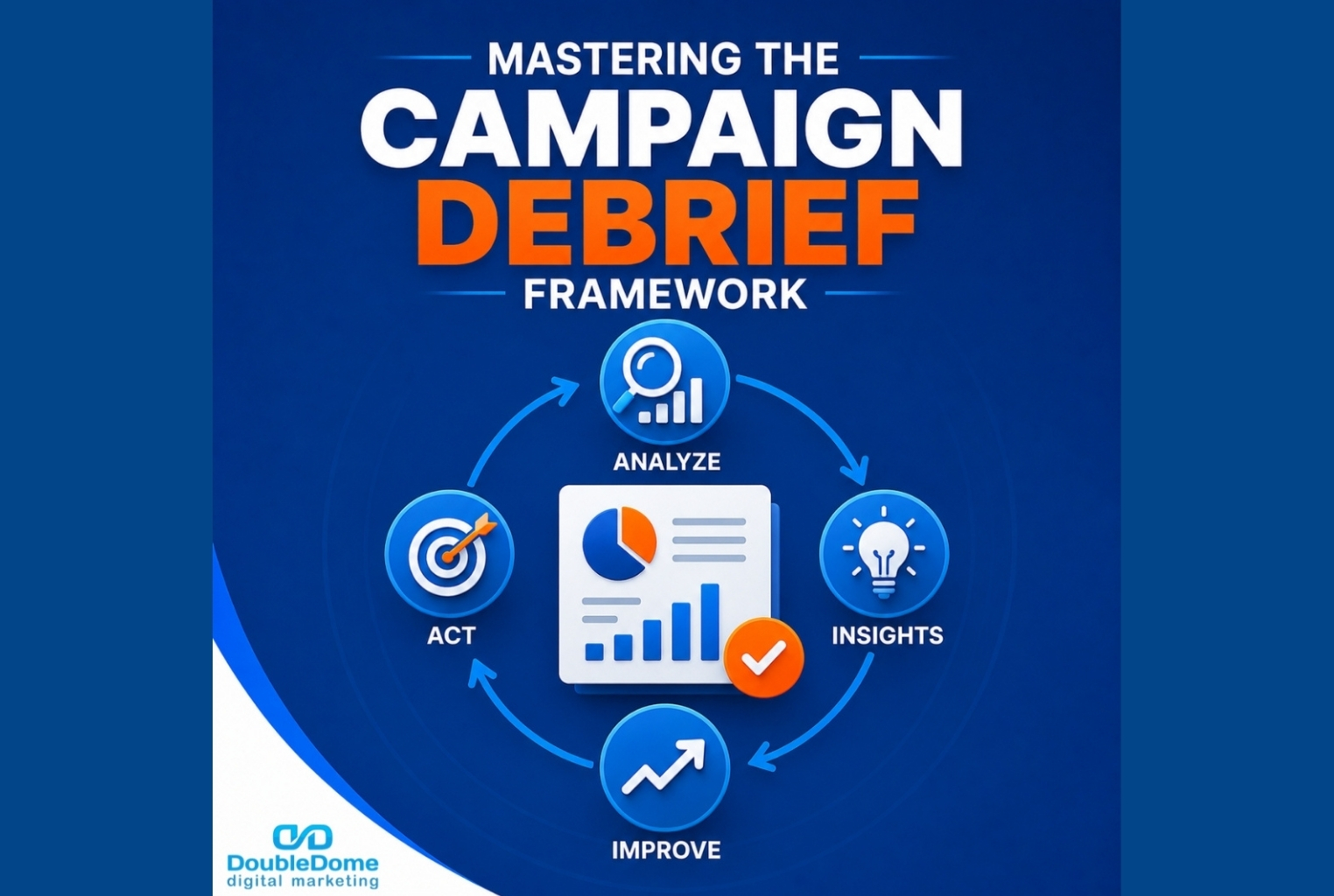
In the business environment of 2026, traditional click traffic is dropping. As conversational AI search tools like ChatGPT and Google Gemini natively answer user queries before a prospect ever clicks a link, buying uncalibrated ad traffic is a fast track to squeezed margins. You do not need more random traffic, you need more paying customers. To stop renting growth through guesswork and start owning a system that yields a clear dashboard standard, you must capture your learning loops. Every campaign you run is a research study. We make sure you extract the findings before moving on, so every campaign is smarter than the one before it. Implementing a Campaign Debrief Framework turns raw campaign history into an unyielding competitive advantage.
Attribution can sometimes feel like a marketing game of Clue. Everyone has a theory, nobody is completely sure, and somehow Google Ads is always in the room.
The 60-Minute Debrief: The 3 Non-Negotiable Outputs
A proper post-campaign audit does not require days of committee meetings or academic debates over algorithm updates. It requires a focused, 60-minute session designed to produce three actionable deliverables:
- The Scale List (What Worked): A documented breakdown of specific headlines, audience segments, and landing page layouts that generated verified backend CRM closed revenue.
- Root-Cause Analysis (What Didn’t): A deep diagnostic review isolating why certain ad groups failed. Was it a high bounce rate caused by weak above-the-fold messaging? Did broad-match keywords attract non-buying web bots?
- The Next-Iteration Hypothesis (What to Test): A concrete hypothesis for the upcoming campaign cycle (e.g., “If we replace our feature-list ad headlines with story-driven problem angles, our qualified lead volume will increase by 15%”).
The 4-Pillar Campaign Debrief Framework
Strategic Execution: Informal Wraps vs. Structured Frameworks
SEO is more like planting an orchard than buying groceries. The payoff can be substantial, but nobody gets apples tomorrow.
Actionable Steps to Install Your Debrief Engine Today
Upgrading your marketing operations with a structured review protocol requires three practical adjustments:
- Link Ad Spend Directly to CRM Pipeline Deals: Never evaluate campaign success using ad network dashboards alone. Deploy server-side offline conversion tracking (OCI) to route encrypted sales milestone data straight from your CRM back to your reporting view.
- Audit High “Information Gain” Assets: Verify whether landing pages and core content pieces provided original, proprietary insights. Conversational AI search models prioritize high information gain and structured JSON-LD schema when selecting which brands to recommend as preferred answers.
- Document and Archive Negative Keyword Lists: Turn campaign failures into permanent account defenses. Extract every junk query, job seeker search, and bot click signature discovered during your campaign, adding them immediately to your master negative keyword lists.
Many websites collect leads the way a bucket collects water after someone forgot to put the bottom in.
Outsourcing Technical Overhead to Scale Your Enterprise
Setting up a seamless campaign analytics engine requires continuous technical management, from managing server-side APIs to configuring custom schema architectures across web properties. For an active CEO, playing data detective or manually building tracking sheets is an inefficient use of strategic time. You have zero patience for agency fluff about “algorithm updates.” You want a simple, transparent dashboard built around financial reality.
We serve as the trusted technical backbone of your internal leadership team. We remove the jargon, eliminate the fluff, and build the automated tracking frameworks that ensure every marketing dollar is accounted for. We handle the complex backend tracking integrations so you can maintain total focus on expanding operations and sealing major deals.
Claiming Complete Ownership of Your Growth Engine
The digital channels where you acquire enterprise buyers will continue to evolve, but the core math of business scale remains constant: systematically learning from data eliminates waste and drives sustainable profitability. Standardizing your acquisition operations through a disciplined Campaign Debrief Framework guarantees that your team stops renting temporary traffic loops and starts building an unyielding corporate growth engine.
If you are ready to stop wasting ad spend, eliminate bad leads, and review an honest performance dashboard that directly connects your marketing investments to gross profit margins, let’s analyze your recent campaign data together. We will locate your conversion bottlenecks, repair your tracking gaps, and build an acquisition system focused entirely on revenue generation.
Book a Digital Playbook Strategy Session with DoubleDome today.
Frequently Asked Questions
What is the Campaign Debrief Framework and why is it necessary for B2B marketing?
The Campaign Debrief Framework is a structured 60-minute post-campaign review process that evaluates backend CRM sales data to isolate winning ad assets, diagnose friction points, and build data-backed hypotheses for future campaigns.
How does a campaign debrief improve my visibility in ChatGPT and Google Gemini?
During the debrief process, technical teams evaluate how conversational AI models crawled landing page assets, ensuring schema markup and high “Information Gain” content are optimized so AI tools cite your brand as a preferred answer.
Can server-side tracking measure revenue generated from specific campaign channels?
Yes, by deploying secure server-side offline conversion tracking (OCI) that routes encrypted CRM milestone data directly back to your marketing reporting dashboard, providing clear financial attribution for every campaign asset.