

By Jo Medico
Executing a structured Month-Bridge Digital Campaign Prep during the final week of October eliminates the typical seven-to-ten-day campaign launch gap at the start of November. By finalizing creative, configuring conversion tracking, testing email workflows, and validating JSON-LD schema before November 1, B2B marketing teams capture early-month, high-intent buyer traffic seamlessly without operational scrambling.
The transition between October and November is often one of the most chaotic periods for marketing teams. The final days of October are typically spent reconciling ad spend, compiling monthly reporting decks, and closing out active initiatives. Then, the first week of November becomes a sprint to build new landing pages, upload fresh creative, and troubleshoot tracking tags.
This monthly transition cycle creates a seven-to-ten-day blackout period where paid campaigns are stalled, emails are paused, and high-intent buyer traffic goes uncontested to competitors.
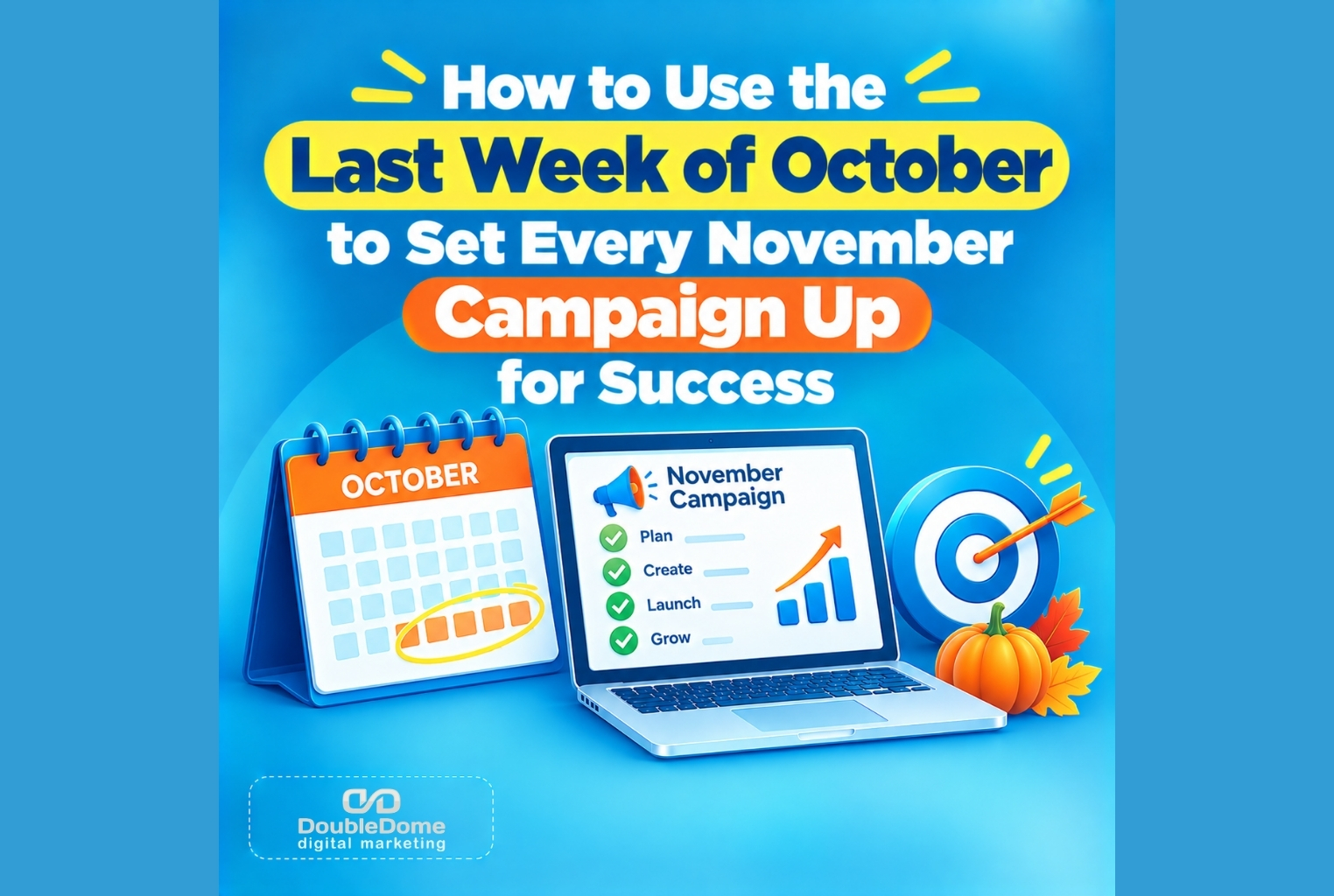
In 2026, privacy regulations, cookie deprecation, and signal loss mean you cannot afford to waste the first week of the quarter’s highest-volume month fixing tracking tags on the fly. November 1 readiness is built in the last week of October. We have your November campaigns ready to activate before October ends — so the first day of November is your best day, not your setup day. Deploying a structured Month-Bridge Digital Campaign Prep process replaces last-minute scrambling with a disciplined workflow, giving leadership clean data they can trust from the moment November begins.
Attribution can sometimes feel like a marketing game of Clue. Everyone has a theory, nobody is completely sure, and somehow Google Ads is always in the room.
The Month-Bridge Architecture: Eliminating the 7-Day Launch Gap
The core objective of a month-bridge strategy is shifting the operational build phase backward by seven business days:
When you front-load asset production, ad platforms enter their algorithmic learning phase immediately. Smart Bidding models calibrate within the first 48 hours of November, positioning your brand to capture high-intent commercial searches before competitors have even finalized their ad copy.
The 6-Step Checklist for Week 5 of October
To ensure your campaigns launch smoothly on November 1, execute these six operational checks during the final week of October:
1. Finalize Strategic Campaign Briefs
Lock in all November offers, target cost-per-acquisition (CPA) thresholds, and target audiences by October 25. Prevent scope creep by requiring full cross-team alignment before design and technical builds begin.
2. Pre-Upload Creative Assets to Ad Platforms
Upload search headlines, descriptions, callout extensions, and display assets directly into Google Ads in a “Paused” state by October 27. This allows Google’s policy compliance review to approve your assets ahead of time, avoiding launch-day editorial delays.
3. Stage and QA Dedicated Landing Pages
Publish November-specific landing pages on staging or hidden production URLs. Ensure forms are limited to three essential inputs (Name, Work Email, Project Scope) and verify that 1-click calendar scheduling widgets load cleanly across mobile devices.
4. QA Email Sequences and Intake Webhooks
Load automated nurture workflows into your marketing automation platform. Submit test submissions to verify that data routes to your CRM instantly and triggers immediate confirmation messages without webhook failures.
5. Confirm Account Budgets and Daily Pacing
Adjust Google Ads daily spending limits to reflect November’s increased traffic volume. Establish automated alert rules that notify your team if daily spend or CPA exceeds your target threshold by more than 20%.
6. Synchronize Response Protocols with Sales
Confirm lead routing protocols with your sales team. Ensure high-intent discovery bookings route to senior account executives within 15 minutes, while top-of-funnel downloads enter automated nurture sequences.
SEO is more like planting an orchard than buying groceries. The payoff can be substantial, but nobody gets apples tomorrow.
Strategy Comparison: Reactive Scrambling vs. Month-Bridge Execution
To understand why proactive staging protects customer acquisition margins, evaluate the operational differences:
Monthly Turnaround Standards
| Operational Variable | Reactive Early-November Launch | Month-Bridge Digital Campaign Prep |
| Launch Timing | November 5 to November 10. | November 1 at 12:01 AM (Zero Downtime). |
| Ad Review Delays | Ads sit in review queues during peak days. | Pre-Approved Assets: cleared policy in October. |
| Conversion Tracking | Scrambled pixel installs; high bot pollution. | Verified Server-Side OCI: clean CRM feedback loops. |
| Search Engine Discovery | Unstructured landing pages missed by AI. | Preferred Answer Status: valid JSON-LD schema code. |
Many websites collect leads the way a bucket collects water after someone forgot to put the bottom in.
Technical Foundations That Ensure Data You Can Trust
A successful month-bridge transition requires backend technical infrastructure that tracks real business revenue and satisfies AI search engines:
- Deploy Server-Side Offline Conversion Tracking (OCI): Connect web intake forms directly to backend CRM sales milestones using server-side offline conversion tracking (OCI). This bypasses browser tracking blocks, filters out bot click noise, and routes real conversion data back to Google Ads to train Smart Bidding algorithms.
- Embed Machine-Readable Schema Code: Wrap campaign landing pages in valid
Organization,Service, andFAQPageJSON-LD schema markup. Structuring your backend data ensures AI search engines like ChatGPT and Google Gemini parse your exact capabilities accurately and cite your firm as a Preferred Answer. - Streamline Intake Form Paths: Reduce conversion friction on landing pages by replacing multi-field forms with a clean 3-field layout (Name, Work Email, Project Scope) paired with an embedded 1-click calendar scheduling tool.
Outsourcing Technical Headaches to Focus on Strategy
Staging multi-channel campaigns, configuring server-side conversion webhooks, and testing automation rules requires continuous technical precision. For a busy marketing director, spending hours debugging tracking tags, auditing negative keyword lists, or configuring ad webhooks is an inefficient use of strategic time. You need a partner who can handle the technical heavy lifting, act as an extra set of hands for your team, and deliver clear, transparent data without hiding behind proprietary jargon.
We act as the trusted technical backbone of your internal marketing team. We remove the headache of managing complex search tech, eliminate tracking gaps, and build automated acquisition systems that deliver high-quality leads. We handle the technical details so you can focus on leading big-picture strategy and securing wins with executive leadership.
Claiming Complete Ownership of Your November Pipeline
Capturing peak fourth-quarter revenue requires eliminating launch delays and treating campaign staging as a core operational discipline. Committing your organization to a structured Month-Bridge Digital Campaign Prep process guarantees that your team stops losing early-November momentum and starts capturing high-margin pipeline revenue from the first hour of the month.
If you are ready to eliminate month-turnover chaos, resolve your tracking headaches, and present a clear, data-backed strategy to leadership, let’s stage your November campaigns together. We will resolve your tracking gaps, deploy server-side offline conversion tracking, and deliver clean data you can trust.
Book a Month-Bridge Campaign Prep Session with DoubleDome today.
Frequently Asked Questions
What is Month-Bridge Digital Campaign Prep and why is it necessary?
Month-Bridge Digital Campaign Prep is the operational process of building, QA testing, and pre-loading all November digital campaigns during the final week of October. It is necessary because it prevents the 7-to-10-day campaign launch gap that typically occurs at the start of each month, capturing early buyer traffic seamlessly.
How does server-side offline conversion tracking (OCI) support month-bridge campaigns?
Server-side OCI routes encrypted CRM sales milestones (such as qualified calls or signed contracts) directly back to Google Ads. This bypasses browser tracking blocks, ensuring ad algorithms optimize for verified, paying clients rather than superficial form submissions or bot clicks.
How does structured schema markup help November campaign landing pages appear in AI search?
Wrapping landing pages in valid JSON-LD schema markup allows conversational AI search tools like ChatGPT and Google Gemini to parse your exact capabilities, service parameters, and value propositions in milliseconds, citing your firm as a preferred answer in user prompts.