

By Clark Mago
Google Ads often attract unqualified traffic despite using perfect keywords because keyword intent only defines what is being searched, not who is searching. Implementing Ads Audience Signal Layering applies in-market segments, demographic data, and first-party customer match lists over keyword bids, ensuring your ad budget targets actual decision-makers rather than researchers, competitors, or job seekers.
You open your Google Ads account, pull up the search terms report, and everything looks pristine on paper. The keywords triggering your ads match your exact service offerings. Yet, your sales team reports that the actual inquiries coming through are a total mismatch: job applicants submitting resumes, students writing research papers, low-budget startups seeking free advice, or competitors poking around.
It is one of the most frustrating sources of wasted ad spend in modern digital acquisition. You are paying premium cost-per-click rates for the right search phrase, but the wrong human is clicking the link.
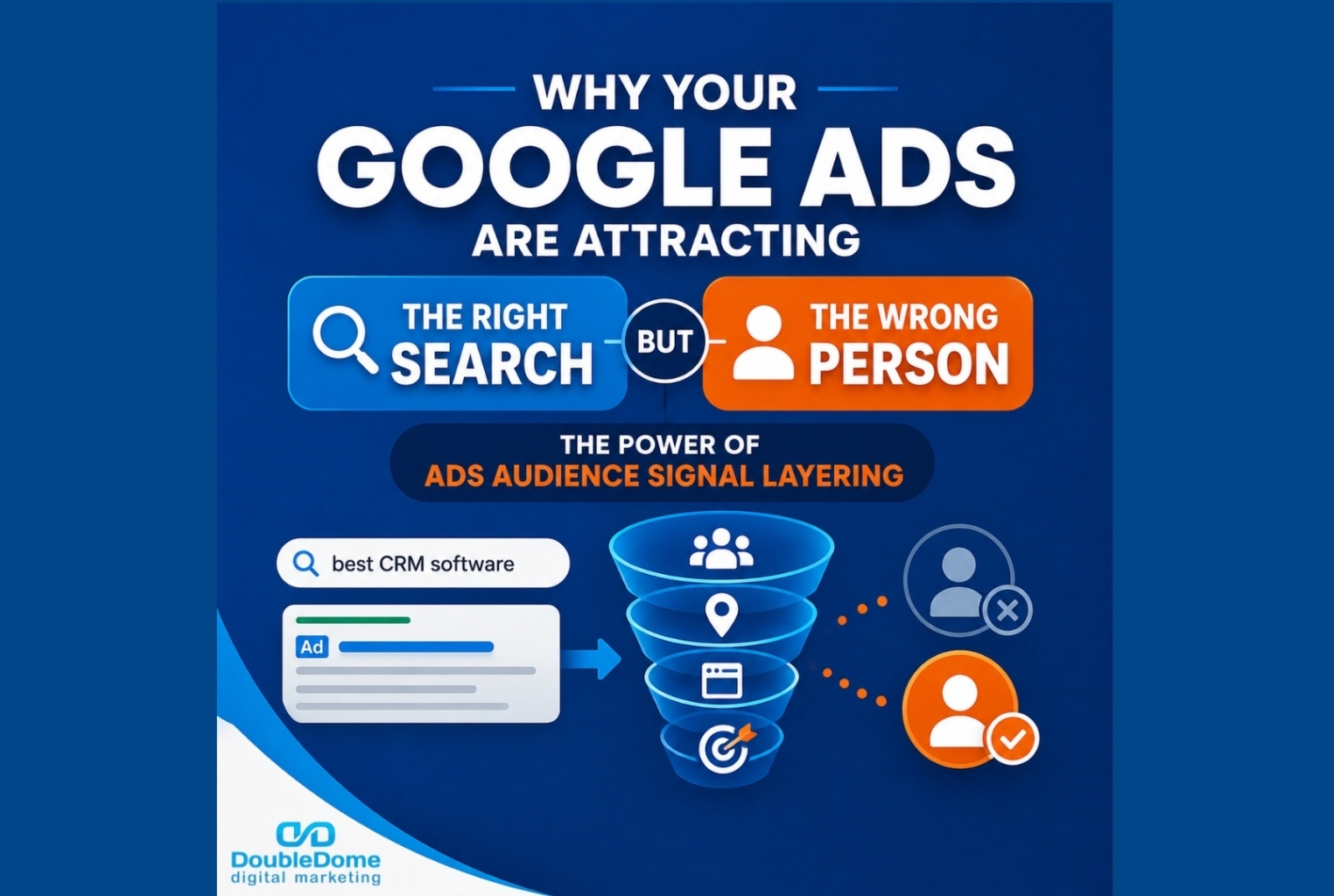
In the business reality of 2026, traditional click traffic is shifting. Conversational AI interfaces natively answer casual consumer questions before a user ever clicks a link, leaving paid search auctions more competitive—and more expensive—than ever. You don’t need more random traffic—you need more paying customers. To stop renting growth through broad ad campaigns and protect your ad budget from wasted clicks, you must look beyond basic keyword matching. Applying precise Ads Audience Signal Layering ensures that your ad budget is spent exclusively on qualified decision-makers.
Attribution can sometimes feel like a marketing game of Clue. Everyone has a theory, nobody is completely sure, and somehow Google Ads is always in the room.
The Hidden Trap: Keyword Intent vs. User Profile
A single search phrase like “commercial facility management services” carries multiple intent profiles depending entirely on who types it into the search bar:
- The Enterprise Buyer: A corporate operations director looking to outsource facility management for five regional offices.
- The Job Seeker: An applicant searching for employment openings at local facility management firms.
- The Academic Researcher: A university student writing a paper on commercial real estate logistics.
- The Vendor / Competitor: A software salesperson researching potential companies to pitch.
If your ad campaign targets keywords alone, Google’s auction treats all four users identically. The system enters your bid, serves your ad, and charges your account the moment any of those four people click. Without extra user qualifiers, your budget is burned by non-buyers who happen to use the right terminology.
How Ads Audience Signal Layering Fixes Your Pipeline
To ensure your ads reach actual buyers, you must teach Google’s automated bidding algorithms who to prioritize. Executing a modern Ads Audience Signal Layering strategy overlays user data profiles directly on top of your keyword criteria:
1. In-Market and Detailed Demographics
Filter your keyword targeting by layering Google’s built-in “In-Market” categories (e.g., users actively researching B2B commercial services) along with detailed company size, household income, and employment seniority signals.
2. First-Party Customer Match Lists
Upload encrypted lists of verified client emails, active CRM contacts, and high-value closed opportunities directly into Google Ads. The platform uses this first-party data to build lookalike audience profiles, bidding more aggressively on users who share the exact behavioral traits of your best clients.
3. Exclusions and Observation Parameters
Exclude user profiles that consistently burn budget, such as job seekers or specific demographic brackets. Setting your audience layers to “Observation Mode” allows you to track bid efficiency before applying strict bid adjustments.
Many websites collect leads the way a bucket collects water after someone forgot to put the bottom in.
Campaign Execution: Basic Keyword Targeting vs. Layered Signals
To see how audience signal layering protects your bottom-line profit margins compared to standard keyword campaigns, examine how both models operate in live auctions:
Search Auction Performance Blueprint
SEO is more like planting an orchard than buying groceries. The payoff can be substantial, but nobody gets apples tomorrow.
Reclaiming Full Control of Your Growth Engine
The right keyword in front of the wrong person is a wasted click. We add the audience layers that make your keywords find decision-makers — not researchers.
By structuring your ad campaigns around an integrated Ads Audience Signal Layering framework, you eliminate budget waste, screen out non-buying searchers, and guide high-intent prospects straight to your sales team.
Outsourcing Technical Overhead to Scale Your Enterprise
Configuring advanced audience signals, setting up Enhanced Conversions for Leads, and maintaining automated CRM data feeds requires deep technical precision. For an executive focused on scaling operations, playing data detective with ad account settings is an inefficient use of strategic time. You have zero patience for agency fluff about “algorithm updates.” You want a simple, transparent dashboard built around financial realities.
We act as the trusted technical backbone of your internal leadership team. We remove the technical friction, eliminate the fluff, and layer your ad accounts to target verified enterprise decision-makers. We build the automated system that makes you the obvious choice for your leads, giving you a clear reporting view.
Claiming Your Absolute Market Advantage
The digital channels where prospective clients research solutions will continue to evolve, but the core fundamentals of customer acquisition remain constant: targeting the right buyer drives profitability, and system optimization eliminates waste. Committing your organization to a structured Ads Audience Signal Layering strategy guarantees that your team stops guessing with your ad spend and starts building a predictable growth engine.
If you are ready to stop wasting ad spend on bad clicks, eliminate low-quality leads, and review a simple dashboard that directly connects your marketing channels to net profit, let’s step through your ad setup together. We will locate your audience gaps, patch your tracking vulnerabilities, and build a acquisition system focused entirely on revenue generation.
Book a Google Ads Strategy Session with DoubleDome today.
Frequently Asked Questions
What is Ads Audience Signal Layering and why is it necessary for Google Ads?
Ads Audience Signal Layering is the practice of combining demographic data, in-market behaviors, and first-party CRM lists with keyword targeting to ensure your ads are shown strictly to qualified decision-makers rather than casual researchers.
How does audience signal layering reduce wasted ad spend from bot clicks?
By restricting ad auctions to verified user profiles and in-market segments, you prevent unauthenticated web bots and automated scrapers from triggering your paid search ads.
Can I track whether layered audience campaigns drive actual closed CRM contracts?
Yes, by deploying secure server-side offline conversion tracking (OCI) that routes encrypted milestone data directly from your CRM back to your Google Ads dashboard, providing clear revenue attribution.