

By Clark Mago
To drive direct phone calls rather than passive form submissions from Google Ads, businesses must pivot from standard landing page goals to call-first campaign architectures. Implementing call-only ads, strategically scheduling phone extensions, and adjusting smart bidding metrics safely bypasses tedious email tag cycles to connect high-intent prospects with sales teams instantly.
For any service-driven organization or B2B enterprise, a live telephone conversation is the ultimate operational shortcut. It is the single point in your sales cycle where a qualified, premium prospect shifts from an anonymous browser to a closed contract. Yet, if you look at the default configuration of most performance campaigns, they are built to do the exact opposite. They funnel high-intent searchers to standard landing pages, collect an email address, and drop a form fill into your inbox.
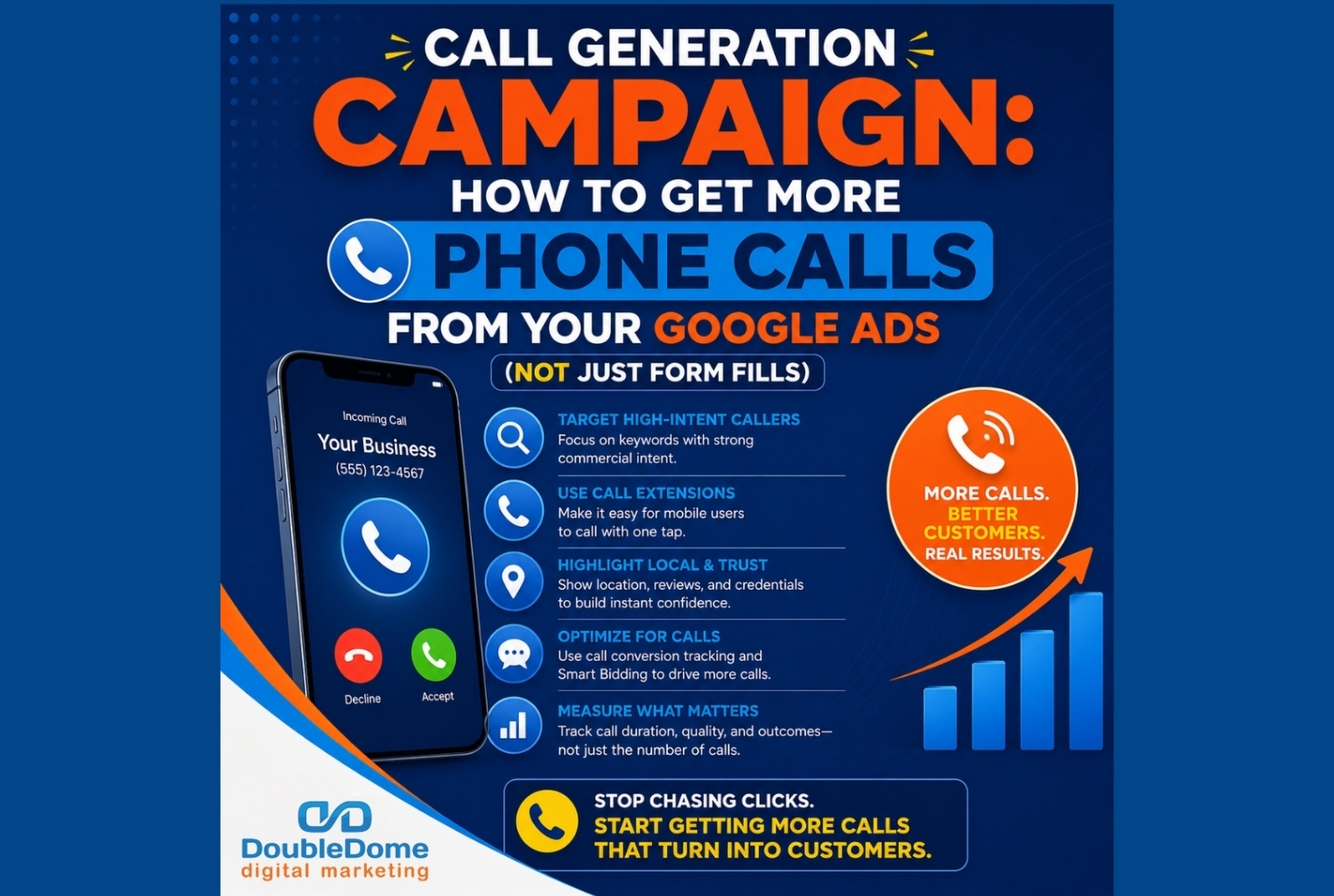
What happens next is a frustrating, manually intensive game of email tag. Your internal team follows up multiple times, the lead slowly goes cold, and your cost-per-acquisition climbs. If you are tired of watching a premium monthly budget produce ambiguous digital interactions rather than active business transactions, your pipeline is suffering from a structural misalignment. In an era where AI search tools answer questions natively and data laws limit traditional tracking, you can no longer afford to rent empty clicks. Building a growth engine that runs while you sleep requires a dedicated Call Generation Campaign strategy designed to connect high-value buyers with your office in real time.
Many websites collect leads the way a bucket collects water after someone forgot to put the bottom in.
The Conversational Multiplier: Shortening the Sales Cycle
When an enterprise client requires an immediate, high-stakes service, they don’t want to wait twenty-four hours for a generic form response. They want answers now. By forcing a high-intent user to fill out a lengthy website questionnaire, you are introducing friction into the exact moment of peak buying intent.
Shifting to a call-first campaign architecture changes the entire economic structure of your advertising account. When a buyer initiates a call directly from an ad on their mobile device or clicks a prominent call node on a mobile landing page, they bypass the passive research phase entirely. The data proves that while a call-optimized approach may yield a slightly lower total volume of raw leads compared to broad form-fill campaigns, the actual conversion-to-closed-revenue percentage is drastically higher. You are paying for genuine customers, not unvetted digital fluff.
The Strategic Blueprint for a Call Generation Campaign
Transitioning away from transactional form submissions and earning direct inbound conversations relies on a programmatic configuration of the Google Ads platform.
1. Deploy Call-Only (Call Ads) Infrastructure
Instead of paying for a user to click through to a webpage where they might get distracted and bounce, call-only ads change the user action entirely. When an enterprise prospect clicks your ad from a mobile interface, their device immediately prompts a direct call to your sales line. You pay for the connection, not the passive click.
2. Implement Advanced Call Extensions and Scheduling
If your sales team only operates between 8:00 AM and 6:00 PM, running prominent call assets at midnight is a fast path to wasted ad spend. Use strict asset scheduling within your account settings to ensure call extensions are highly visible only when an internal representative is actively available to answer the phone. During off-hours, the platform can automatically revert to standard text formats safely.
3. Transition to Value-Based Smart Bidding
Modern machine-learning models optimize for the exact data markers you feed back into the system. If your account marks every standard contact form and brief phone call as an identical conversion, the algorithm treats them with equal weight. By utilizing secure first-party tracking systems and call-tracking parameters, you can assign an explicit financial value to calls that last over a specific duration (e.g., more than 120 seconds). This trains the ad model to systematically seek out serious, high-value buyers.
Comparing Lead funnels: Form-First vs. Call-First Economics
To understand what your digital marketing investments are actually buying you each month, look at how the transactional mechanics compare between these two primary architectures:
The Operational Efficiency Matrix
| Performance Variable Metric | The Traditional Form-Fill Loop | The Programmatic Call Generation Campaign |
| Primary User Action | Visitor fills out a multi-field form on a landing page. | User initiates a direct phone call from an ad or mobile node. |
| Sales Cycle Velocity | Delayed; requires manual follow-ups over hours or days. | Immediate; live sales conversation occurs at the peak moment of intent. |
| Pipeline Leakage Point | High; leads frequently drop off during the follow-up process. | Minimal; target audience connects directly with a representative. |
| Lead Quality Control | Lower; easily triggered by bots or low-intent casual researchers. | Highly qualified; filters out cold inquiries automatically. |
Attribution can sometimes feel like a marketing game of Clue. Everyone has a theory, nobody is completely sure, and somehow Google Ads is always in the room.
Outsourcing the Technical Overhead to Secure Honest Data
Building an airtight, call-optimized marketing system requires serious technical precision behind the scenes. Between integrating advanced Google forwarding numbers, mapping server-side offline conversion tags directly to your CRM sales milestones, and auditing negative search parameters to filter out bot traffic, the configuration can quickly overwhelm your internal resources. You shouldn’t have to spend your weekends playing data detective just to confirm if your marketing spend is working.
We step in as the technical backbone of your executive team. We eliminate the complex marketing theories and provide a transparent, straightforward performance dashboard that shows you exactly how much contract revenue was created for every dollar invested. If a phone call is your best sales tool, your ads should be driving phone calls—not form fills that go cold. We build the call-first campaign architecture. We handle the daily technical shifts and platform updates so you can maintain total focus on closing premium deals and owning your market.
SEO is more like planting an orchard than buying groceries. The payoff can be substantial, but nobody gets apples tomorrow.
Securing Predictable Revenue Scale
The search landscape will continue to experience automated shifts as AI recommendation bots change user discovery patterns, but the core foundation of commercial growth remains unchanged: fast, transparent human connections close deals. Committing your business to a structured Call Generation Campaign standard guarantees that your brand stops renting empty web traffic loops and starts building a highly optimized lead generation asset. By positioning your sales team a single click away from your ideal corporate prospects, you install a scalable framework that drives predictable revenue month after month.
If you are ready to eliminate bad leads, remove the guesswork from your monthly ad spend, and look at clear, auditable reporting that connects your marketing channels directly to bottom-line growth, let’s step through your account metrics together.
Book a Google Ads Management Audit Session with DoubleDome today.
Frequently Asked Questions
What is a Call Generation Campaign, and how does it differ from traditional search ads?
A call generation campaign utilizes specialized ad formats and call extensions designed specifically to prompt a phone call directly from the search results page, bypassing standard landing page forms to connect high-intent buyers with your team instantly.
How do you track the quality of a phone call conversion in Google Ads?
We use advanced call-tracking parameters and Google forwarding numbers to track data metrics such as call duration, area codes, and specific timestamps, which are mapped directly back to your CRM milestones to confirm lead validity.
Will shifting to a call-first ad structure increase my cost-per-click metrics?
While call-driven ad formats can occasionally carry a higher average cost-per-click due to the extreme level of user intent, the significantly higher close rate and condensed sales cycle consistently lower your total cost-per-customer-acquisition.