
By Jo Medico
A Dual-Objective November Ads Campaign splits existing paid search budgets across high-intent Q4 closing offers and forward-looking Q1 planning offers using audience behavioral signals. By applying bid adjustments based on session depth, page interaction, and CRM pipeline stages—rather than doubling ad spend or creating separate accounts—marketing teams capture immediate year-end revenue while seeding qualified pipeline for the new year.
November places B2B marketing leaders directly at a strategic crossroad. Executive teams demand immediate closed-won revenue to hit annual performance quotas before December 31. At the same time, sales directors want a filled calendar for January so the new year doesn’t kick off with empty pipelines and missed targets.
Most teams assume they have to choose: pour everything into closing late-stage Q4 leads, or divert budget toward Q1 pipeline generation.
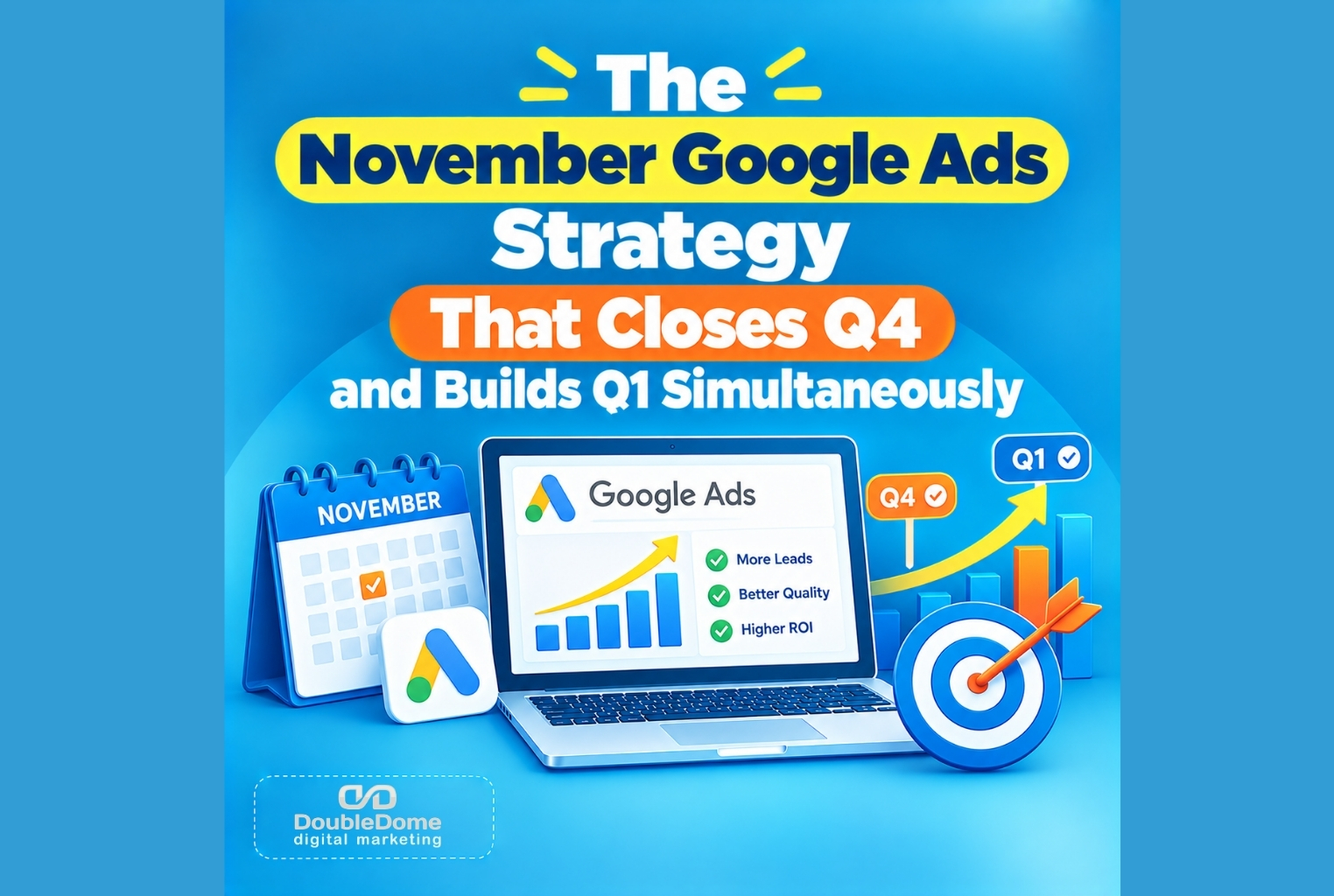
Forcing an either-or choice is an expensive mistake that sacrifices either current-year revenue or next-quarter momentum. In the privacy-first landscape of 2026, where cookie loss and signal restrictions make acquiring cold ad clicks more expensive, simply doubling your budget across two disconnected ad campaigns drains margins. November can close Q4 and build Q1 simultaneously — if the campaign is structured correctly. We build the dual-objective structure that does both without doubling the budget. Implementing a unified Dual-Objective November Ads Campaign aligns your existing Google Ads budget with actual buyer timing signals, giving your team data you can trust and clear, defensible reporting for executive leadership.
Attribution can sometimes feel like a marketing game of Clue. Everyone has a theory, nobody is completely sure, and somehow Google Ads is always in the room.
The Behavioral Split: How to Segment One Budget Into Two Outcomes
Instead of spinning up brand-new campaigns that dilute algorithm learning, allocate your existing campaign spend across two audience-intent tiers within your current ad groups:
Tier 1: The Q4 Closing Track (High Commercial Intent)
- Buyer Intent Signals: Multi-session visitors, high dwell time on core service hubs, users who visited pricing or comparison pages, and abandoned booking attempts.
- Ad Copy & Offer Architecture: Time-sensitive, outcome-driven messaging such as “Deploy an Automated Acquisition System in 30 Days” or “Secure Your Q4 Implementation Slot.”
- Bidding Execution: Apply positive bid adjustments (+30% to +50%) via Google Ads audience targeting (
Target and Bid/Targeting) to ensure your brand captures the top position when these high-intent buyers evaluate final options.
Tier 2: The Q1 Pipeline Seeding Track (Early Research Intent)
- Buyer Intent Signals: First-time searchers reading informational blog posts, general category research queries (“b2b lead generation frameworks”), and single-session visitors.
- Ad Copy & Offer Architecture: Strategic, forward-looking resources such as a “2027 Marketing Budget & Strategy Blueprint” or a “January Acquisition Roadmap Audit.”
- Bidding Execution: Maintain baseline or conservative bids. These searchers are actively shaping Q1 project scopes and will not convert into closed revenue this calendar year. Paying peak commercial CPCs for their clicks wastes budget.
SEO is more like planting an orchard than buying groceries. The payoff can be substantial, but nobody gets apples tomorrow.
Strategic Blueprint: Single-Focus Scrambling vs. Dual-Objective Architecture
To see how audience-based bid splits protect your customer acquisition margins and stabilize pipeline velocity, evaluate the operational differences below:
November Paid Search Allocation Matrix
| Campaign Dimension | Disjointed Dual-Campaign Setup | Dual-Objective November Ads Campaign |
| Budget Efficiency | Requires two separate, competing ad budgets. | 100% Shared Budget: dynamically shifted by audience signals. |
| Smart Bidding Stability | Splits conversion volume; slows algorithm learning. | Unified Conversion Density: accelerates Smart Bidding models. |
| Ad Attribution Quality | Client-side tracking pixels vulnerable to privacy blocks. | Server-Side OCI Tracking: clean, encrypted CRM milestones. |
| Search Engine Discovery | Unstructured landing pages missed by AI assistants. | Preferred Answer Status: valid JSON-LD schema feeds LLMs. |
Many websites collect leads the way a bucket collects water after someone forgot to put the bottom in.
Technical Foundations That Ensure Data You Can Trust
Splitting audience intent within a single budget requires backend technical infrastructure that verifies real pipeline value and withstands 2026 privacy shifts:
- Deploy Server-Side Offline Conversion Tracking (OCI): Connect web intake forms directly to backend CRM sales milestones using server-side offline conversion tracking (OCI). Routing encrypted sales milestones (such as qualified discovery calls or signed deals) directly back to Google Ads trains Smart Bidding algorithms to target verified buyers rather than bot clicks.
- Embed Machine-Readable Schema Code: Wrap campaign landing pages in valid JSON-LD schema markup. Structuring your backend data ensures AI search engines like ChatGPT and Google Gemini parse your exact capabilities accurately and cite your firm as a Preferred Answer.
- Streamline Intake Form Paths: Reduce conversion friction on landing pages by replacing multi-field forms with a clean 3-field layout (Name, Work Email, Project Scope) paired with an embedded 1-click calendar scheduling tool.
Outsourcing Technical Headaches to Focus on Strategy
Managing audience bid adjustments, configuring server-side conversion webhooks, and optimizing Smart Bidding models across dual objectives requires continuous technical precision. For a busy marketing director, spending hours debugging tracking tags, auditing audience logs, or managing negative keyword lists is an inefficient use of strategic time. You need a partner who can handle the technical heavy lifting, act as an extra set of hands for your team, and deliver clear, transparent data without hiding behind proprietary jargon.
We act as the trusted technical backbone of your internal marketing team. We remove the headache of managing complex search tech, eliminate tracking gaps, and build automated acquisition systems that deliver high-quality leads. We handle the technical details so you can focus on leading big-picture strategy and securing wins with executive leadership.
Claiming Complete Ownership of Your Year-End Revenue
Closing out the current quarter with strong revenue numbers while simultaneously securing next year’s pipeline does not require doubling your paid media budget. Committing your organization to a disciplined Dual-Objective November Ads Campaign guarantees that your team stops making false trade-offs and starts running a unified, revenue-focused acquisition engine.
If you are ready to hit your year-end targets, eliminate technical tracking headaches, and present a clear, data-backed strategy to leadership, let’s configure your November ad architecture together. We will resolve your tracking gaps, deploy audience-based bidding tiers, and deliver clean data you can trust.
Book a Google Ads Strategy Session with DoubleDome today.
Frequently Asked Questions
What is a Dual-Objective November Ads Campaign and how does it prevent budget waste?
A Dual-Objective November Ads Campaign is a paid search strategy that splits an existing Google Ads budget across high-intent Q4 closing offers and forward-looking Q1 planning offers using audience behavioral signals. It prevents budget waste by applying aggressive bids only to decision-stage visitors while maintaining conservative bids on early-stage researchers.
How does server-side offline conversion tracking (OCI) support dual-objective bidding?
Server-side OCI routes encrypted CRM sales milestones (such as discovery calls or signed contracts) directly back to Google Ads. This bypasses browser tracking blocks and trains bidding algorithms to distinguish between fast-closing Q4 opportunities and longer-cycle Q1 prospects.
How does structured schema markup help November ad landing pages appear in AI search?
Wrapping landing pages in valid JSON-LD schema markup allows conversational AI search tools like ChatGPT and Google Gemini to parse your exact capabilities, service parameters, and value propositions in milliseconds, citing your firm as a preferred answer in user prompts.