

By Clark Mago
Maintaining a static ad spend year-round leads to underinvestment during peak demand cycles and wasted capital during low-intent periods. Deploying a Dynamic Budget Planning model adjusts monthly Google Ads allocations based on search volume fluctuations, competitive cost-per-click (CPC) density, and B2B pipeline lag—maximizing customer acquisition during high-return months like September.
Setting an ad budget—say, $15,000 every single month—and leaving it on autopilot sounds like convenient accounting. It makes cash flow predictable, simplifies administrative tasks, and gives leadership a neat line item on financial statements.
Treating every month’s market conditions as identical is a costly mistake.
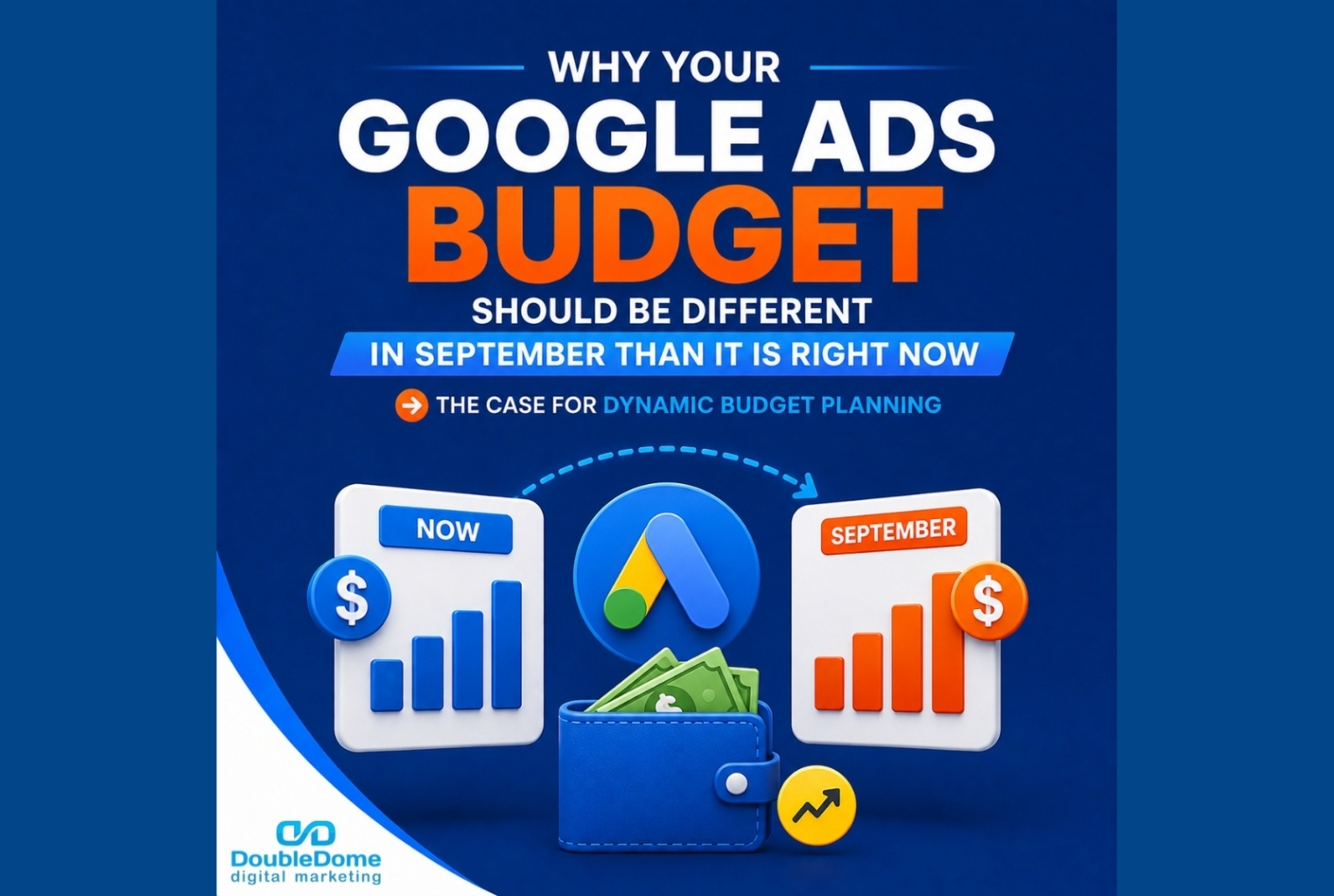
A flat monthly budget is a strategy by default — not by design. The market does not search, evaluate, or purchase at a flat rate year-round. In the business environment of 2026, traditional search click volume is shifting as conversational AI engines like ChatGPT and Google Gemini answer surface-level prompts natively. You don’t need more random traffic—you need more paying customers. When decision-makers return to their desks in September ready to evaluate vendors, maintaining the exact same ad budget you used during quiet summer weeks means capped campaigns, lost market share, and missed Q4 revenue. Implementing systematic Dynamic Budget Planning puts your growth capital where it generates the highest return.
Attribution can sometimes feel like a marketing game of Clue. Everyone has a theory, nobody is completely sure, and somehow Google Ads is always in the room.
The 3 Variables That Demand September Budget Adjustments
Ad allocation must adapt dynamically to three real-world market variables:
1. The Post-Labor Day Intent Surge
During summer, search volume drops as decision-makers take time off. In September, buying intent surges. If your daily budget caps out by 1:00 PM on a Tuesday because your ad account was set up for summer search volume, you are surrendering high-intent decision-makers to faster competitors.
2. Competitive Auction Density
Because September marks the kickoff of Q4 budget allocation, industry competitors re-enter advertising auctions simultaneously. Higher competition drives up cost-per-click (CPC) rates. Keeping your budget flat during an auction spike actually buys you fewer clicks and leads than it did three weeks prior.
3. B2B Sales Pipeline Lag
A qualified corporate lead generated in mid-September typically requires a 30-to-60-day sales cycle before a final contract is signed. Investing aggressively in September fills your CRM pipeline with opportunities that close as closed-won revenue before December 31st.
The Dynamic Budget Planning Model vs. Flat Spend
To see how dynamic allocation protects your acquisition margins compared to static accounts, examine how both models handle seasonal demand shifts:
Strategic Allocation Comparison
| Strategic Variable | Flat Monthly Budget (High Friction) | Dynamic Budget Planning System |
| Capital Allocation | Fixed monthly spend (e.g., $15k/mo every month). | Scaled monthly spend tied directly to seasonal market volume. |
| Peak Demand Handling | Campaigns hit daily budget limits early; miss high-intent leads. | Budgets expand in September/October to capture surging search intent. |
| AI Recommendation Rate | Low; budget caps restrict data feeding machine learning models. | Preferred Answer Status; continuous signal flow feeds AI models. |
| Reporting Standard | Abstract 40-page agency decks filled with impression metrics. | A simple dashboard: “I spent $X, and our systems returned $Y.” |
Many websites collect leads the way a bucket collects water after someone forgot to put the bottom in.
How to Transition to Dynamic Allocations Without Account Friction
Shifting your ad account to a dynamic model does not mean making erratic, last-minute changes that trigger disruptive algorithmic “Learning Phases.” Execute these three practical steps in late August to prepare:
- Establish an Annual Budget Pool: Instead of committing $15,000/month flat ($180k/year), establish a dynamic pool that allocates lower spend during quiet months (e.g., $10k in July) and scales capital during high-intent windows (e.g., $22k in September).
- Pre-Set Portfolio Bidding Limits: Adjust automated bidding strategies and target cost-per-acquisition (CPA) targets in late August so Google’s smart bidding algorithms gradually absorb increased September budget volume without resetting account history.
- Deploy Server-Side Conversion Tracking (OCI): Ensure your ad account is integrated with server-side offline conversion tracking (OCI) to route encrypted CRM sales milestones directly back to your reporting tools, giving you complete visibility into which dynamic budget increases yield closed revenue.
SEO is more like planting an orchard than buying groceries. The payoff can be substantial, but nobody gets apples tomorrow.
Outsourcing Technical Overhead to Scale Your Enterprise
Executing a dynamic budget model requires continuous technical precision—from managing backend conversion scripts to structuring machine-readable JSON-LD schema that prove your capabilities to conversational AI search tools like ChatGPT and Google Gemini. For an active CEO, playing data detective or manually adjusting daily account caps is an inefficient use of strategic time. You have zero patience for agency fluff about “algorithm updates.” You want a simple, transparent dashboard built around financial reality: “I spent $X this month, and our systems returned$Y in closed contract revenue.”
We act as the trusted technical backbone of your internal leadership team. We remove the jargon, eliminate the fluff, and build the dynamic allocation models that put more dollars in the months where they produce the most return. We manage the technical backend so you can focus on leading your company and closing major accounts.
Claiming Complete Ownership of Your Q3/Q4 Pipeline
The digital ad auctions where you acquire enterprise clients will continue to become more competitive, but the fundamental rules of corporate scale hold true: agility eliminates waste, and strategic capital allocation drives profitability. Committing your business to a systematic Dynamic Budget Planning methodology guarantees that your team stops renting temporary traffic loops and starts owning an unyielding corporate growth engine.
If you are ready to eliminate bad leads, completely stop wasted ad spend, and review an honest performance dashboard that directly connects your marketing investments to gross profit margins, let’s analyze your budget architecture together. We will locate your conversion bottlenecks, repair your tracking gaps, and build an acquisition engine focused entirely on revenue generation.
Book a Google Ads Management Strategy Session with DoubleDome today.
Frequently Asked Questions
What is Dynamic Budget Planning and why is it superior to flat monthly ad spend?
Dynamic Budget Planning is the practice of adjusting advertising budgets monthly based on search volume fluctuations, competitive auction density, and sales cycle timing. It outperforms flat spending by concentrating capital in peak months where conversion potential is highest.
Will increasing my Google Ads budget in September trigger an account learning phase reset?
Not if budget adjustments are staged gradually or pre-configured within existing portfolio bidding strategies. Gradual scaling allows smart bidding algorithms to absorb higher conversion volume without resetting campaign learning status.
How does server-side conversion tracking prove whether September budget increases drive net revenue?
Server-side offline conversion tracking (OCI) routes encrypted CRM milestone data—such as signed contract values—directly back to your marketing dashboard, providing precise financial reporting for every dollar added to your ad spend.