

By Clark Mago
A Full-Funnel Q4 Ads Campaign captures B2B buyers across the entire decision lifecycle by deploying three distinct campaign layers: consideration-stage discovery, comparison-stage conquesting, and decision-stage conversion. Structuring Google Ads to engage buyers during early evaluation—rather than waiting for bottom-of-funnel conversion queries—significantly lowers cost-per-acquisition (CPA), captures higher-quality leads, and secures market share during peak fourth-quarter purchasing windows.
When the fourth quarter arrives, paid search auctions become fierce. Most marketing teams respond by pouring their entire Google Ads budget directly into bottom-of-funnel “ready-to-buy” transactional search phrases.
While targeting bottom-of-funnel searchers is necessary, relying solely on late-stage queries exposes your ad campaigns to the highest cost-per-click (CPC) rates of the year.
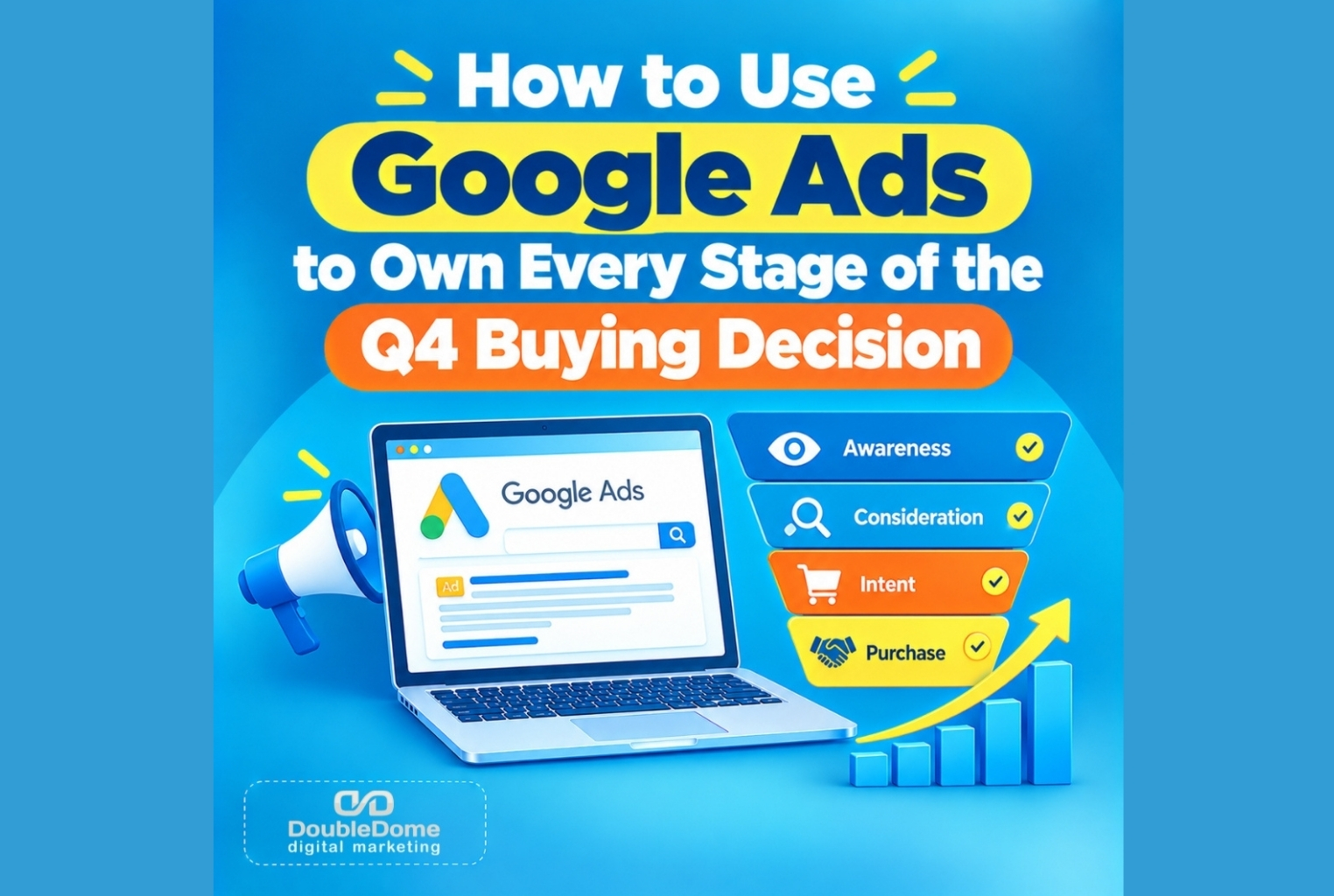
By the time a decision-maker searches for an exact commercial service term in late Q4, they have likely spent weeks researching options, asking AI assistants for vendor comparisons, and narrowing down their shortlist. Bidding only on final-step keywords means you miss the opportunity to shape the buyer’s evaluation criteria when they were first forming their project scope. Owning Q4 means being visible at every stage of the decision, not just the last one. We build the three-layer campaign architecture that covers the whole journey. Implementing a structured Full-Funnel Q4 Ads Campaign establishes a multi-touch acquisition engine that drives predictable pipeline growth backed by clean, reliable data you can present directly to leadership.
Attribution can sometimes feel like a marketing game of Clue. Everyone has a theory, nobody is completely sure, and somehow Google Ads is always in the room.
The 3 Campaign Layers of a Full-Funnel Q4 Strategy
To engage enterprise decision-makers before your competitors even know they are in market, structure your Google Ads account into three specialized, funnel-aligned tiers:
1. The Consideration Layer (Early Evaluation Phase)
- Keyword Strategy: Focus on informational and evaluation queries, such as “how to evaluate B2B growth partners” or “what to look for in Q4 ad management.”
- Messaging & Landing Experience: Offer high-value, educational assets like a 1-page Q4 execution checklist or a technical buyer’s guide. This builds brand authority and seeds first-party remarketing pools early.
2. The Comparison Layer (Active Benchmarking Phase)
- Keyword Strategy: Target side-by-side evaluation queries (e.g., “Service A vs. Service B”) and competitor brand search phrases.
- Messaging & Landing Experience: Highlight objective, side-by-side comparison tables, verified client outcomes ($X spent vs.$Y earned in CRM pipeline), and transparent pricing parameters.
3. The Decision Layer (Contract Finalization Phase)
- Keyword Strategy: Focus strictly on high-intent commercial terms (e.g., “B2B lead generation system Dallas”) and branded retargeting list queries.
- Messaging & Landing Experience: Provide low-friction booking options, such as a 3-field contact form (Name, Work Email, Project Scope) paired with an embedded calendar for instant discovery call scheduling.
SEO is more like planting an orchard than buying groceries. The payoff can be substantial, but nobody gets apples tomorrow.
Strategic Comparison: Bottom-Only Bidding vs. Full-Funnel Architecture
To see how multi-layer campaign structures protect your acquisition margins and improve lead quality, examine the performance breakdown below:
Google Ads Funnel Execution Matrix
| Strategic Variable | Bottom-Only Bidding (High Cost) | Full-Funnel Q4 Ads Campaign Standard |
| Auction Environment | Extreme competition; annual peak CPC costs. | Blended Auction Efficiency: lower average cost-per-click. |
| Buyer Touchpoints | Single touchpoint at final search step. | Multi-Touch Authority: shapes buyer criteria early. |
| Data & Tracking | Client-side tracking pixels vulnerable to blocks. | Server-Side OCI Tracking: clean, encrypted CRM sync. |
| AI Search Presence | Unmonitored; landing pages lack machine schema. | Preferred Answer Status: structured JSON-LD feeds LLMs. |
Many websites collect leads the way a bucket collects water after someone forgot to put the bottom in.
Technical Foundations That Ensure Data You Can Trust
Deploying a multi-layered ad framework requires backend technical infrastructure that tracks real business revenue and withstands modern tracking restrictions:
- Deploy Server-Side Offline Conversion Tracking (OCI): Route encrypted CRM sales milestones (such as qualified discovery calls or signed deals) directly back to Google Ads bidding algorithms. This bypasses browser tracking blocks, filters out bot click noise, and trains Smart Bidding models to target verified enterprise buyers.
- Embed Machine-Readable Schema Code: Wrap campaign landing pages in valid JSON-LD schema markup. Structuring your backend data ensures conversational AI search tools like ChatGPT and Google Gemini parse your exact capabilities accurately and cite your firm as a Preferred Answer.
- Streamline Intake Form Paths: Reduce conversion friction on comparison and decision landing pages by replacing multi-field forms with a clean 3-field layout paired with an embedded 1-click calendar scheduling tool.
Outsourcing Technical Headaches to Focus on Strategy
Managing a multi-tiered campaign architecture, configuring server-side conversion webhooks, and optimizing ad bidding strategies across three funnel stages requires continuous technical precision. For a busy marketing director, spending hours debugging tracking tags, auditing negative keyword lists, or configuring ad webhooks is an inefficient use of strategic time. You need a partner who can handle the technical heavy lifting, act as an extra set of hands for your team, and deliver clear, transparent data without hiding behind proprietary jargon.
We act as the trusted technical backbone of your internal marketing team. We remove the headache of managing complex search tech, eliminate tracking gaps, and build automated acquisition systems that deliver high-quality leads. We handle the technical details so you can focus on leading big-picture strategy and securing wins with executive leadership.
Claiming Complete Ownership of Your Year-End Revenue
Capturing market share during the fourth quarter requires moving past simple bottom-of-funnel bidding and engaging decision-makers across their entire evaluation journey. Committing your organization to a disciplined Full-Funnel Q4 Ads Campaign guarantees that your team stops competing in noisy, high-cost final auctions and starts managing a predictable, revenue-focused acquisition engine.
If you are ready to expand your search presence, eliminate technical tracking headaches, and present a clear, data-backed strategy to leadership, let’s build your campaign architecture together. We will resolve your tracking gaps, deploy your multi-layer ad accounts, and deliver clean data you can trust.
[Book a Full-Funnel Q4 Ads Campaign Session with DoubleDome today.]
Frequently Asked Questions
What is a Full-Funnel Q4 Ads Campaign and why is it superior to bottom-of-funnel bidding?
A Full-Funnel Q4 Ads Campaign is a three-layer Google Ads architecture that targets buyers across consideration, comparison, and decision search stages. It is superior to bottom-of-funnel bidding because it engages decision-makers early, lowers average cost-per-click (CPC), and builds brand preference before final vendor selection.
How does server-side offline conversion tracking (OCI) support multi-layer ad campaigns?
Server-side OCI routes encrypted CRM milestones (such as qualified calls or signed contracts) directly back to Google Ads. This bypasses browser tracking restrictions, ensuring bidding algorithms optimize for verified, paying clients across all funnel tiers rather than superficial clicks.
How does structured schema markup help campaign landing pages in AI search?
Wrapping landing pages in valid JSON-LD schema markup allows conversational AI search tools like ChatGPT and Google Gemini to parse your exact service capabilities, comparison metrics, and value propositions in milliseconds, citing your firm as a preferred answer in user prompts.