

By Clark Mago
A sudden drop in Q4 lead quality despite rising form completions occurs when higher ad budgets push Smart Bidding algorithms toward adjacent audiences, broad match queries drift into irrelevant consumer intent, and retargeting pools become over-saturated. Running a structured Q4 Lead Quality Diagnostic isolates these targeting breakdowns and deploys server-side conversion webhooks to align ad spend strictly with verified enterprise buyers.
Fourth-quarter Google Ads dashboards often paint a misleading picture of campaign success. Clicks are up, lead volume peaks, and cost-per-acquisition (CPA) graphs look artificially healthy. Yet, when you check in with your sales team, the feedback is consistent: inbound leads are unaligned, budgets are unrealistic, and decision-makers are absent.
Watching form fills increase while closed revenue stalls is one of the most frustrating bottlenecks in B2B growth.
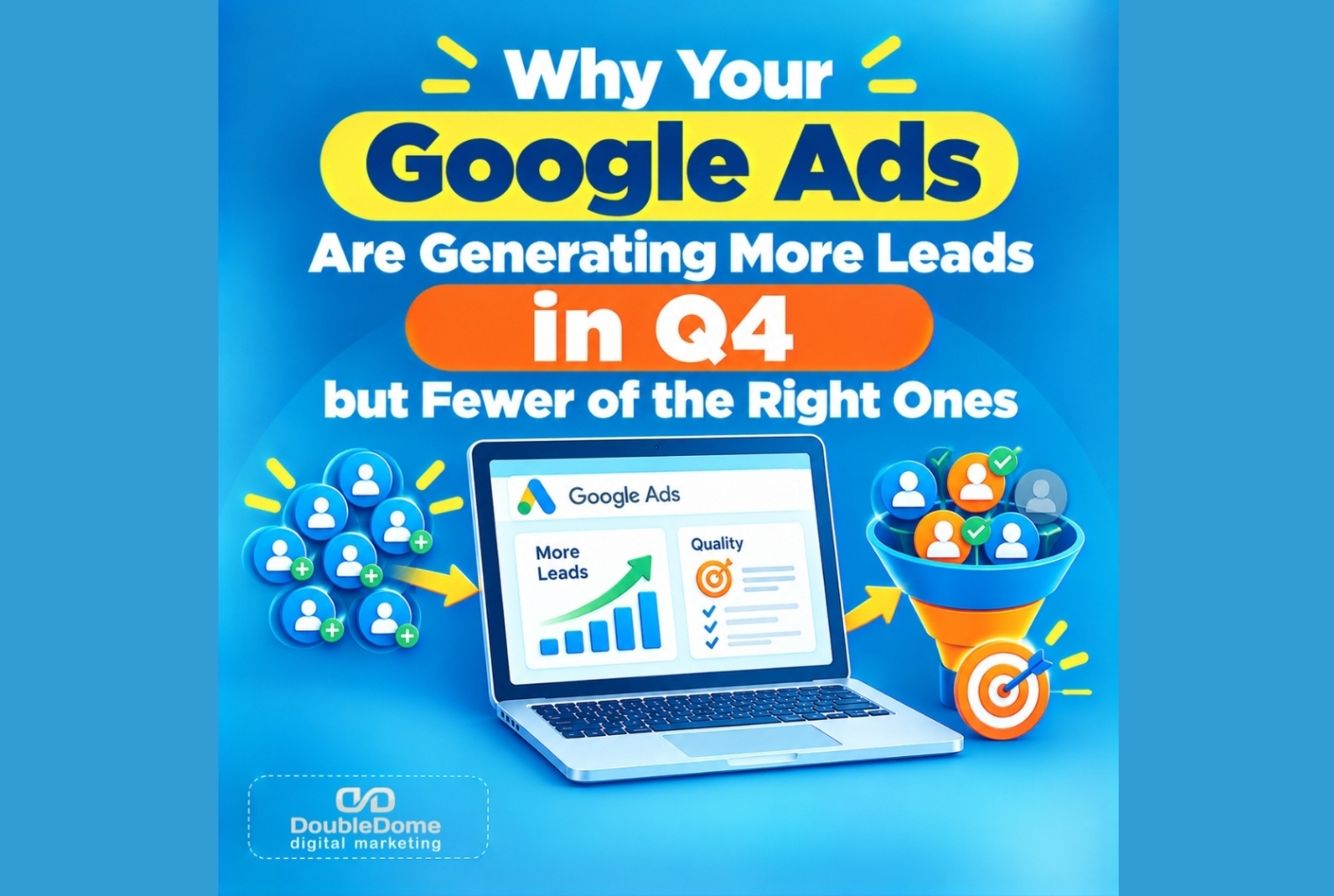
In 2026, privacy regulations, cookie deprecation, and signal loss make client-side tracking pixels vulnerable to bot traffic and superficial form submissions. When ad networks optimize for sheer volume rather than pipeline value, scaling daily ad spend simply buys more low-intent leads. High Q4 lead volume with low lead quality is a targeting problem, not a market problem. We diagnose the specific cause and fix it before you spend another day generating the wrong leads. Conducting a comprehensive Q4 Lead Quality Diagnostic reveals the root causes of campaign drift, giving you clear, reliable data you can trust to present directly to leadership.
Attribution can sometimes feel like a marketing game of Clue. Everyone has a theory, nobody is completely sure, and somehow Google Ads is always in the room.
3 Hidden Causes of Q4 Lead Quality Degradation
When paid search accounts scale during the fourth quarter, Smart Bidding algorithms often introduce targeting leakage across three specific campaign mechanisms:
1. Daily Budget Expansion into Lower-Tier Audiences
When daily campaign spend limits are increased to capture Q4 demand, bidding algorithms run out of high-intent searchers. To fulfill your expanded budget, the system automatically extends ad delivery into lower-tier, adjacent audiences that were previously excluded by tighter constraints.
2. Seasonal Shift in Broad Match Search Queries
Search behavior changes during the holiday season. Broad match keywords that performed reliably in Q3 begin triggering consumer-oriented searches, student research queries, or job seekers looking for end-of-year employment—generating high click volume with zero commercial intent.
3. Remarketing Audience Fatigue and Saturation
During high-traffic quarters, retargeting frequency caps often get overlooked. Prospective buyers see the exact same ad copy repeatedly, causing high-intent decision-makers to tune out while passive web browsers click without intending to buy.
SEO is more like planting an orchard than buying groceries. The payoff can be substantial, but nobody gets apples tomorrow.
Strategic Blueprint: The Q4 Lead Quality Diagnostic Guide
Use this diagnostic framework to identify specific targeting breakdowns and deploy immediate technical corrections:
Q4 Diagnostic & Remediation Matrix
| Symptom Identified | Primary Root Cause | Technical Remediation Action |
| High Form Counts / Zero Discovery Calls | Budget pushing into adjacent audiences. | Transition Smart Bidding to Target ROAS based on CRM offline values. |
| Spike in Non-Commercial Search Terms | Broad match drift from Q4 search patterns. | Apply negative keyword lists; restrict to exact & phrase match. |
| Declining Retargeting Click-Through Rates | Audience saturation & ad fatigue. | Set frequency caps (2–3 impressions/day); refresh Q4 ad creative. |
| Bot Traffic & Fake Email Inbound Leads | Unfiltered client-side form submissions. | Route encrypted CRM milestones via Server-Side OCI Webhooks. |
Many websites collect leads the way a bucket collects water after someone forgot to put the bottom in.
Technical Foundations That Ensure Data You Can Trust
Diagnosing and fixing campaign drift requires backend measurement systems that train ad algorithms on real business value rather than superficial form completions:
- Deploy Server-Side Offline Conversion Tracking (OCI): Connect web contact forms directly to backend CRM sales milestones using server-side offline conversion tracking (OCI). Routing encrypted sales milestones (such as qualified discovery calls or signed deals) directly back to Google Ads trains Smart Bidding models to target real enterprise buyers rather than non-converting bot clicks.
- Embed Machine-Readable Schema Code: Wrap campaign landing pages in valid JSON-LD schema markup. Structuring your backend data ensures AI search engines like ChatGPT and Google Gemini parse your exact capabilities accurately and cite your firm as a Preferred Answer.
- Streamline Intake Form Paths: Reduce conversion friction on landing pages by replacing multi-field forms with a clean 3-field layout (Name, Work Email, Project Scope) paired with an embedded 1-click calendar scheduling tool.
Outsourcing Technical Headaches to Focus on Strategy
Managing negative keyword lists, configuring server-side conversion webhooks, and tuning Smart Bidding models across multiple campaigns requires continuous technical execution. For a busy marketing director, spending hours debugging tracking tags, auditing search query logs, or managing ad scripts is an inefficient use of strategic time. You need a partner who can handle the technical heavy lifting, act as an extra set of hands for your team, and deliver clear, transparent data without hiding behind proprietary jargon.
We act as the trusted technical backbone of your internal marketing team. We remove the headache of managing complex search tech, eliminate tracking gaps, and build automated acquisition systems that deliver high-quality leads. We handle the technical details so you can focus on leading big-picture strategy and securing wins with executive leadership.
Claiming Complete Ownership of Your Year-End Pipeline
Stopping lead quality decay during the fourth quarter does not require cutting your marketing budget or abandoning paid search. Committing your organization to a disciplined Q4 Lead Quality Diagnostic guarantees that your team stops paying for irrelevant traffic and starts capturing high-margin, verified pipeline revenue.
If you are ready to eliminate bad leads, resolve your tracking headaches, and present a clear, data-backed strategy to leadership, let’s analyze your ad accounts together. We will resolve your targeting bottlenecks, deploy server-side offline conversion tracking, and deliver clean data you can trust.
Book a Q4 Lead Quality Diagnostic Session with DoubleDome today.
Frequently Asked Questions
What is a Q4 Lead Quality Diagnostic and why is it essential for fall campaigns?
A Q4 Lead Quality Diagnostic is a technical audit that analyzes Google Ads keyword match types, Smart Bidding parameters, retargeting frequency caps, and CRM conversion tracking. It is essential in Q4 because scaling budgets often cause algorithms to capture low-intent, non-converting audiences.
How does server-side offline conversion tracking (OCI) fix poor lead quality?
Server-side OCI routes encrypted CRM sales milestones (such as qualified discovery calls or signed deals) directly back to Google Ads. This bypasses browser tracking blocks and trains bidding algorithms to target verified buyers rather than superficial form submissions or bot clicks.
How does structured schema markup help campaign landing pages in AI search overviews?
Wrapping landing pages in valid JSON-LD schema markup allows conversational AI search tools like ChatGPT and Google Gemini to parse your exact capabilities, service parameters, and value propositions in milliseconds, citing your firm as a preferred answer in user prompts.