

By Jo Medico
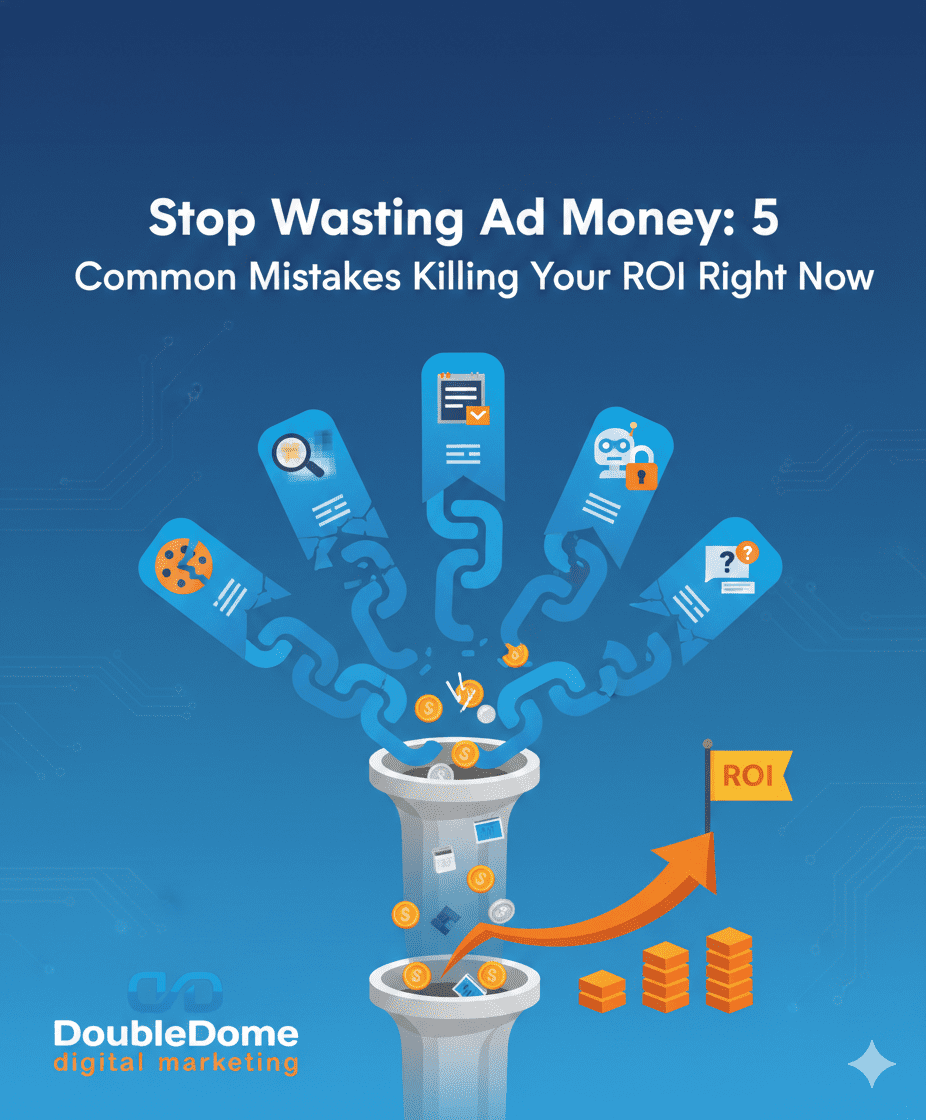
To Stop Wasting Ad Money in 2026, marketers must pivot from cookie-based tracking to first-party data, eliminate “bot-heavy” broad targeting, and replace generic AI copy with human-first messaging. By focusing on lead quality over volume and implementing transparent data modeling, brands can scale efficiently despite modern privacy restrictions.
The 2026 Ad Crisis: Why the “Old Ways” Are Breaking
If you feel like your ad performance has hit a ceiling despite increasing your budget, you aren’t alone. In 2026, the digital advertising landscape has fundamentally shifted. Privacy laws have effectively dismantled traditional tracking, and the “black box” algorithms of major platforms often prioritize their own revenue over your lead quality.
For the precision-focused Marketing Director, the challenge is clear: How do you prove ROI to leadership when the data is fragmented? To Stop Wasting Ad Money, you must move beyond the technical headaches and focus on a strategy that acts as a technical backbone for your team, not a drain on your resources.
1. Relying on “Zombie” Cookies and Broken Tracking
The biggest drain on budgets today is “phantom attribution.” Many teams are still trying to use tracking methods that were phased out years ago. Without a robust first-party data strategy, your ads are essentially flying blind.
The Fix: Implement Server-Side GTM and enhanced conversions. By owning your data stream rather than renting it from a browser, you gain “Data You Can Trust.” This allows you to see the “why” behind every conversion, even in a privacy-first world.
2. The “Quantity Over Quality” Lead Trap
In 2026, the metric that matters is no longer Cost-Per-Click (CPC); it’s Revenue-Per-Lead. If your agency is celebrating 100 new leads but your sales team is complaining that 90 of them are unqualified or bot-generated, you are burning capital.
The Fix: Shift to “Precision Targeting.” Use AI to exclude low-intent patterns and focus spend on high-value “Lookalike” audiences based on your actual customer lifetime value (CLV).
3. Using Generic AI Content That Sounds Robotic
Because AI-generated copy is now everywhere, it has become “invisible” to the human eye. Customers in 2026 crave authenticity. If your ads look like every other generic script generated by a prompt, users will scroll right past.
The Fix: Human-First Content. Use AI for the data-heavy lifting and technical distribution, but ensure your creative has a human soul. Real stories, real pain points, and real empathy are what drive conversions in a saturated market.
4. Hiding Behind “Proprietary” Black Box Systems
Transparency is the antidote to wasted spend. If your current partner hides their work behind “secret sauce” systems that you can’t see into, you can’t verify if they are actually moving the needle.
The Fix: Demand open-book management. You should have 24/7 access to your ad accounts and a dashboard that clearly shows: “We spent $X, and it resulted in $Y of qualified pipeline.”
5. Ignoring the Knowledge Gap in AI-Search Integration
Search is no longer just a list of links; it’s an ecosystem of answers. If your ads aren’t optimized to appear within AI-generated search summaries, you are missing out on the highest-intent traffic available.
The Fix: Modernize your keyword strategy to include “Conversational Intent.” Stop targeting fragments and start targeting the specific questions your ideal customers are asking their AI assistants.
Strategy Comparison: Wasteful vs. Precision Marketing
| Feature | Wasteful Ad Spend | Precision Marketing (2026) |
| Tracking | Third-party cookies (broken) | First-party data / Server-side |
| Messaging | Mass-produced AI “fluff” | Human-first, high-empathy |
| Lead Focus | High volume, low intent | Low volume, high revenue |
| Reporting | Hidden “proprietary” metrics | Transparent, honest data |
| Efficiency | Manual, slow adjustments | Automated technical backbone |
Frequently Asked Questions
How do I Stop Wasting Ad Money if tracking is blocked?
Shift to a first-party data strategy where you collect and upload your own conversion signals directly to the ad platform.
Why am I getting bad leads from my Google Ads?
Likely due to “Broad Match” settings and a lack of negative keyword lists that haven’t been updated to account for 2026 AI search patterns.
What is ‘Human-First’ content in advertising?
It is content that prioritizes emotional resonance and authentic storytelling over keyword density to stand out in an AI-saturated market.
Can I still see my ROAS (Return on Ad Spend) accurately?
Yes, but it requires a “Full-Funnel” attribution model that connects your CRM data back to your original ad clicks.
Scale Your Marketing Without the Headache
You are a pro, and you need a partner who is as smart as the tech. Stop fighting the technical headaches of Google Ads and start focusing on the big-picture strategy. At DoubleDome Digital Marketing, we act as the technical backbone of your team, handling the 2026 tech shifts so you can deliver the big wins.
Ready to see the ‘why’ behind the ‘what’ and get data you can finally trust?