

By Janice Ramos
Starting organic search optimizations in September can still deliver measurable Q4 revenue. By deploying high-impact Late-Start SEO Quick Wins—such as Google Business Profile enhancements, existing content refreshes, structured schema markup, and geo-targeted citation alignment—businesses can secure high-intent leads within 30 to 60 days while building long-term search authority.
When September rolls around, a familiar sense of hesitation creeps into executive planning meetings. You know your business needs more organic leads, but you have been told for years that organic search engine optimization takes 6 to 12 months to show meaningful returns. It is easy to write off Q4 entirely, assuming that any campaign launched today will only benefit next year’s balance sheet.
While building domain authority across brand-new competitive keywords does take time, writing off Q4 organic revenue is a costly mistake.
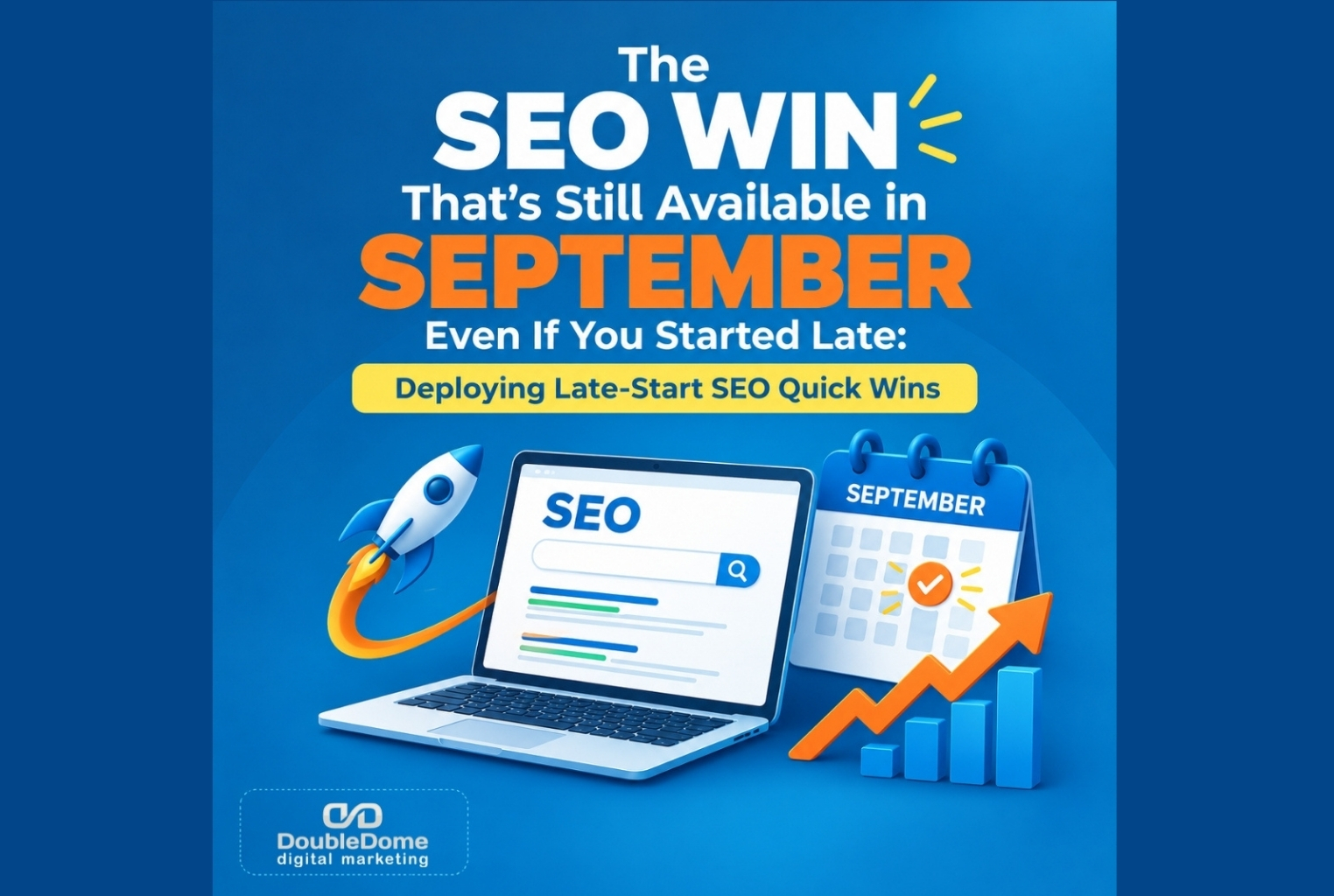
In the business reality of 2026, traditional click traffic is dropping as conversational AI search engines like ChatGPT and Google Gemini natively answer user prompts before a buyer ever clicks a link. You do not need more random web traffic—you need more paying customers. It’s not too late for SEO to contribute to your Q4 pipeline — if you start with the right actions in the right order. We identify the 30–60 day wins and execute them immediately. Deploying strategic Late-Start SEO Quick Wins allows you to capture active, high-intent buyers before the end of the year while establishing a clear, transparent reporting baseline: “I spent $X, and our systems made$Y.”
SEO is more like planting an orchard than buying groceries. The payoff can be substantial, but nobody gets apples tomorrow.
The 3 Fast-Track SEO Wins Available in September
You do not need to rewrite your entire website to capture revenue before Q4 ends. By focusing strictly on low-friction, high-impact assets, you can secure measurable ranking improvements within 30 to 60 days:
1. Google Business Profile & Geo-Citation Optimization (Impact: 2–3 Weeks)
For regional service categories, local map pack placements drive the highest-intent calls. Updating your primary categories, publishing regular posts, verifying address consistency across Bing and Apple Maps, and adding service area zip codes yields visible local search visibility in less than a month.
2. High-Intent Content Refreshes (Impact: 4–6 Weeks)
Instead of publishing brand-new articles from scratch, audit existing pages sitting on pages two or three of search results. Updating old statistics, rewriting meta titles to reflect current buyer problems, and adding high “Information Gain” case metrics signals fresh relevance to search crawlers without waiting months for indexing.
3. Machine-Readable Schema Code Integration (Impact: 3–5 Weeks)
To earn Preferred Answer Status when decision-makers ask conversational AI engines for regional vendor recommendations, your site must feature structured data. Adding Organization, Service, and FAQPage JSON-LD schema code allows search engines and AI assistants to verify your operational credentials in milliseconds.
Attribution can sometimes feel like a marketing game of Clue. Everyone has a theory, nobody is completely sure, and somehow Google Ads is always in the room.
30–60 Day Execution Timeline: Traditional vs. Quick-Win SEO
To see how rapid-response optimizations compare to traditional long-term SEO builds, examine the operational timelines below:
Short-Term SEO Impact Blueprint
| Execution Milestone | Traditional SEO Build (Slow Impact) | Late-Start SEO Quick Wins Standard |
| Primary Focus | Writing 20+ new blog posts from scratch. | Refreshes on high-striking-distance content. |
| Time to First Signal | 6 – 12 months for new authority. | 2 – 4 weeks via local map and schema fixes. |
| AI Extraction Status | Slow; un-indexed pages are ignored by LLMs. | Preferred Answer Status: structured JSON-LD feeds ChatGPT. |
| Reporting Standard | Abstract PDF decks detailing keyword volume. | Simple dashboard: “I spent $X, and our site made$Y.” |
Many websites collect leads the way a bucket collects water after someone forgot to put the bottom in.
Actionable Steps to Capture Q4 Pipeline Revenue
Executing a late-year organic strategy requires three practical, system-level adjustments:
- Target Striking-Distance Keywords First: Identify pages currently ranking between positions 8 and 20 for high-intent search queries. Adding structured H2/H3 headings, internal links, and clear value statements pushes these pages onto page one quickly.
- Streamline Above-the-Fold Messaging: Ensure landing pages immediately answer the buyer’s problem within the first 3 seconds, reducing bounce rates and improving engagement metrics.
- Deploy Server-Side Offline Conversion Tracking (OCI): Connect web forms directly to backend CRM sales milestones using server-side tracking. This provides total financial transparency, showing exactly how organic traffic turns into closed contracts.
Outsourcing Technical Overhead to Scale Your Enterprise
Executing a rapid-response organic campaign involves continuous technical precision—from managing server-side conversion APIs to deploying custom schema architectures across site templates. For an active CEO, playing copywriter, web developer, or data detective is an inefficient use of strategic time. You have zero patience for agency fluff about “algorithm updates.” You want a simple, transparent dashboard built around financial reality.
We act as the trusted technical backbone of your internal growth team. We remove the jargon, eliminate the fluff, and build the automated acquisition systems that turn incoming fall demand into predictable pipeline revenue. We handle the technical backend so you can maintain total focus on leading your company and closing enterprise deals.
Claiming Complete Ownership of Your Market Footprint
The digital channels where enterprise prospects evaluate solutions will continue to evolve, but the core math of business scale remains constant: strategic prioritization eliminates waste, and timing drives profitability. Committing your organization to a systematic Late-Start SEO Quick Wins strategy guarantees that your team stops renting temporary traffic loops and starts building an unyielding corporate growth engine.
If you want to review an honest performance dashboard that directly connects your digital investments to gross profit margins, let’s analyze your search footprint together. We will locate your low-hanging ranking opportunities, repair your tracking gaps, and build a growth engine focused entirely on revenue generation.
Book a September SEO Strategy Session with DoubleDome today.
Frequently Asked Questions
What are Late-Start SEO Quick Wins and how do they generate Q4 leads?
Late-Start SEO Quick Wins are fast-acting optimizations—such as Google Business Profile updates, existing content refreshes, and structured schema implementation—that produce measurable rankings and leads within 30 to 60 days.
Can an SEO campaign launched in September really impact this year’s revenue?
Yes. By focusing on existing pages sitting on page two of search results and optimizing local map profiles, businesses can capture active fall searchers and generate qualified CRM pipeline value before year-end.
How does JSON-LD schema code help my website show up in ChatGPT and Gemini?
Wrapping core service pages in machine-readable JSON-LD schema markup allows conversational AI search tools to parse your exact capabilities, location details, and value propositions in milliseconds, citing your firm as a preferred regional answer.