

By Janice Ramos
Managing multiple business locations during the fourth quarter requires absolute operational data accuracy across search networks. Running a structured Local Listings Audit verifies special holiday hours, synchronizes Name, Address, and Phone (NAP) details, updates local schema markup, and streamlines review responses across Google, Apple Maps, and Bing—preventing lost sales, customer frustration, and sudden ranking drops during peak seasonal foot traffic.
Managing multi-location marketing during the holidays is a high-wire act. Between running paid ad campaigns, preparing seasonal email promotions, and coordinating team schedules, basic listing maintenance often slips through the cracks. Then a common scenario unfolds: a customer checks Google Maps on Thanksgiving weekend, sees that a location is marked “Open,” drives across town, and arrives at a locked door.
The inevitable result is a furious customer leaving a one-star review before they even leave the parking lot.
In the digital landscape of 2026, privacy changes, signal loss, and cookie deprecation make local discovery channels more important than ever. At the same time, conversational AI assistants like ChatGPT, Apple Intelligence, and Google Gemini query local directory nodes directly to answer prompts like “Who is open near me right now?” When algorithms spot conflicting operational hours between your website and your directory profiles, they lose confidence in your data and drop your business from local pack results. Small errors in local listings create big frustration. We audit and update every profile so customers always find the right information. Booking a comprehensive Local Listings Audit eliminates operational data discrepancies, protects brand reputation, and delivers clean data you can trust to present directly to leadership.
Many websites collect leads the way a bucket collects water after someone forgot to put the bottom in.
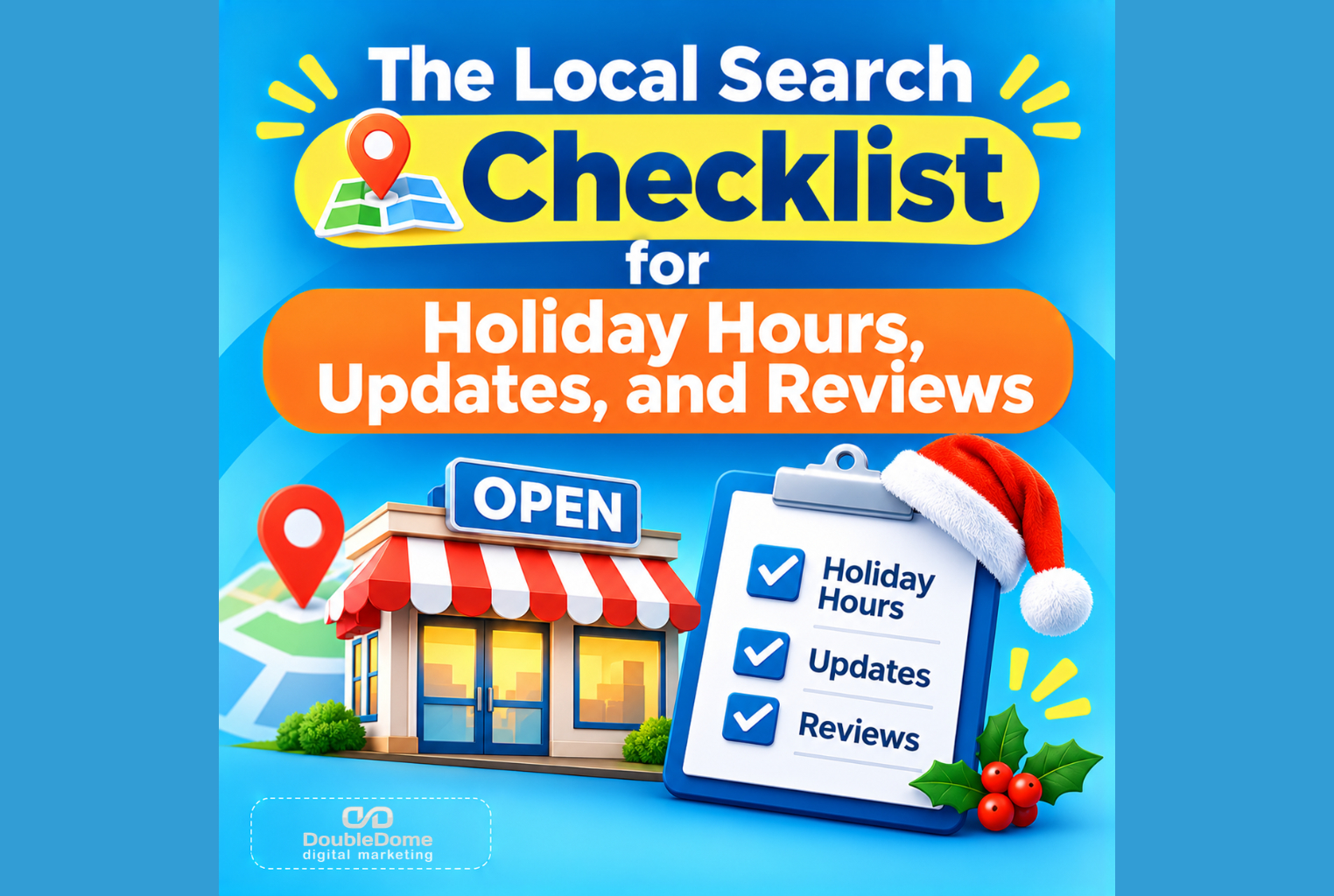
The 5-Point Local Search Checklist for Peak Season
To safeguard foot traffic and local map pack rankings across all branch locations, run through this five-point operational verification framework:
1. Set Special Holiday Hours in Google Business Profile (GBP)
Never alter regular business hours to accommodate temporary holiday schedules. Google’s algorithm may assume your permanent schedule changed, requiring weeks of verification to fix. Instead, use the Special Hours feature to designate custom opening and closing times for Thanksgiving, Black Friday, Christmas Eve, Christmas Day, and New Year’s Day.
2. Verify NAP Uniformity Across Secondary Engines
Google is not the only discovery engine that matters. Siri and Apple Intelligence pull directly from Apple Business Connect, while ChatGPT search functionality relies heavily on Bing Places data. Ensure every branch’s Name, Address, Phone number, and suite formatting are completely identical across all platforms.
3. Publish Short Holiday Updates and Announcements
Publish a concise Google Post and Bing announcement highlighting seasonal order deadlines, emergency service availability, or holiday customer support hours. Active updates signal to local ranking algorithms that the listing is monitored, improving local visibility.
4. Implement a 24-Hour Review Response SLA
Unaddressed negative reviews during high-traffic weeks act as a major conversion deterrent. Establish an internal protocol to address all reviews—both positive and critical—within 24 hours. A thoughtful, human-first response that offers an offline resolution directly counters potential customer churn.
5. Deploy Machine-Readable LocalBusiness JSON-LD Markup
Ensure every branch landing page on your core website features verified schema markup. Feeding structured code to search engines prevents AI models from misquoting your hours in voice searches.
Attribution can sometimes feel like a marketing game of Clue. Everyone has a theory, nobody is completely sure, and somehow Google Ads is always in the room.
Strategic Blueprint: Unmanaged Profiles vs. Local Listings Audit
To understand how directory errors erode local conversion rates, evaluate the operational differences below:
Local Search Data Integrity Matrix
| Operational Factor | Unmanaged Multi-Location Profiles | Local Listings Audit Standard |
| Holiday Hours Setup | Ignored or overwritten; customer visits locked doors. | Special Hours Active: date-specific hours pre-scheduled. |
| Cross-Platform Sync | Conflicting addresses between Google, Bing, and Apple. | 100% Data Uniformity: identical NAP data across platforms. |
| AI Engine Trust Score | Low; conflicting signals cause search bots to skip. | Preferred Answer Status: valid JSON-LD schema feeds LLMs. |
| Review Management | Slow responses; unattended customer complaints pile up. | 24-Hour Human SLA: empathetic, brand-building responses. |
| Attribution Standard | Client-side tracking pixels vulnerable to browser blocks. | Server-Side OCI Tracking: clean, encrypted CRM sales sync. |
SEO is more like planting an orchard than buying groceries. The payoff can be substantial, but nobody gets apples tomorrow.
Technical Foundations That Ensure Data You Can Trust
Keeping local listings accurate requires connecting your physical footprint to reliable digital tracking systems:
- Deploy Server-Side Offline Conversion Tracking (OCI): Connect local phone calls, appointment bookings, and quote requests directly to backend CRM sales records using server-side offline conversion tracking (OCI). This bypasses browser tracking blocks, filters out spam calls, and trains Google Ads algorithms on qualified revenue.
- Embed Machine-Readable Schema Code: Wrap individual location pages in valid JSON-LD schema markup. Structuring your backend code ensures AI search engines like ChatGPT and Google Gemini parse your operating hours accurately and cite your firm as a Preferred Answer.
- Streamline Mobile Booking Paths: Reduce friction for local searchers by embedding a clean 3-field contact layout (Name, Work Email, Project Scope) paired with an interactive 1-click calendar scheduling widget.
Outsourcing Technical Headaches to Focus on Strategy
Synchronizing business listings across dozens of directories, resolving duplicate location flags, updating holiday schema code, and monitoring review feeds requires continuous operational execution. For a busy marketing director, spending hours manually updating business portals or formatting CSV address files is an inefficient use of strategic time. You need a partner who can handle the technical heavy lifting, act as an extra set of hands for your team, and deliver clear, transparent data without hiding behind proprietary jargon.
We act as the trusted technical backbone of your internal marketing team. We remove the headache of managing complex search tech, eliminate tracking gaps, and build automated acquisition systems that deliver high-quality leads. We handle the technical details so you can focus on leading big-picture strategy and securing wins with executive leadership.
Claiming Complete Ownership of Your Local Market Presence
Maintaining foot traffic and local pipeline during the busy holiday season does not require complex new software. Committing your organization to a disciplined Local Listings Audit guarantees that your team stops losing valuable customers to avoidable directory errors and starts capturing high-intent local buyers across every location.
If you are ready to correct listing discrepancies, eliminate technical tracking headaches, and present a clear, data-backed strategy to leadership, let’s review your local profiles together. We will resolve your listing inconsistencies, deploy structured schema markup, and deliver clean data you can trust.
Book an SEO Audit Session with DoubleDome today.
Frequently Asked Questions
What is a Local Listings Audit and why is it essential before the holidays?
A Local Listings Audit is a comprehensive review of a business’s local citations, Google Business Profiles, Apple Business Connect, and Bing Places accounts. It is essential before the holidays because inaccurate hours or mismatched addresses lead to locked-door customer experiences, negative reviews, and reduced local search rankings.
Why does setting Special Hours in Google Business Profile protect search rankings?
Using the Special Hours feature tells Google’s search algorithms that your operational schedule changes are temporary for specific holidays. Overwriting primary business hours can trigger automated re-verification requests or cause algorithms to assume permanent reductions in operating schedule, hurting local visibility.
How does structured LocalBusiness schema code support conversational AI search?
Wrapping location landing pages in valid JSON-LD schema markup allows conversational AI search engines like ChatGPT and Google Gemini to parse your exact operating hours, holiday schedules, and service areas in milliseconds, citing your business as a preferred answer for voice and local queries.