
By Janice Ramos
Executing an October Full-Site SEO Audit identifies critical technical errors, content quality bottlenecks, and structured data gaps across your entire web architecture before peak November search traffic hits. By repairing crawl errors, optimizing high-intent pages, and deploying machine-readable schema in October, B2B organizations ensure search engines and AI engines index their capabilities in time to capture fourth-quarter revenue.
Over the course of a year, most B2B websites undergo dozens of incremental updates. Marketing teams publish new blog posts, adjust service page copy, update pricing forms, and launch targeted ad campaigns. However, optimizing individual pages in isolation without ever inspecting your full site health creates hidden technical friction.
When October arrives, unaddressed site issues quietly siphon off high-intent search traffic right when buying activity peaks.
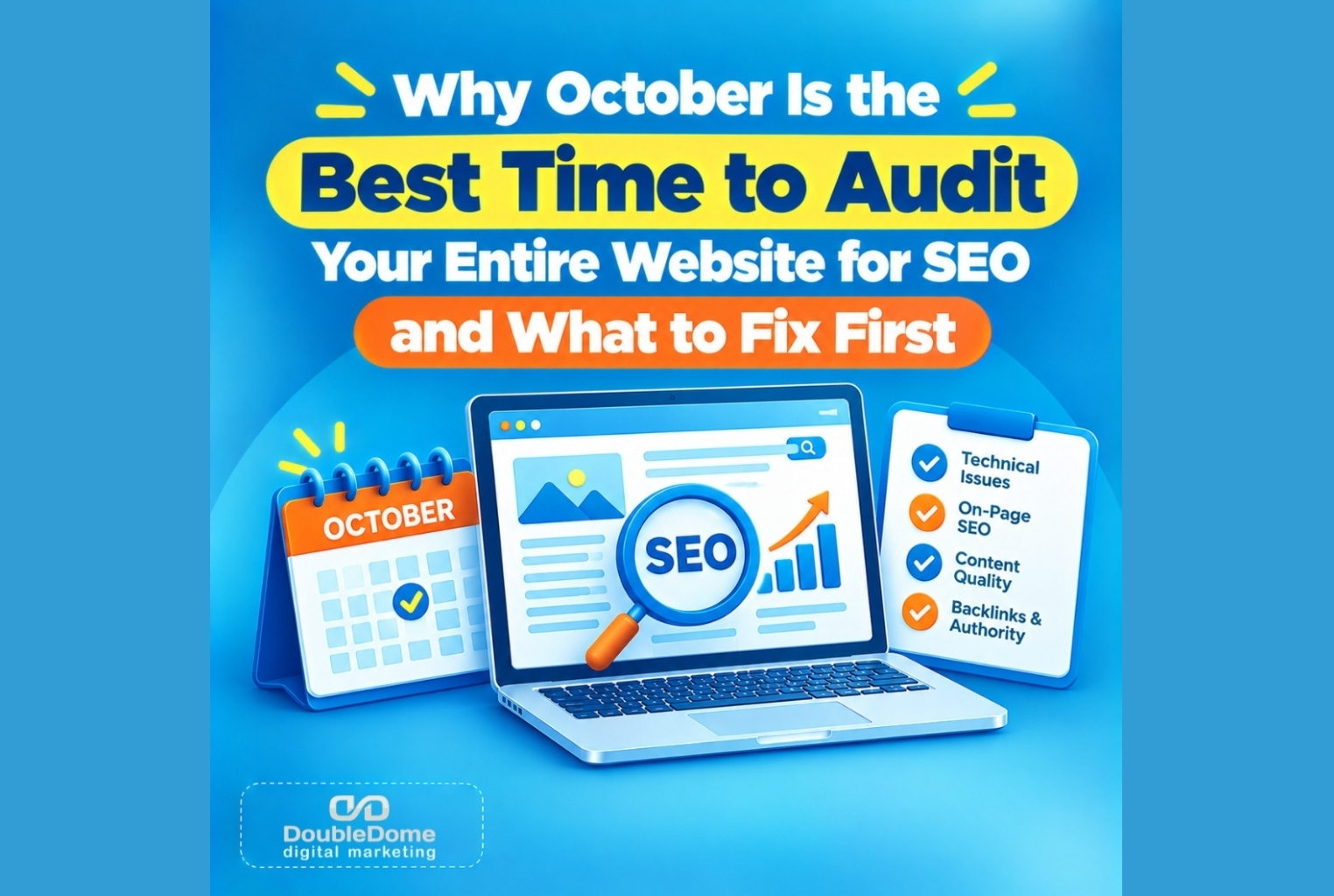
In the digital business reality of 2026, privacy changes, signal loss, and cookie deprecation make relying solely on surface-level ad clicks or flawed attribution pixels a major risk. Meanwhile, conversational AI search assistants natively summarize vendor capabilities directly on screen before a prospect ever clicks a link. You need clean data you can trust and a website built to perform. A full website SEO audit in October produces November results. We audit every page, prioritize every fix, and execute the highest-impact improvements before your November traffic peaks. Deploying a structured October Full-Site SEO Audit resolves site-wide bottlenecks, aligns your infrastructure with AI search engines, and delivers a clear, revenue-focused roadmap to executive leadership.
SEO is more like planting an orchard than buying groceries. The payoff can be substantial, but nobody gets apples tomorrow.
The 4 Pillars of a Comprehensive October SEO Audit
To ensure your web architecture is fully optimized for both human visitors and conversational AI crawlers before November, run your site through this four-part diagnostic framework:
1. Technical Health & Indexing Security
- Diagnostic Focus: Uncover 404 crawl errors, broken redirects, mobile usability flaws, and Core Web Vitals bottlenecks.
- Why It Matters: Search engines penalize sites with slow load speeds or crawling dead-ends, wasting search engine crawl budgets before key buying weeks.
2. Content Quality & Keyword Cannibalization
- Diagnostic Focus: Identify thin pages, duplicate content blocks, and instances where multiple blog posts compete for the exact same commercial search terms.
- Why It Matters: Competing internal pages confuse search engines, diluting domain authority and dropping high-intent service hubs off page one.
3. On-Page Structure & Conversion Clarity
- Diagnostic Focus: Audit meta titles, descriptions, and H1-H3 header hierarchies across all core service destination pages.
- Why It Matters: Including clear value propositions and low-friction calls to action in your meta tags improves click-through rates (CTR) directly from search results within two to three weeks.
4. Authority Architecture & Machine-Readable Schema
- Diagnostic Focus: Validate internal linking paths from high-authority blog posts to core commercial pages, and inspect backend JSON-LD schema blocks.
- Why It Matters: Conversational AI engines like ChatGPT and Google Gemini rely on valid
Organization,Service, andFAQPageschema markup to parse your capabilities and cite your firm as a Preferred Answer.
Attribution can sometimes feel like a marketing game of Clue. Everyone has a theory, nobody is completely sure, and somehow Google Ads is always in the room.
Self-Audit Guide: Category Framework & Diagnostics
Use this structured diagnostic checklist to evaluate your digital footprint before year-end buying surges begin:
October Audit Diagnostic Blueprint
| Audit Pillar | Diagnostic Focus Area | Recommended Free Diagnostic Tools | Expected Fix Impact Timeline |
| Technical Health | Mobile load speed & crawl errors | Google Search Console & PageSpeed Insights | 1 to 2 Weeks |
| Content Quality | Cannibalization & thin content | Screaming Frog (Free Tier) & Search Console | 2 to 3 Weeks |
| On-Page Setup | Meta title CTR & H1-H3 structure | Google Search Console Performance Report | 2 to 3 Weeks |
| Authority & Schema | Internal link paths & JSON-LD code | Schema.org Validator & Rich Results Test | 3 to 4 Weeks |
Many websites collect leads the way a bucket collects water after someone forgot to put the bottom in.
Technical Foundations That Deliver Data You Can Trust
A site audit must extend beyond basic HTML code to ensure your backend analytics and lead capture systems operate flawlessly:
- Deploy Server-Side Offline Conversion Tracking (OCI): Connect web contact forms directly to backend CRM sales milestones using server-side offline conversion tracking (OCI). This bypasses browser tracking blocks, filters out bot click noise, and routes real conversion data back to Google Ads to train Smart Bidding algorithms.
- Streamline Intake Form Paths: Reduce conversion friction on high-traffic landing pages by replacing lengthy multi-field forms with a clean 3-field layout (Name, Work Email, Project Scope) paired with an embedded 1-click calendar scheduling tool.
- Standardize Entity Data Across Directories: Ensure your company name, address, phone number, and primary service definitions match identically across Google Business Profile, Bing Places, Apple Maps, and trade directories.
Outsourcing Technical Headaches to Focus on Strategy
Conducting a site-wide technical audit, fixing crawl errors, deploying custom JSON-LD schema, and configuring server-side conversion webhooks requires technical precision. For a busy marketing director, spending hours debugging code, auditing webhooks, or managing site scripts is an inefficient use of strategic time. You need a partner who can handle the technical heavy lifting, act as an extra set of hands for your team, and deliver clear, transparent data without hiding behind proprietary jargon.
We act as the trusted technical backbone of your internal marketing team. We remove the headache of managing complex search tech, eliminate tracking gaps, and build automated acquisition systems that deliver high-quality leads. We handle the technical details so you can focus on leading big-picture strategy and securing wins with executive leadership.
Claiming Complete Ownership of Your Year-End Traffic
Capturing maximum fourth-quarter revenue requires stepping back from piecemeal page updates and inspecting your entire digital asset as a unified growth engine. Committing your organization to a disciplined October Full-Site SEO Audit guarantees that your team stops defending hidden technical site errors and starts driving predictable, high-margin pipeline revenue.
If you are ready to resolve your site bottlenecks, eliminate technical tracking headaches, and present a clear, data-backed roadmap to leadership, let’s audit your entire site together. We will resolve your crawl errors, deploy machine-readable schema, and deliver clean data you can trust.
Book an October Full-Site SEO Audit Session with DoubleDome today.
Frequently Asked Questions
What is an October Full-Site SEO Audit and why is October the ideal time to execute it?
An October Full-Site SEO Audit is a diagnostic evaluation of your website’s technical health, content quality, on-page optimization, and JSON-LD schema markup. October is the ideal time because fixes executed in October index in time to capture peak November and December commercial search traffic.
How does server-side offline conversion tracking (OCI) support website SEO audits?
Server-side OCI routes encrypted CRM sales milestones (such as qualified calls or signed contracts) directly back to your reporting dashboards. This bypasses browser tracking blocks, giving you verified data to prove exact organic marketing ROI to executive leadership.
How does structured schema markup help audited websites appear in AI search?
Wrapping core service copy in valid JSON-LD schema markup allows conversational AI search tools like ChatGPT and Google Gemini to parse your exact capabilities, service parameters, and value propositions in milliseconds, citing your firm as a preferred answer in user prompts.