

By Janice Ramos
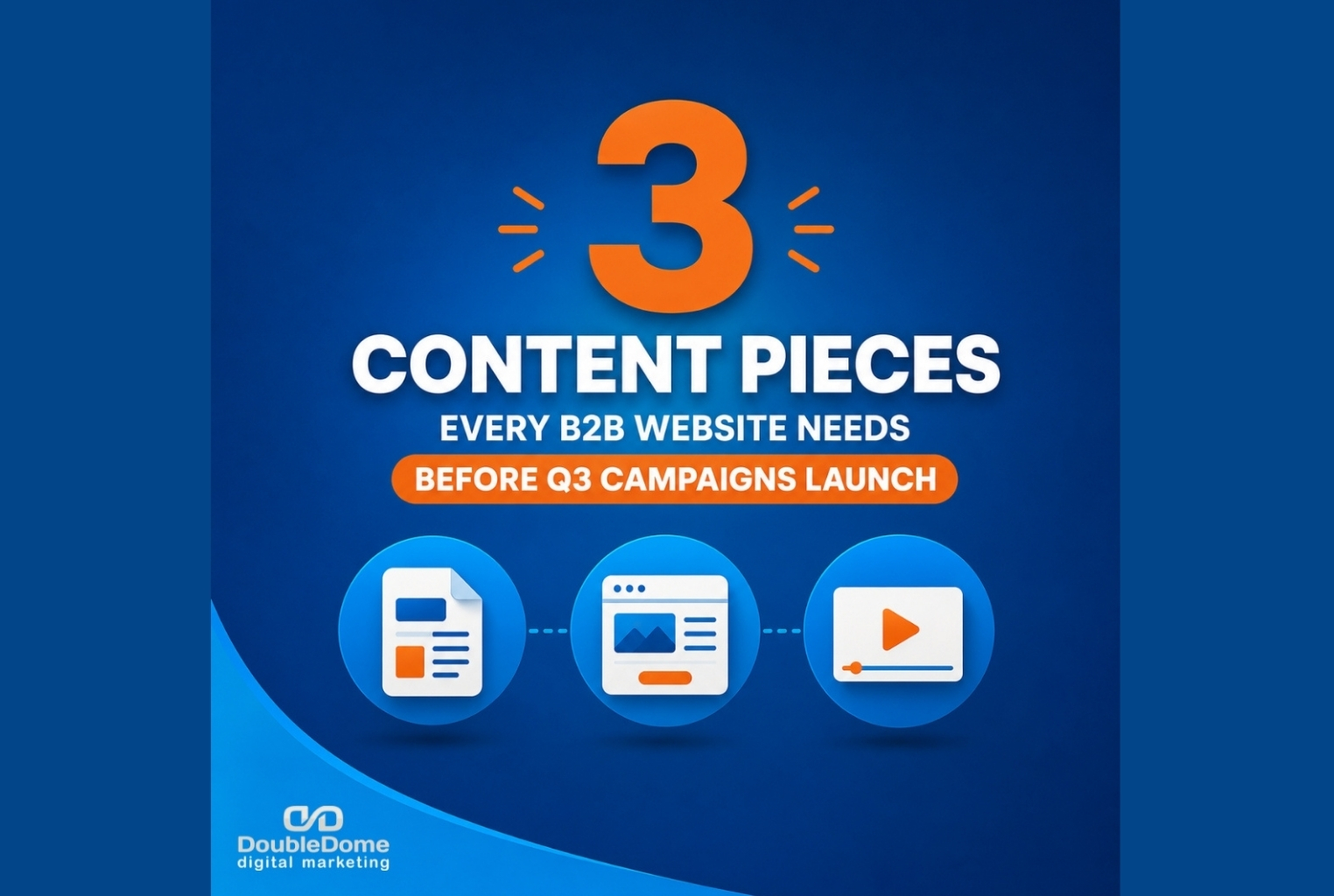
Before launching Q3 marketing campaigns, B2B websites must install three foundational content assets to convert incoming traffic: a category comparison page to win evaluation-stage buyers, a machine-readable client case study to prove ROI, and a structured FAQ hub to earn citations in AI search assistants like ChatGPT and Google Gemini.
Every year, enterprise decision-makers prepare to launch mid-year demand campaigns with significant budget allocations. They approve targeted ad groupings, scale outbound email sequences, and set aggressive revenue expectations for the third quarter. Yet, when the paid traffic begins flowing, inbound contract conversions stall.
The underlying problem isn’t the ad targeting—it’s the destination. Driving high-intent B2B traffic to a website that lacks foundational conversion assets is like pouring water into a bucket with no bottom.
In the business landscape of 2026, traditional click volume is dropping as AI models answer consumer questions natively before a buyer ever visits your domain. You don’t need more random traffic—you need more customers. If you are tired of agencies offering vague excuses about “algorithm updates” and want a simple dashboard that proves “I spent $X, and our systems made$Y,” you must ensure your site possesses absolute Q3 Content Readiness. Before deploying another dollar into paid campaigns, your digital ecosystem must contain three specific content assets designed to turn clicks into pipeline revenue.
Many websites collect leads the way a bucket collects water after someone forgot to put the bottom in.
The 3 Content Assets Required for Q3 Campaign Success
When buyers click through your Q3 ads, they are actively evaluating options and identifying potential risks. If your site offers only generic product descriptions or thin blog posts, those prospects exit immediately. Installing these three core content pieces creates an automated infrastructure that captures intent at every evaluation stage:
1. The Category Comparison Page (“Our Approach vs. The Standard Approach”)
Evaluation-stage buyers rarely ask, “What is this service?” They ask, “Why should I choose your methodology over the status quo or your top competitors?”
- The Format: A direct, side-by-side comparison page that contrasts your proprietary system against legacy industry alternatives. Focus on structural differences, pricing transparency, tracking models, and real revenue outcomes rather than superficial feature lists.
- Why AI Engines Love It: AI recommendation tools like Perplexity and Gemini constantly look for objective comparison tables to answer user queries about vendor selection.
- Production Timeline: 5 to 7 business days.
2. The Machine-Readable Client Results Case Study
Generic testimonials like “They were great to work with” do not close B2B contracts. Decision-makers need concrete proof of financial performance.
- The Format: A deeply detailed case study formatted for both human readers and AI crawlers. It must highlight hard metrics—such as percentage return on ad spend, pipeline dollar valuations, and exact implementation timelines—supported by first-person executive quotes.
- Why AI Engines Love It: Generative engines scan for high “Information Gain”—original data sets and specific figures that prove verified industry authority.
- Production Timeline: 7 to 10 business days.
3. The Comprehensive FAQ & Objection-Handling Hub
Before signing a contract or booking a strategy call, enterprise buyers search for answers to specific risk-related questions: contract lengths, onboarding friction, data security, and attribution tracking.
- The Format: A clean, single-page knowledge hub addressing the top 10 questions buyers ask during sales calls. Each answer must be concise (40–60 words) and embedded with technical schema.
- Why AI Engines Love It: Wrapping short, direct answers in valid FAQPage JSON-LD schema allows conversational search bots to parse your data instantly and cite your brand as the preferred answer.
- Production Timeline: 3 to 5 business days.
Attribution can sometimes feel like a marketing game of Clue. Everyone has a theory, nobody is completely sure, and somehow Google Ads is always in the room.
Content Infrastructure Comparison: Campaign Readiness Matrix
To see how an engineered content foundation protects your ad spend compared to traditional ad setups, look at how incoming traffic behaves under both models:
| Performance Variable | Legacy Campaign Launch (High Leakage) | Complete Q3 Content Readiness |
| Landing Destination | Generic homepage or thin, single-offer form pages. | Tailored comparison pages and data-backed case studies. |
| AI Recommendation Rate | Low; thin text gets filtered out by conversational tools. | Preferred Answer Status; structured FAQ schema drives LLM citations. |
| Conversion Tracking Path | Basic browser pixels vulnerable to data privacy blocks. | Secure, server-side data logs linking content reads to CRM revenue. |
| Reporting Standard | PDF decks highlighting vanity metrics like ad impressions. | Clear, honest reporting showing exact ad spend vs. closed contracts. |
SEO is more like planting an orchard than buying groceries. The payoff can be substantial, but nobody gets apples tomorrow.
Stop Renting Growth and Start Owning Your Pipeline
Launching Q3 campaigns without the right content infrastructure creates unnecessary budget waste. Your paid ads might bring interested prospects to your domain, but without authoritative comparison content, clear proof of results, and structured answers to their objections, those visitors leave without taking action.
Q3 campaigns need Q3-ready content to convert the traffic they drive. We build the three pieces that make every campaign dollar work harder. By establishing a systematic standard of Q3 Content Readiness, you stop renting temporary visibility from search networks and start owning a permanent digital asset that generates leads around the clock.
Outsourcing Technical Overhead to Scale Your Enterprise
Executing a complete content infrastructure requires continuous technical precision—from writing valid JSON-LD schemas to configuring server-side tracking lines (OCI) that connect campaign interactions directly to your backend CRM. For a CEO focused on expanding operations, playing web developer or managing copy revisions is an inefficient use of strategic time.
We serve as the trusted technical backbone of your internal growth department. We remove the technical headaches, eliminate agency fluff, and build the automated content systems that turn incoming traffic into predictable pipeline revenue. We handle the technical infrastructure so you can focus on leading your business and closing high-value deals.
Book an SEO Review Session with DoubleDome today.
Frequently Asked Questions
What is Q3 Content Readiness, and why is it essential for B2B ad campaigns?
Q3 Content Readiness is the process of building essential website assets—comparison pages, case studies, and structured FAQ hubs—to ensure paid ad traffic converts into pipeline revenue rather than bouncing.
How do category comparison pages help my business rank in ChatGPT and Gemini?
Conversational AI tools favor objective comparison data tables to answer vendor queries. Providing structured comparison content helps these engines identify and cite your brand as the preferred answer.
Can I accurately track lead conversions from case study pages if users block cookies?
Yes, deploying secure, server-side offline conversion tracking (OCI) routes encrypted sales milestones directly from your internal CRM back to your reporting interface, bypassing browser privacy blocks.