

By Paras Jain
A high bounce rate is a loud signal that your digital growth engine has a systemic leak. It typically indicates a disconnect between user intent and page experience, often caused by slow speeds, irrelevant traffic, or poor mobile utility. Effective Bounce Rate Optimization ensures that the high-intent leads you pay for actually convert into revenue rather than immediate exits.
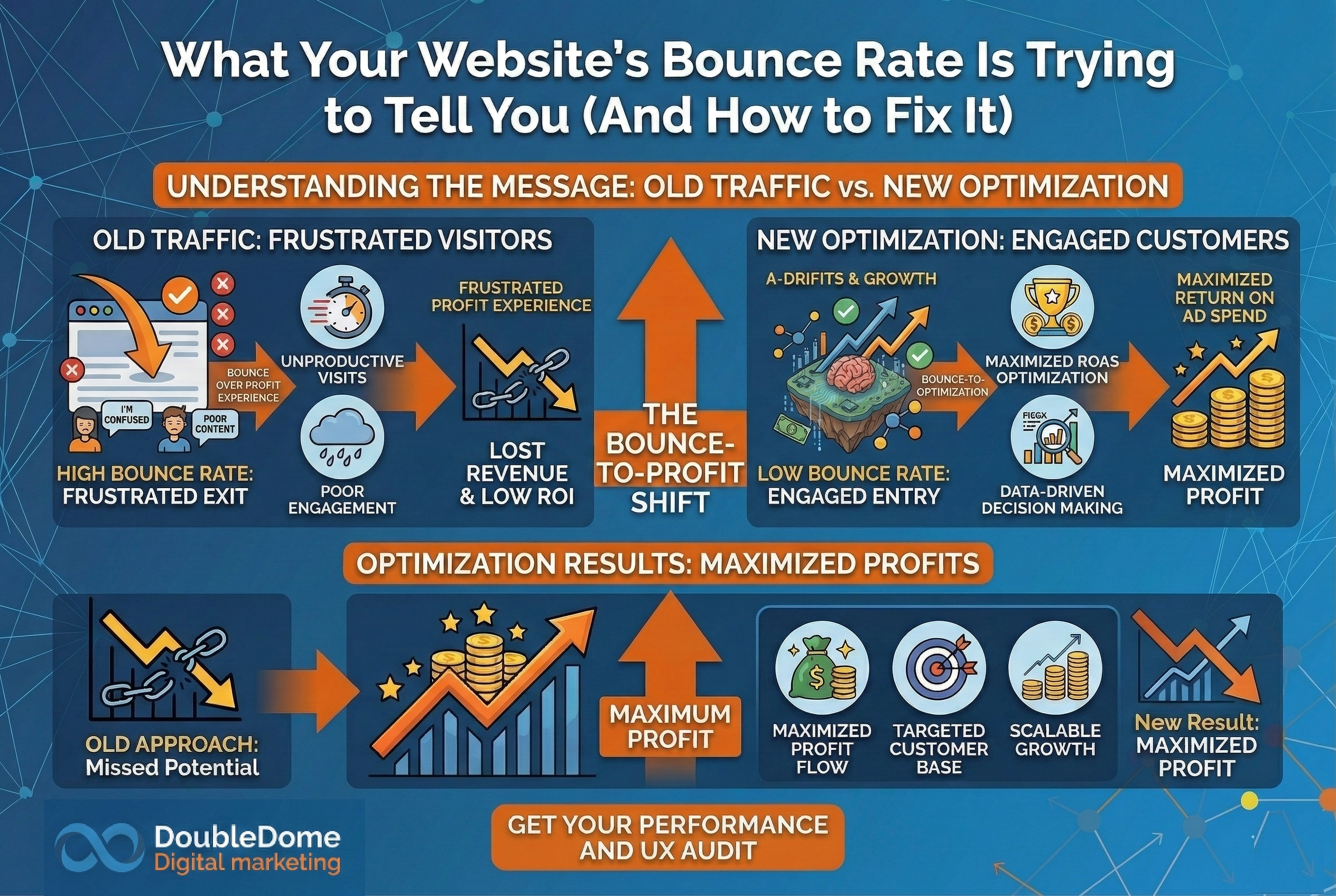
The Silent Revenue Killer: Why Visitors Are Vanishing
You are looking at your analytics dashboard, and the numbers are jarring. You see a high volume of traffic hitting your site, but the “Bounce Rate” column is a sea of red. Most visitors are leaving within seconds of arrival. For a CEO focused on scaling a predictable system, this is the ultimate red flag: you are pouring capital into a bucket with a massive hole in the bottom.
In 2026, the “Old Ways” of just chasing rankings are dead. Being #1 on Google is irrelevant if the people who click your link feel an immediate “mismatch” and hit the back button. If you are spending $15k a month on marketing, a high bounce rate means you are effectively subsidizing your competitors by training search engines that your site isn’t the “Preferred Answer.”
To own your market, you must stop the guesswork. You don’t need more “fluff” about algorithm updates; you need a technical backbone that keeps your leads engaged until they close.
The Guru Insight: Diagnosing the “Why” Behind the Exit
A high bounce rate isn’t a mystery; it’s a symptom with predictable causes. In 2026, users have zero patience for friction. If your site doesn’t speak “AI-speed” or “Human-intent” instantly, it’s invisible.
Strategic Bounce Rate Optimization requires diagnosing which of the five “Revenue Leaks” is draining your budget:
- Technical Friction: Your site feels fast on your office fiber, but on a mobile device with 5G, it’s sluggish. If it takes longer than 2.5 seconds to load, 40% of your leads are gone.
- The Messaging Mismatch: Your ads promise one thing, but your landing page talks about another. If the “fluff” filter isn’t passed in three seconds, the user bounces.
- Irrelevant Traffic: You are ranking for the wrong keywords. You’re attracting “information seekers” when you need “buyers.”
- The Mobile UX Gap: Broken layouts and tiny buttons make it impossible for 65% of your audience to take action.
- Answer Engine Saturation: If an AI tool like ChatGPT or Gemini gives the user a better summary than your own page, they have no reason to stay.
Moving Beyond “Rented” Traffic to Owned Results
Most business owners are terrified that their ads are being clicked by bots or low-quality prospects. A high bounce rate often confirms this fear. When you move toward a system of ownership, you prioritize quality over quantity.
By implementing Bounce Rate Optimization, you transform your website from a passive brochure into a precision-engineered conversion tool. You stop “renting” clicks that bounce and start building a brand that AI search engines actually recommend. This is how you achieve the “Spent $X, Made $Y” dashboard that every scale-oriented CEO deserves.
Comparison: The “Noise” Model vs. The Optimized System
| Feature | The Legacy “Noise” Model | The Optimized Growth System |
| Primary Goal | High Traffic Volume | High Conversion Quality |
| User Experience | Desktop-First / Generic | Mobile-First / Intent-Matched |
| Data Tracking | Clicks and Impressions | Revenue and Retention |
| Bounce Rate Status | High (50%+) | Optimized (Under 35% for high-intent) |
| AI Perception | Low Trust / High Friction | Preferred Answer / Cited Source |
| Business Impact | Wasted Spend / Guesswork | Scalable Growth / Total Transparency |
FAQ: Stopping the Digital Bleeding
What is a “good” bounce rate in 2026?
For high-intent landing pages, you should aim for 25-40%. Anything above 60% usually indicates a technical failure, a mobile UX issue, or a fundamental mismatch between the ad and the page.
Does a high bounce rate hurt my SEO and AI rankings?
Absolutely. Search engines and AI models use “pogo-sticking” (users bouncing back to the search page) as a signal that your site is not helpful. High bounce rates will cause you to lose your status as a “Preferred Answer.”
How can I quickly improve my bounce rate?
Start with technical speed. Compressing images and optimizing server-side response times often yields an immediate 10-15% improvement in retention.
Scale Your Marketing Without the Headache
In 2026, you don’t need more traffic—you need more customers. Don’t let a high bounce rate drain your potential. You need a partner who acts as the technical backbone of your team, delivering high-quality leads and clear, honest data.
At DoubleDome Digital Marketing, we diagnose exactly why visitors are bouncing and fix the root cause. Whether it’s technical, messaging, or traffic quality, we find your specific problem and solve it. We handle the 2026 tech shifts so you can focus on the big wins. No jargon, just revenue.