

By Sonny Day
High-intent B2B website abandonment at the final contact or booking stage is driven by three specific conversion friction points: excessive form fields, response time uncertainty, and post-submission decision anxiety. Executing a targeted Final-Step Abandonment Fix—shortening forms to under four fields, publishing explicit response time pledges, and adding a “what to expect next” visual roadmap—reduces form drop-off by 20% to 40% during peak fourth-quarter buying cycles.
Few marketing scenarios are more frustrating than watching high-intent traffic navigate your entire website, review your service offerings, open your contact page, and then close the browser tab. You spent significant ad capital and strategic effort attracting motivated enterprise buyers during the fourth quarter, only to lose them at the very moment they were most ready to engage.
The Q4 lead that almost converted is your most expensive loss.
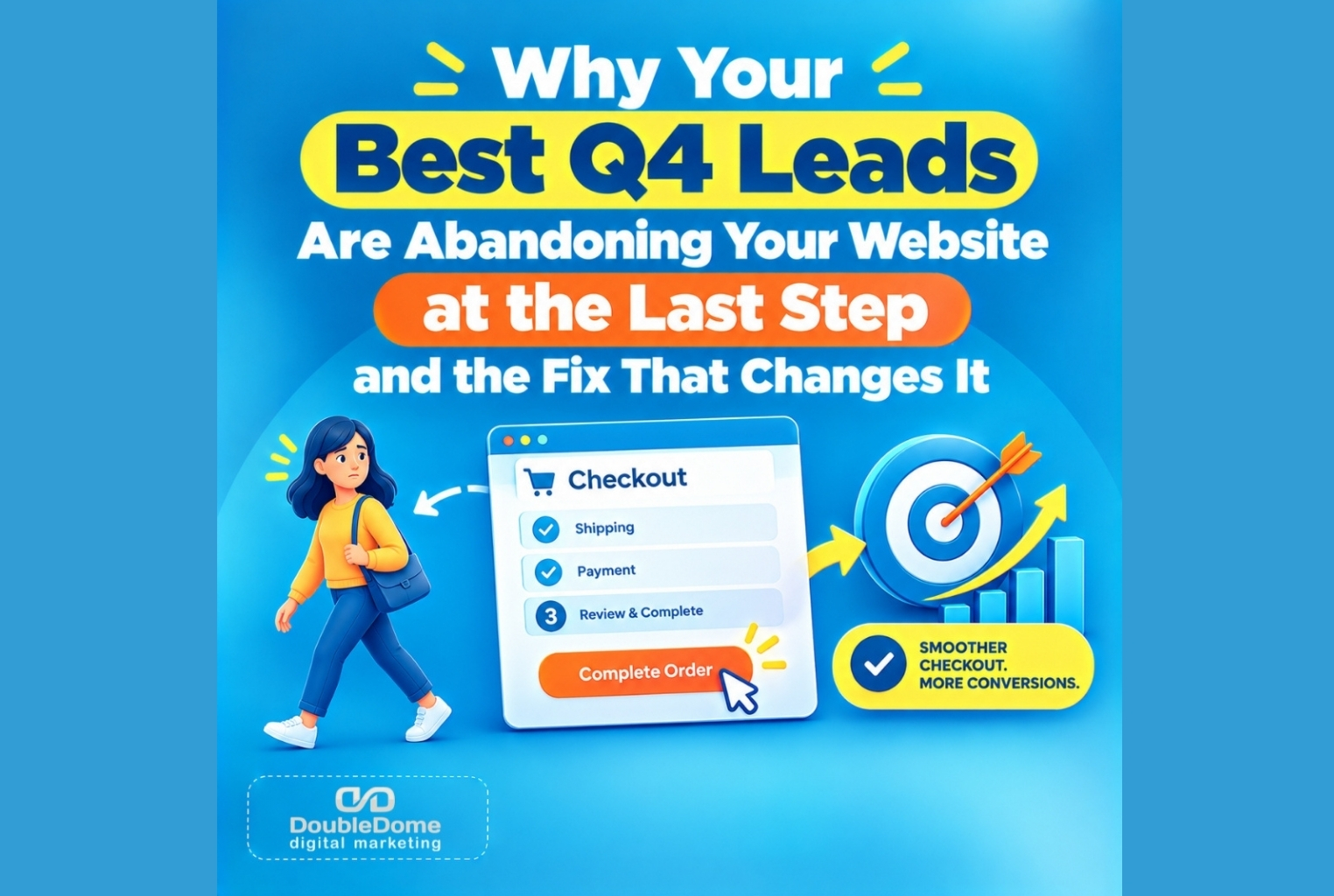
In 2026, privacy regulations, cookie deprecation, and browser signal loss mean you can no longer rely on retargeting cookies to chase those lost visitors across the web. You need a site that converts high-value traffic on the first visit. We identify exactly which friction point is causing the abandonment and remove it before another high-intent visitor leaves. Executing a systematic Final-Step Abandonment Fix removes conversion obstacles, aligns your intake paths with executive expectations, and provides clear, reliable data you can trust to present directly to leadership.
Many websites collect leads the way a bucket collects water after someone forgot to put the bottom in.
The 3 Conversion Friction Points Causing Final-Step Drop-Off
When qualified B2B prospects abandon your contact or calendar booking pages, it is rarely due to a lack of interest. Instead, they hit one of three predictable operational friction points:
1. Form Length Fatigue (Cognitive Drag)
First-touch contact forms asking for seven to ten inputs (Company Size, Annual Revenue, Phone Number, Job Title, Street Address) exceed a busy executive’s patience threshold. Every additional form field lowers conversion rates exponentially during high-stress Q4 planning windows.
2. Response Time Uncertainty
Busy decision-makers fear that submitting a form will launch their information into an unmonitored digital abyss—or worse, trigger an immediate deluge of aggressive sales calls. Without an explicit commitment regarding when and how your team responds, prospects hesitate to hit submit.
3. Post-Submission Decision Anxiety
High-intent buyers hesitate when they cannot visualize the next step. If your booking page fails to explain what happens after submission, prospects delay taking action to avoid locking themselves into an unknown onboarding process.
Attribution can sometimes feel like a marketing game of Clue. Everyone has a theory, nobody is completely sure, and somehow Google Ads is always in the room.
Strategic Blueprint: The Final-Step Abandonment Fix Guide
To recover lost pipeline value and increase intake page conversion velocity, deploy these three targeted fixes:
Abandonment Remediation Matrix
| Identified Friction Point | Root Cause Analysis | Strategic Fix & Technical Action |
| Form Length Fatigue | Excessive required fields creating cognitive drag. | Form Reduction: restrict fields to Name, Work Email, and Project Scope. |
| Response Uncertainty | Absence of concrete follow-up commitments. | Response Time Pledge: publish a explicit “15-Minute Response SLA” badge. |
| Decision Anxiety | Unclear post-submission onboarding process. | “What to Expect” Roadmap: embed a 3-step visual workflow beside the form. |
SEO is more like planting an orchard than buying groceries. The payoff can be substantial, but nobody gets apples tomorrow.
Technical Foundations That Ensure Data You Can Trust
Eliminating final-step drop-off requires backend technical infrastructure that tracks real business revenue while satisfying modern AI search engines:
- Deploy Server-Side Offline Conversion Tracking (OCI): Connect web contact forms directly to backend CRM sales milestones using server-side offline conversion tracking (OCI). This bypasses browser tracking blocks, filters out bot click noise, and routes real conversion data back to Google Ads to train Smart Bidding algorithms.
- Embed Machine-Readable Schema Code: Wrap campaign contact pages and calendar booking tools in valid
Organization,Service, andFAQPageJSON-LD schema markup. Structuring your backend data ensures AI search engines like ChatGPT and Google Gemini parse your exact capabilities accurately and cite your firm as a Preferred Answer. - Integrate 1-Click Calendar Scheduling: Replace static email forms with an embedded, interactive calendar tool that allows motivated decision-makers to select an immediate discovery call time without waiting for email back-and-forth.
Outsourcing Technical Headaches to Focus on Strategy
Optimizing form UX, deploying custom JSON-LD schema, and setting up server-side conversion webhooks requires technical precision. For a busy marketing director, spending hours debugging code, auditing form drop-off analytics, or managing site scripts is an inefficient use of strategic time. You need a partner who can handle the technical heavy lifting, act as an extra set of hands for your team, and deliver clear, transparent data without hiding behind proprietary jargon.
We act as the trusted technical backbone of your internal marketing team. We remove the headache of managing complex search tech, eliminate tracking gaps, and build automated acquisition systems that deliver high-quality leads. We handle the technical details so you can focus on leading big-picture strategy and securing wins with executive leadership.
Claiming Complete Ownership of Your Year-End Pipeline
Stopping final-step website abandonment during the fourth quarter does not require a costly, multi-month website redesign. Committing your organization to a disciplined Final-Step Abandonment Fix guarantees that your team stops losing qualified buyers at the goal line and starts converting high-margin pipeline revenue.
If you are ready to eliminate conversion bottlenecks, resolve your tracking headaches, and present a clear, data-backed strategy to leadership, let’s audit your intake pages together. We will resolve your abandonment friction points, deploy server-side tracking, and deliver clean data you can trust.
Book a Website Optimization Session with DoubleDome today.
Frequently Asked Questions
What is a Final-Step Abandonment Fix and why is it essential in Q4?
A Final-Step Abandonment Fix is a targeted optimization process that eliminates form friction, response uncertainty, and commitment anxiety on contact pages. It is essential in Q4 because high-intent buyers operate on strict deadlines and abandon long or vague intake paths for more transparent competitors.
How does reducing form fields to three inputs improve conversion rates?
Limiting intake forms to three essential inputs (Name, Work Email, Project Scope) removes cognitive drag for busy executives, dramatically lowering form drop-off while still collecting the data needed to initiate a discovery call.
How does server-side offline conversion tracking (OCI) support form optimization?
Server-side OCI routes encrypted CRM milestones (such as qualified calls or signed deals) directly back to campaign dashboards. This bypasses browser tracking blocks, ensuring ad algorithms optimize for verified, paying clients rather than superficial form attempts.