

By Paras Jain
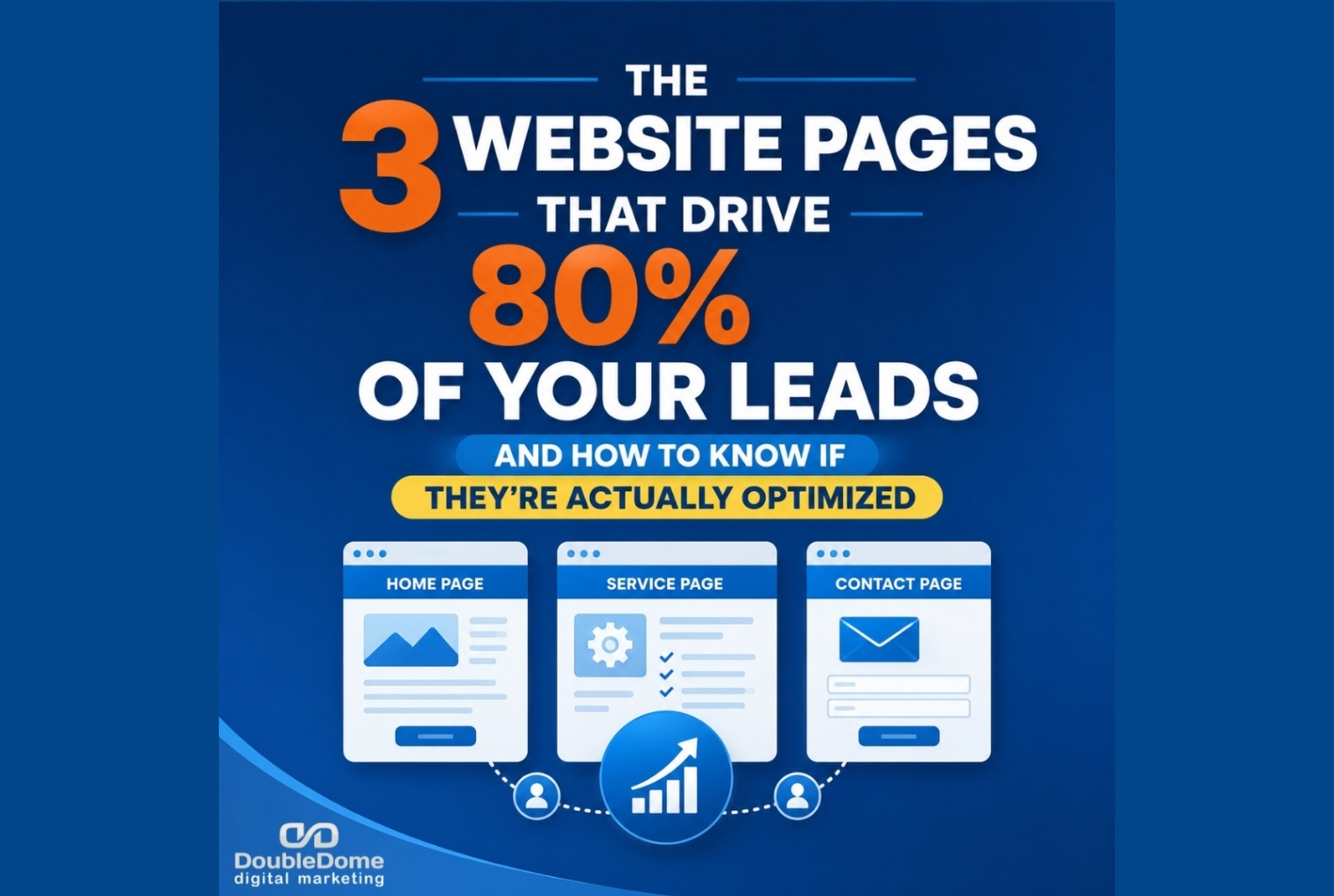
In B2B digital marketing, the 80/20 rule applies directly to website lead generation: 80% of qualified conversions originate from just three core assets: the homepage, primary service page, and contact page. Concentrating conversion rate optimization on these high-leverage pages maximizes pipeline growth and eliminates wasted marketing spend.
For growth-minded business leaders, managing a digital presence often feels like a constant game of whack-a-mole. You review your website analytics, see dozens of secondary blog posts, about pages, and archived resources, and feel compelled to tweak every single URL. You order redesigns across forty different templates, hoping that a broad cosmetic refresh will magically increase your inbound pipeline.
However, spreading your optimization efforts across dozens of low-impact pages produces diffused, disappointing results.
In the business reality of 2026, traditional traffic is shifting. As conversational AI tools natively answer user questions before a prospect ever clicks a traditional search result, chasing raw traffic volume is a losing game. You don’t need more traffic—you need more customers. You want a growth engine that works while you sleep, and you want a simple dashboard that shows exactly what your $15k/month is buying you. To stop renting growth and start owning your market, you must apply strict High-Leverage Page Optimization by concentrating your capital where conversions actually happen.
Many websites collect leads the way a bucket collects water after someone forgot to put the bottom in.
The Core Trio: Identifying Your 80% Conversion Engines
For almost every B2B service provider, three specific URL types generate four out of every five qualified leads:
- The Homepage (The First Impression & Positioning Anchor): The primary entry point for direct traffic, brand searches, and referral clicks. Its job is not to close the sale immediately, but to validate credibility and route high-intent visitors directly to service pages.
- The Primary Service Page (The Value Proposition & Proof Hub): Where prospective buyers evaluate fit, examine technical capabilities, review pricing frameworks, and inspect real case study metrics.
- The Contact / Booking Page (The Friction Removal & Final Node): Where interested prospects land when they are ready to talk business. Any UX friction, unnecessary form fields, or technical glitches here directly destroy revenue.
If you open your analytics platform right now and filter conversions by landing page path, you will likely see this exact concentration. Trying to optimize a 2021 blog post on general industry trends while your contact page has a broken mobile submission form is like repainting the garage while the front door is locked from the inside.
The High-Leverage Page Optimization Checklist
To ensure your three core pages are actively building trust and capturing revenue, run them through this targeted optimization framework:
1. The Homepage Optimization Checklist
- Clear Above-the-Fold Positioning: Does the hero section clearly state what you do, who you serve, and the primary business outcome you deliver within 3 seconds?
- Clear Conversion Pathways: Are there distinct, visual pathways guiding visitors directly to your core service hubs without forcing them to hunt through multi-tiered navigation menus?
- Proof & Social Validation: Are client logos, verified ROI metrics, and trust seals visible before the first scroll?
2. The Primary Service Page Checklist
- High “Information Gain” Copy: Does the copy offer deep, proprietary methodology details rather than generic, fluff-filled descriptions that look like everyone else’s?
- Machine-Readable Schema: Is the page wrapped in valid
ServiceandFAQPageJSON-LD code so search algorithms and AI recommendation tools (like ChatGPT and Gemini) can process your exact capabilities? - Low-Friction Micro-CTAs: Are there mid-page options (like diagnostic tools or gated benchmark reports) for buyers who aren’t ready to book a 60-minute call today?
3. The Contact Page Checklist
- Form Field Audit: Is your intake form stripped down to only the essential fields needed to qualify a buyer? (Every additional field reduces completion rates by 10%).
- Expectation Setting: Does the page clearly outline what happens after submission (e.g., “You will hear from a senior strategist within 2 business hours”)?
- Direct Contact Alternatives: Are direct phone numbers, email addresses, and team availability clearly listed for enterprise buyers who refuse to fill out web forms?
Comparing the Strategies: Diffused Effort vs. Focused Scale
Optimizing the wrong pages is how CRO budgets get wasted. We identify your three highest-leverage pages and concentrate every improvement there.
Page Focus vs. Business Impact
Attribution can sometimes feel like a marketing game of Clue. Everyone has a theory, nobody is completely sure, and somehow Google Ads is always in the room.
Eliminating Technical Friction to Protect Your Ad Capital
Many business leaders spend thousands of dollars renting traffic from Google Ads, terrified that their campaigns are being clicked by bots or people who aren’t going to buy. But if your paid ad traffic routes to an unoptimized service page or a high-friction contact form, the ad network isn’t failing—your conversion bucket is leaking.
Applying rigorous High-Leverage Page Optimization ensures that every paid or organic visitor lands on a page engineered to convert. By structuring your content around clear information gain and mapping conversions via secure server-side tracking (OCI), you protect your marketing budget from waste and transform your website into a permanent corporate asset.
SEO is more like planting an orchard than buying groceries. The payoff can be substantial, but nobody gets apples tomorrow.
Outsourcing Technical Overhead to Scale Your Enterprise
Executing high-converting page layouts requires constant technical precision. Between writing machine-readable schema, optimizing mobile page speeds, and setting up server-side attribution, the technical workload can quickly overwhelm internal teams. For a CEO, playing web developer or data detective is an inefficient use of time.
We act as the trusted technical backbone of your internal growth team. We remove the jargon, eliminate the fluff, and execute data-backed optimizations on the three pages that drive your business. Stop chasing clicks and start owning your market. In 2026, you don’t need more traffic—you need more customers. We build the system that makes you the obvious choice for your leads, no matter how the tech changes. Just results, no jargon.
Claiming Your Market Advantage
The digital spaces where your prospective clients locate solutions will continue to evolve, but the math of conversion optimization remains constant: focusing power on your highest-yielding assets drives maximum revenue. Standardizing your approach through systematic High-Leverage Page Optimization guarantees that your team stops guessing and starts building a predictable growth engine.
If you are ready to stop wasting ad spend, eliminate bad leads, and look at a simple dashboard that connects your digital investments directly to net profit, let’s analyze your core pages together. We will locate your conversion bottlenecks, patch your tracking gaps, and turn your top three pages into an automated lead machine.
Book a Website Design Optimization Session with DoubleDome today.
Frequently Asked Questions
What are the 3 website pages that drive 80% of B2B leads?
For almost every B2B service website, 80% of qualified leads come from the homepage (first touch), the primary service page (buyer fit evaluation), and the contact page (final conversion node).
How does High-Leverage Page Optimization impact AI recommendation tools?
By focusing on your core service pages and embedding clean, machine-readable JSON-LD schema, conversational AI engines like ChatGPT and Gemini can accurately index your capabilities and recommend your brand.
Can I track conversions on these 3 pages accurately if browsers block tracking cookies?
Yes, by setting up secure server-side offline conversion tracking (OCI) that routes real conversion milestones directly from your CRM back to your reporting dashboard.