

By Paras Jain
A Q4 Website Closing Configuration optimizes your website for year-end decision-makers without the cost, delay, or risk of a complete rebuild. By deploying five targeted updates—updating hero messaging with Q4 timing, embedding fall case study proof, clarifying onboarding timelines, addressing late-year objections, and enabling targeted exit-intent prompts—your digital infrastructure converts high-intent B2B visitors at a significantly higher rate in less than five days.
As the fourth quarter gets underway, marketing directors face a familiar dilemma. You know your website could convert qualified visitors more effectively, but launching a full site redesign this late in the year is impractical. A multi-month rebuild burns budget, risks project delays, and distracts your team during the highest-stakes sales season of the year.
The good news? You do not need a complete site overhaul to capture year-end revenue.
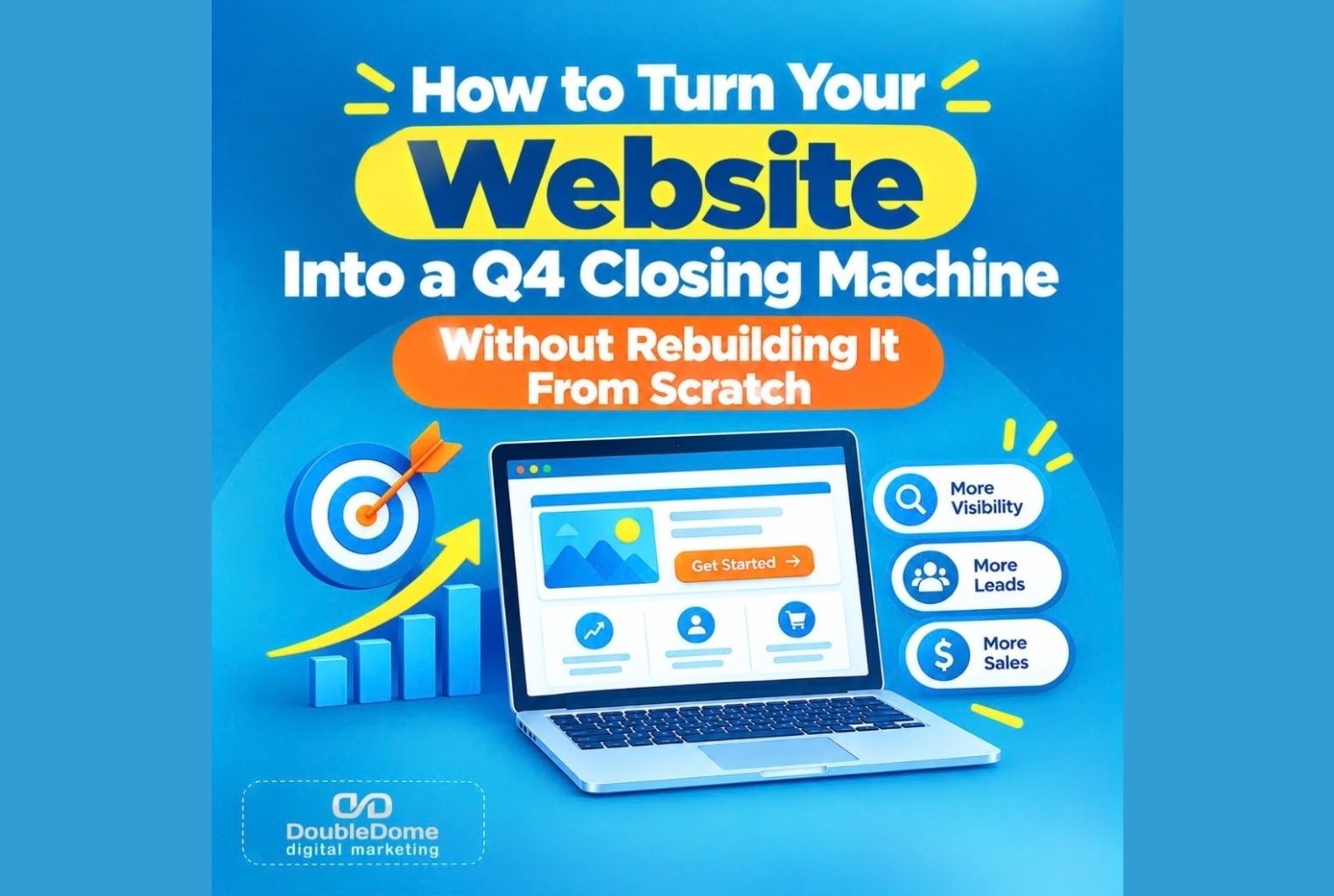
In 2026, privacy changes, signal loss, and cookie deprecation mean relying solely on surface-level ad clicks or vanity traffic metrics is no longer viable. You need a site that converts real buyers into verified pipeline opportunities. Five changes, five days, a website that closes Q4 buyers at a measurably higher rate. We implement every update before October is a week old. Executing a rapid Q4 Website Closing Configuration removes conversion bottlenecks, aligns your messaging with fall buyer urgency, and delivers clean, data-backed results your leadership can trust.
Many websites collect leads the way a bucket collects water after someone forgot to put the bottom in.
The 5 Targeted Updates of a Q4 Closing Setup
Instead of touching your entire site architecture, focus your technical execution on five high-leverage updates that directly address fourth-quarter buyer psychology:
1. Above-the-Fold Q4 Hero Section Refresh
Update your homepage hero copy to directly address fourth-quarter business priorities. Replace generic slogans (“Empowering B2B Innovation”) with time-sensitive, outcome-focused language (“Deploy an Automated Lead System Before Year-End Budget Locks”).
2. Service Page Fall Case Study Proof
Add a dedicated proof section to primary service hubs featuring real-world client outcomes ($X spent vs.$Y earned in pipeline value). Highlight a client that onboarded in October and achieved measurable wins before December 31st.
3. Contact Page “What Happens Next” Roadmap
Decision-makers in Q4 fear that onboarding delays will waste their remaining annual budget. Include a clear, step-by-step onboarding timeline right next to your contact form outlining exact 30-day implementation milestones.
4. Year-End Objection FAQ Module
Add an FAQ section addressing the five most common Q4 buyer hesitations: implementation timelines, holiday scheduling, budget allocation mechanics, CRM integration speed, and contract flexibility.
5. High-Engagement Exit-Intent Prompt
Activate a targeted exit-intent prompt for visitors who spend more than 60 seconds reviewing high-intent pages without converting. Offer a low-friction next step, such as downloading a 1-page Q4 execution checklist or booking a 15-minute strategy call.
SEO is more like planting an orchard than buying groceries. The payoff can be substantial, but nobody gets apples tomorrow.
Strategy Comparison: Full Site Redesign vs. Q4 Closing Configuration
To see how targeted site updates protect your marketing budget and team bandwidth, compare both execution models below:
Website Optimization Execution Matrix
| Implementation Variable | Full Website Redesign (High Risk) | Q4 Website Closing Configuration Standard |
| Execution Timeline | 60 to 90+ days of design iterations. | 3 to 5 Days: rapid technical deployment. |
| Messaging Focus | Evergreen copy written for broad audiences. | Time-Sensitive: directly addresses Q4 timing & budgets. |
| AI Search Readability | Unmonitored; unstructured text ignored by LLMs. | Preferred Answer Status: valid JSON-LD schema code feeds LLMs. |
| Reporting Standard | Abstract PDF decks with vague traffic metrics. | Transparent dashboard linking spend to net CRM revenue. |
Attribution can sometimes feel like a marketing game of Clue. Everyone has a theory, nobody is completely sure, and somehow Google Ads is always in the room.
Technical Foundations That Ensure Data You Can Trust
Updating site copy is only part of the equation. To ensure your Q4 site updates translate into transparent, verified lead data, install these three technical enhancements:
- Deploy Server-Side Offline Conversion Tracking (OCI): Connect web contact forms directly to backend CRM sales milestones using server-side offline conversion tracking (OCI). This bypasses browser tracking blocks, filters out bot click noise, and routes real conversion data back to Google Ads to train Smart Bidding algorithms.
- Embed Machine-Readable JSON-LD Schema Markup: Wrap your updated service copy and FAQ modules in valid JSON-LD schema code. Conversational AI engines like ChatGPT and Google Gemini rely on structured backend data to parse your exact capabilities and cite your firm as a Preferred Answer.
- Streamline Intake Forms to 3 Fields: Remove conversion friction by limiting contact forms to three core inputs (Name, Work Email, Project Scope) paired with an embedded 1-click calendar scheduling tool.
Outsourcing Technical Headaches to Focus on Strategy
Executing targeted site configurations, managing schema code, and setting up server-side conversion webhooks requires continuous technical precision. For a busy marketing director, spending hours debugging code, configuring ad webhooks, or managing site scripts is an inefficient use of strategic time. You need a partner who can handle the technical heavy lifting, act as an extra set of hands for your team, and deliver clear, transparent data without hiding behind proprietary jargon.
We act as the trusted technical backbone of your internal marketing team. We remove the headache of managing complex search tech, eliminate tracking gaps, and build automated acquisition systems that deliver high-quality leads. We handle the technical details so you can focus on leading big-picture strategy and securing wins with executive leadership.
Claiming Complete Ownership of Your Year-End Pipeline
Maximizing your fourth-quarter revenue does not require a risky, expensive website overhaul. Committing your organization to a disciplined Q4 Website Closing Configuration guarantees that your team stops defending low-converting web pages and starts managing a high-performing digital asset.
If you are ready to convert more fall visitors, resolve your tracking headaches, and present a clear, data-backed strategy to leadership, let’s configure your site together. We will resolve your conversion bottlenecks, execute high-priority site updates, and deliver clean data you can trust.
Book a Website Optimization Session with DoubleDome today.
Frequently Asked Questions
What is a Q4 Website Closing Configuration and why is it superior to a site redesign?
A Q4 Website Closing Configuration is a targeted 3-to-5-day technical update that refreshes hero copy, adds fall case study proof, clarifies onboarding roadmaps, addresses year-end objections, and activates exit prompts. It is superior to a redesign because it drives immediate conversion lift without high costs or implementation delays.
How does adding an onboarding roadmap on the contact page increase form completions?
An onboarding roadmap directly addresses fourth-quarter decision-makers’ primary fear—that implementation will drag past year-end. Outlining clear 30-day milestones reassures prospects that your team delivers rapid time-to-value.
How does structured schema markup help website updates appear in conversational AI search?
Wrapping updated service copy and FAQs in machine-readable JSON-LD schema markup allows conversational AI search tools like ChatGPT and Google Gemini to parse your exact capabilities, service parameters, and value propositions in milliseconds, citing your firm as a preferred answer in user prompts.