
By Sonny Day
The single most decisive conversion metric in Q4 is the discovery call booking rate from high-intent service page visits, not site-wide conversion rate or superficial form fills. Focusing on this specific metric measures whether qualified buyers evaluating your capabilities take direct action to enter your sales pipeline. At peak fourth-quarter traffic volumes, lifting this priority metric by just 1% produces more qualified revenue than any other CRO initiative.
Digital analytics dashboards are packed with conversion data. Between site-wide form completions, newsletter subscriptions, content downloads, and bounce rates, marketing leaders can easily compile twenty-page reporting decks that appear highly productive.
Yet, tracking everything often leads to optimizing for the wrong outcome.
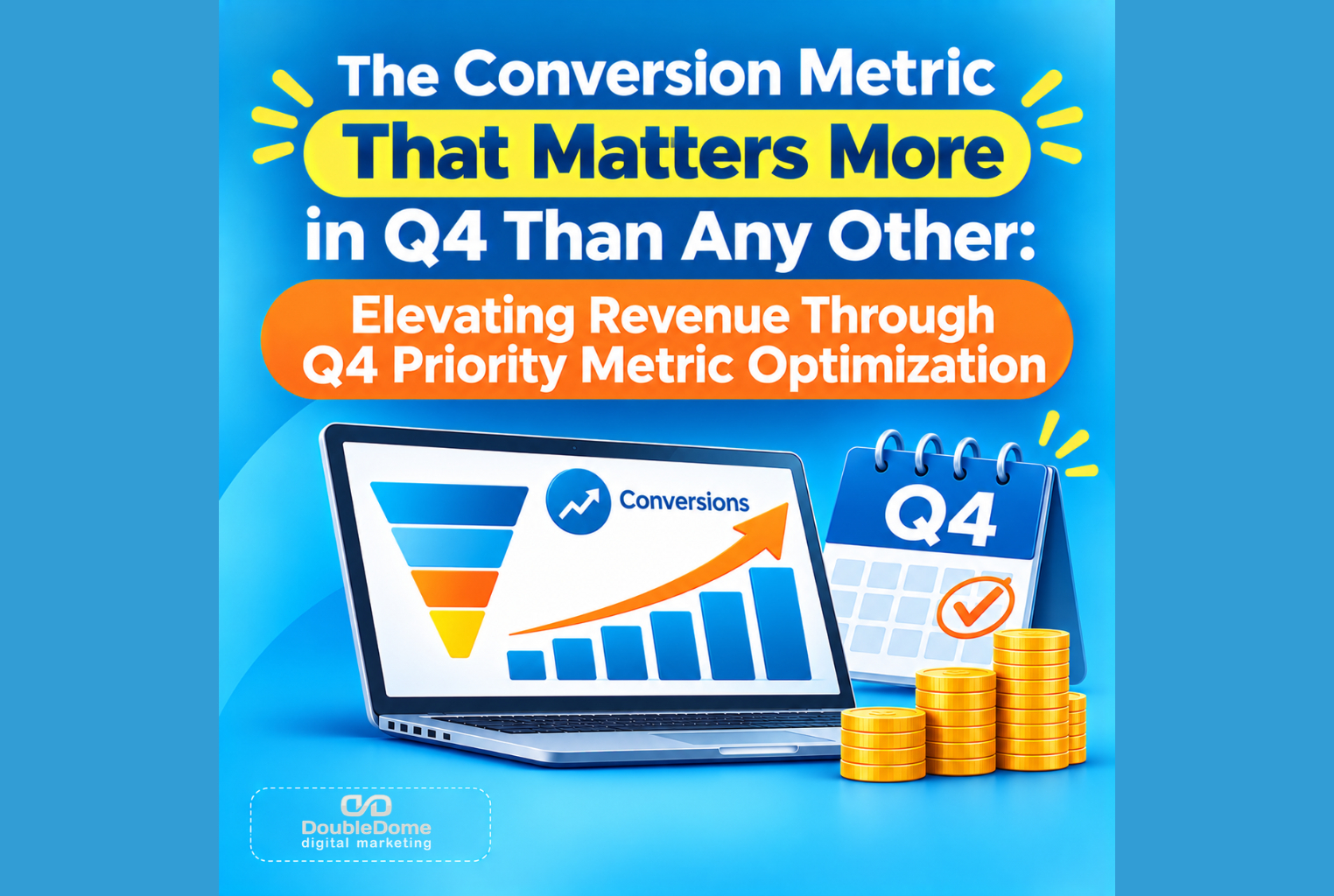
In the privacy-first business landscape of 2026, where signal loss, cookie deprecation, and browser privacy features make tracking superficial web events unreliable, reporting on aggregate conversion volume provides a false sense of security. A high volume of top-of-funnel PDF downloads does not pay the bills or satisfy executive revenue quotas before December 31. What matters in late Q4 is high-intent pipeline velocity. We focus your Q4 CRO effort on the one metric that directly predicts pipeline — not the ones that look good in reports but don’t move revenue. Implementing a disciplined approach to Q4 Priority Metric Optimization isolates the single metric that moves the revenue needle, giving you clean, defensible data you can trust when presenting results to leadership.
Attribution can sometimes feel like a marketing game of Clue. Everyone has a theory, nobody is completely sure, and somehow Google Ads is always in the room.
The True North Metric: Discovery Call Booking Rate from Service Pages
While site-wide conversion rate blends casual blog readers with high-intent buyers into a single muddy statistic, your Discovery Call Booking Rate from High-Intent Service Page Visits isolates motivated decision-makers at the exact point of evaluation:
Why This Metric Dictates Q4 Revenue
- Filters Out Top-of-Funnel Noise: Casual visitors reading informational articles will distort site-wide conversion percentages. Isolating service page traffic focuses optimization entirely on bottom-of-funnel decision-makers.
- Direct Pipeline Correlation: A scheduled discovery call converts into closed-won business at a rate three to five times higher than an unassisted contact form fill or gated whitepaper download.
- The High-Impact Leverage Point: In fourth-quarter search auctions where cost-per-click (CPC) peaks, lifting your service page booking rate from 2.5% to 3.5% yields a 40% increase in pipeline capacity without spending an extra dollar on media.
SEO is more like planting an orchard than buying groceries. The payoff can be substantial, but nobody gets apples tomorrow.
Industry Benchmarks: Where Does Your Site Stand?
To evaluate whether your digital infrastructure is performing at standard or leaking qualified pipeline, benchmark your service page performance against current B2B standards:
Q4 Priority Metric Optimization Performance Matrix
| Performance Tier | Service Page Booking Rate | Pipeline Impact & Conversion Reality |
| Critical Leakage | Below 1.5% | Severe friction; multi-field forms and hidden calendar links repel busy buyers. |
| Industry Baseline | 1.5% to 2.8% | Standard performance; steady lead flow, but late-stage drop-off remains unaddressed. |
| Optimized Standard | 3.0% to 5.2%+ | High Velocity: streamlined 3-field forms, clear SLAs, and interactive calendar scheduling. |
Many websites collect leads the way a bucket collects water after someone forgot to put the bottom in.
3 Strategic Adjustments That Lift Service Page Booking Rates
Moving your service page booking metric into the top tier before year-end does not require a complete site redesign. It requires removing friction points that cause high-intent buyers to hesitate:
1. Embed 1-Click Interactive Calendar Schedulers Directly on Core Hubs
Stop forcing prospective clients to submit a form, wait twelve hours for an email response, and exchange three scheduling messages. Embed an interactive calendar widget directly below the service deliverables so motivated buyers can lock in a discovery call immediately.
2. Implement an Explicit “Response Time SLA” Badge
Decision-makers evaluating vendors in Q4 operate under strict budget deadlines. Adding a transparent commitment beside intake forms—such as “15-Minute Response SLA During Business Hours”—eliminates hesitation and pre-empts decision anxiety.
3. Replace Static “Get a Quote” CTAs with Action-Oriented Scoping
Vague calls-to-action like “Contact Sales” sound like an open invitation to an aggressive sales pitch. Replace them with specific, value-driven next steps, such as “Book a 20-Minute Technical Scope Review,” clarifying exactly what happens during the initial call.
Technical Foundations That Ensure Data You Can Trust
Tracking your primary conversion metric requires backend infrastructure that provides accurate attribution and satisfies AI search engines:
- Deploy Server-Side Offline Conversion Tracking (OCI): Connect calendar scheduling tools directly to backend CRM sales milestones using server-side offline conversion tracking (OCI). This bypasses browser tracking blocks, filters out bot click noise, and routes real conversion data back to Google Ads to train Smart Bidding algorithms on high-value enterprise buyers.
- Embed Machine-Readable Schema Code: Wrap service pages and scheduling modules in valid JSON-LD schema markup. Structuring your backend data ensures conversational AI search tools like ChatGPT and Google Gemini parse your exact capabilities accurately and cite your firm as a Preferred Answer.
- Streamline Intake Form Paths: Reduce conversion friction by replacing multi-field forms with a clean 3-field layout (Name, Work Email, Project Scope) paired with an embedded 1-click calendar scheduling tool.
Outsourcing Technical Headaches to Focus on Strategy
Configuring calendar webhooks, setting up server-side conversion tags, optimizing conversion paths, and monitoring funnel drop-offs requires continuous technical precision. For a busy marketing director, spending hours debugging tracking scripts, running form error audits, or adjusting conversion tags is an inefficient use of strategic time. You need a partner who can handle the technical heavy lifting, act as an extra set of hands for your team, and deliver clear, transparent data without hiding behind proprietary jargon.
We act as the trusted technical backbone of your internal marketing team. We remove the headache of managing complex search tech, eliminate tracking gaps, and build automated acquisition systems that deliver high-quality leads. We handle the technical details so you can focus on leading big-picture strategy and securing wins with executive leadership.
Claiming Complete Ownership of Your Year-End Pipeline
Capturing peak fourth-quarter revenue requires stepping away from vanity conversion metrics and focusing relentlessly on the single action that moves prospects into closed deals. Committing your organization to a disciplined Q4 Priority Metric Optimization framework guarantees that your team stops chasing cosmetic metrics and starts running an efficient, high-converting revenue engine.
If you are ready to identify your true conversion baseline, eliminate technical tracking headaches, and present a clear, data-backed strategy to leadership, let’s analyze your service page performance together. We will resolve your conversion bottlenecks, deploy server-side offline conversion tracking, and deliver clean data you can trust.
Book a Website Support Optimization Session with DoubleDome today.
Frequently Asked Questions
What is Q4 Priority Metric Optimization and why does it focus on service page booking rates?
Q4 Priority Metric Optimization is a conversion rate framework that prioritizes the discovery call booking rate on high-intent service pages over aggregate website conversions. It focuses on this metric because service page bookings represent qualified, bottom-of-funnel buyers who directly populate the late-Q4 sales pipeline.
Why is overall website conversion rate a misleading KPI in the fourth quarter?
Overall website conversion rate mixes top-of-funnel informational readers with commercial decision-makers. A spike in casual blog traffic or resource downloads can make the site look successful while qualified, revenue-generating discovery calls actually decline.
How does server-side offline conversion tracking (OCI) support conversion rate optimization?
Server-side OCI routes encrypted CRM sales milestones (such as verified discovery calls or closed contracts) directly back to campaign reporting dashboards. This bypasses browser tracking blocks, ensuring your team optimizes for verified sales opportunities rather than superficial form submissions or bot traffic.