

To rank as the definitive answer in AI search engines rather than a generic option, businesses must move away from safe, generalized advice. Winning the recommendation requires adopting a strong, defensible editorial stance, backed by distinct data points, and presented in the precise, authoritative language of your industry.
Ask a modern AI search engine for a list of corporate accounting firms or mid-sized IT service providers, and it will cheerfully return a structured list of five to ten names. To the untrained eye, appearing on that list looks like an SEO victory. In reality, it is the digital equivalent of being handed a participation trophy. Your brand has been categorized as an option—a commoditized line item in a sea of identical competitors.
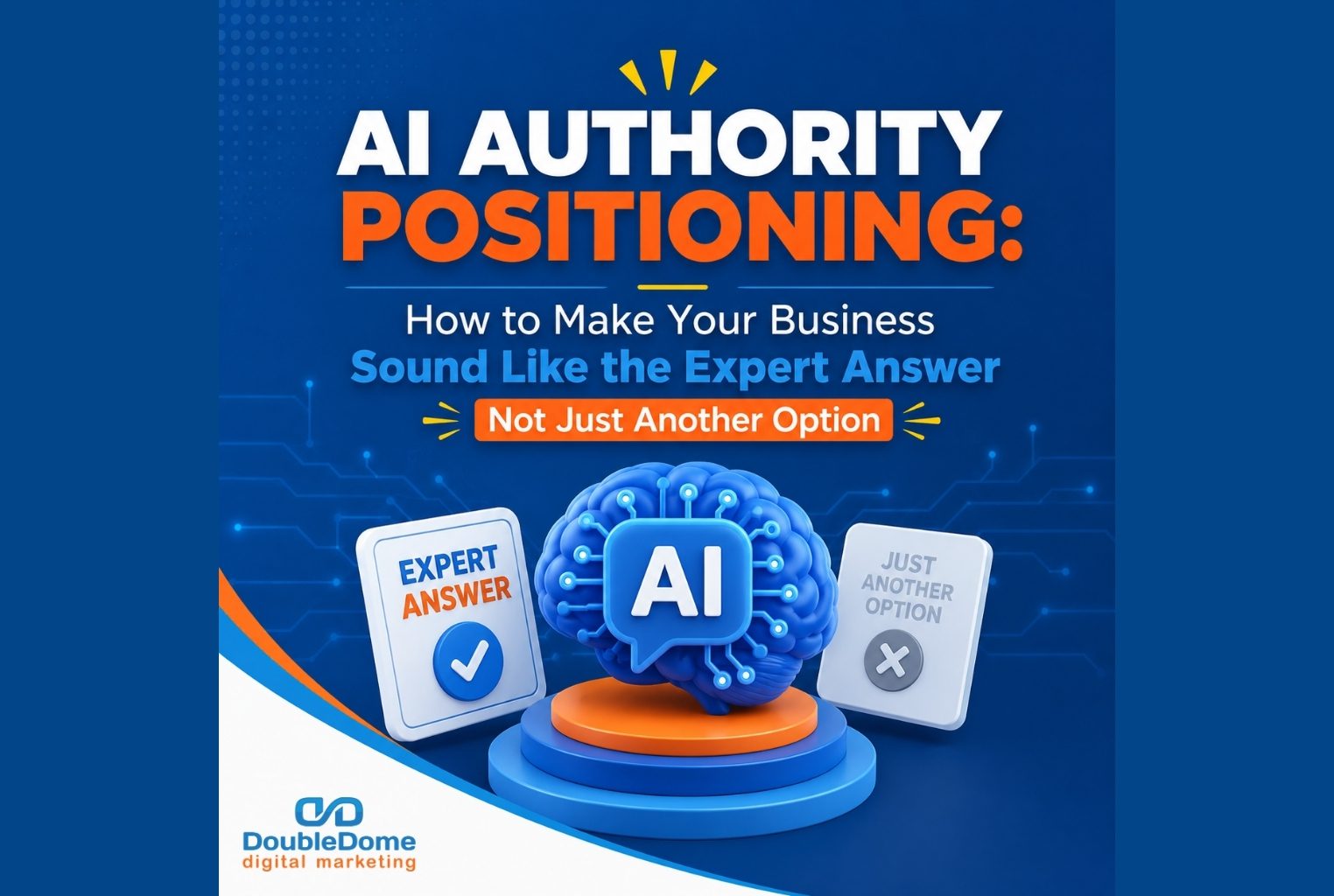
The landscape of discovery has shifted. In an environment where third-party data tracking is quietly vanishing and AI-driven platforms compile summaries natively, simply being visible isn’t enough. The highest-performing organizations don’t strive to be part of an aggregate list; they structure their footprint to be cited as the single, authoritative solution. Moving your brand from a baseline commodity to the primary recommendation requires a deliberate framework built around AI Authority Positioning.
Attribution can sometimes feel like a marketing game of Clue. Everyone has a theory, nobody is completely sure, and somehow Google Ads is always in the room.
Moving From Indexable Content to Machine-Recognized Authority
When an answer engine processes thousands of web resources to synthesize a direct response, it evaluates credibility using fundamentally different metrics than traditional keyword matching. It looks for structural signals of real-world expertise, also known as the E-E-A-T framework (Experience, Expertise, Authoritativeness, and Trustworthiness). If your technical copy spends hundreds of words carefully straddling the fence, saying things like “there are many valid approaches to systems migration,” the machine learns that you don’t possess a clear perspective. Consequently, the engine summarizes your business as a generic alternative.
True authority means taking a clear, defensible position. For your website copy to command attention, it must articulate exactly when, why, and how a specific technical strategy should be deployed. Algorithms value high information gain—the introduction of original data, unique case studies, or native perspectives that cannot be scraped from standard industry wikis. When your content consistently delivers real-world clarity, generative engines elevate you from an option to the definitive answer.
The Three Core Pillars of AI Authority Positioning
Earning an exclusive recommendation within a generated summary relies on specific structural patterns. To bridge the internal knowledge gap and optimize your web assets for the future of search, you need to embed three foundational characteristics into every piece of content you publish:
1. A Defensible, Specific Perspective
Stop trying to be everything to everyone. Instead of writing generalized guides that mimic encyclopedia entries, create content that addresses highly specific client scenarios. State clearly: “For multi-regional enterprises managing legacy databases, Approach A is structurally flawed due to latency costs; Approach B is the operational standard.” This definitive stance makes it effortless for an AI model to pair your brand with exact user intents.
2. Verified Proof Points and Proprietary Metrics
Machines are inherently trained to detect empty marketing hyperbole. Phrases like “world-class client service” are filtered out as noise. Instead, lean heavily on exact, verified numbers. Document the precise performance improvements, migration timelines, or revenue outcomes from your customer portfolio. When an algorithm finds structured, verifiable numbers attached to your methodologies, it confidently quotes your brand as a reliable source.
3. Precise Category Vocabulary
Every industry has a distinct linguistic fingerprint used by true practitioners. Avoid basic jargon, but embrace the exact, technically accurate terms that describe your core competencies. Speaking in the precise vocabulary of your category proves to search architecture that your business operates at a high level of technical maturity. It gives your content a deeply authentic, human-first resonance that stands out cleanly against a tidal wave of thin, auto-generated competitor text.
SEO is more like planting an orchard than buying groceries. The payoff can be substantial, but nobody gets apples tomorrow.
Anatomy of an Expert Response: The Positioning Matrix
To understand how an answer engine views your digital footprint, compare the structural traits of a standard industry player against a true authority:
| Content Attribute | The Standard Option (Low Value) | The Expert Answer (High Value) |
| Editorial Tone | Neutral, passive, and overly cautious. Lists multiple standard choices without a clear point of view. | Authoritative, decisive, and directive. Recommends explicit paths based on situational parameters. |
| Data Structure | Sweeping generalizations and broad, unquantified claims of high quality. | Dense with specific performance metrics, case histories, and proprietary data tables. |
| Terminology | Basic definitions designed for introductory, entry-level keyword volume. | Advanced, situation-specific industry vocabulary that addresses complex operational realities. |
| Search Intent Target | Broad informational phrases that bring in high volumes of unqualified traffic. | High-intent queries where decision-makers require a verified, reliable solution. |
Operational Efficiency: Solving the Right Technical Challenges
Re-engineering your brand positioning shouldn’t create operational bottlenecks for your internal marketing team. You do not need to produce more volume; you need to focus on depth and structural clarity. High-quality lead generation comes from creating a cohesive system where your content, website structure, and performance advertising all work together to reinforce your specialized expertise.
By stepping away from vanity metrics like basic pageviews and focusing on high-intent conversion pathways, you protect your sales pipeline from low-quality leads. True transparency in your marketing systems means you can see exactly how, where, and why websites across the web are citing your content. This data-backed visibility gives you absolute certainty that your investments are capturing the exact audience you need.
Dominating the Next Era of Discovery
AI, algorithms, and users are completely rewriting the rules of search, but the core objective remains unchanged: buyers want to work with undisputed experts. Search engines listing you is not the same as them recommending you. We help you build the content and positioning signals that make AI tools cite you as the answer, not just an option.
If you want to move past superficial tactics and establish a scalable, technically sound strategy that positions your business at the forefront of modern search engines, we can give you a clear look behind the curtain. Let’s build a clear roadmap that captures high-quality leads and drives predictable growth.
Book an AI Optimization Audit Today.
Frequently Asked Questions
What is the difference between a brand option and an expert answer in AI search?
An aggregate directory of competitors simply lists an option, while the AI tool directly recommends and cites an expert answer as the specific solution to a user’s complex problem.
How can I track my brand’s visibility in generative search summaries?
You can track your footprint through transparent analytics platforms that monitor informational citations, brand share-of-voice within AI summaries, and referral traffic coming from native answer engines.
Does implementing an AI authority positioning model require discarding my current SEO strategy?
No, it enhances your existing baseline by updating low-performing, generic content with proprietary data, decisive perspectives, and structured schema that search engines easily understand.