

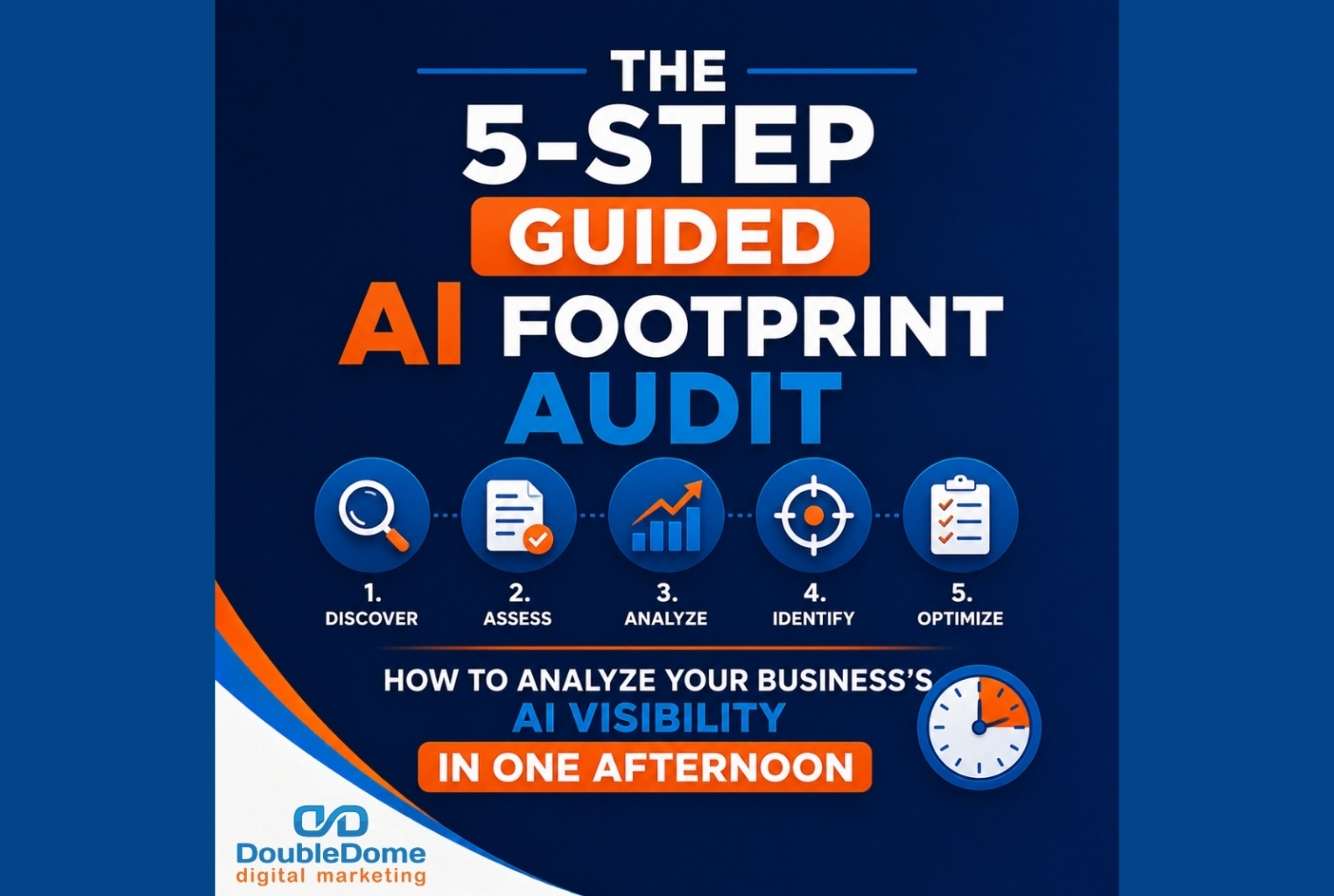
A guided AI footprint audit analyzes how conversational models like ChatGPT and Google Gemini index and recommend your business. By evaluating brand descriptions, structured schema code, review freshness, content depth, and language consistency, you can identify optimization gaps that block your brand from being the preferred answer.
For growth-focused executives, the digital landscape of 2026 has brought a stark realization: the old search engine playbook is broken. You’ve likely watched traditional website traffic drop because AI search models and conversational interfaces answer your prospective buyers’ questions natively before they ever click a link. Simply ranking at the top of a static list doesn’t matter if an AI bot recommends your closest competitor instead.
If you are tired of agencies offering vague promises about “algorithm updates” and want to know exactly how your marketing spend converts into closed contracts, you need to transition from renting clicks to owning your pipeline. You don’t need more traffic—you need more customers.
Conducting a systematic Guided AI Footprint Audit is the single fastest way to clear out the marketing fluff, find out exactly how conversational engines view your company, and build a customer generation engine that runs while you sleep. The best part? You can complete this diagnostic assessment in a single afternoon without writing a single line of code.
Many websites collect leads the way a bucket collects water after someone forgot to put the bottom in.
Demystifying the Guided AI Footprint Audit: Why Machine Readability Wins
Conversational search models do not use keywords the way legacy engines did. Instead, they operate as context engines, evaluating the depth of your content, the consistency of your brand references across third-party sites, and your structured code data.
To conduct your own Guided AI Footprint Audit over a single afternoon, structure your diagnostic checks around these five critical operational areas:
Step 1: Run Brand Description Tests Across 3 AI Engines
- The Process: Open ChatGPT, Google Gemini, and Perplexity on your browser. Input three unbranded, situational prompts that your ideal clients would write (e.g., “Who is the most reliable commercial security provider in Dallas with custom CRM integrations?”).
- The Evaluation: Note whether your brand is recommended, check the factual accuracy of your service description, and identify which competitors the models cited instead. If you are missing, it means your current digital footprint lacks sufficient authority signals.
Step 2: Validate Your Code with Google’s Rich Results Test
- The Process: Copy your homepage URL and primary service landing pages. Navigate to Google’s official, free Rich Results Test tool, paste your links, and run the test.
- The Evaluation: This tool shows you exactly what search robots see. Check whether your pages contain valid, error-free JSON-LD structured schemas (specifically
Organization,Service, andFAQPagecode). If your code is empty or returns warning blocks, the machine cannot resolve your business details, leaving you invisible.
Step 3: Grade Your Authority Across 5 Major Review Platforms
- The Process: AI models treat your own website content as self-reported promotion. To verify your credibility, they crawl external networks. Audit your brand presence across five key nodes: Google Business Profile, LinkedIn, Clutch (or G2 for software), Yelp, and Glassdoor.
- The Evaluation: Look for review freshness. AI engines weigh recent reviews (under 90 days old) featuring specific industry vocabulary significantly higher than older, generic feedback. If your profiles are stagnant, your algorithmic trust score drops.
Step 4: Compare Content Depth to Your Top 10 Buyer Queries
- The Process: Write down the top 10 highly technical questions your prospects ask during sales calls. Search your existing website for pages that directly address these prompts.
- The Evaluation: Rate your content depth. To win recommendations, your pages must offer high “Information Gain”—original data, explicit cost tables, and real-world case studies. If your site features only safe, short blog posts that repeat basic definitions, AI filters will flag your content as duplicate noise.
Step 5: Enforce Cross-Platform Language Consistency
- The Process: Review how your business name, address, phone number, and core service offerings are described across your website, directories, and social profiles.
- The Evaluation: Algorithms require identical data patterns to perform entity resolution. If your company is listed as “Carter Logistics, LLC” on your site but “Carter Transport” on LinkedIn, the database splits your authority. Standardize your naming structures across every single external node.
Attribution can sometimes feel like a marketing game of Clue. Everyone has a theory, nobody is completely sure, and somehow Google Ads is always in the room.
Performance Framework: Traditional SEO vs. AI Engine Audits
To help your leadership team focus on metrics that impact your bottom line, look at how legacy search metrics compare to an automated discovery audit:
| Diagnostic Focus Area | Legacy SEO Technical Audit | The Guided AI Footprint Audit Standard |
| Primary Metric | Tracking superficial keyword rank positions and aggregate organic click volumes. | Verifying brand citation frequency and preferred recommendations in LLM summaries. |
| Data Tracking Path | Relying on classic tracking scripts vulnerable to browser privacy blocks. | Integrating secure, server-side tracking to map CRM milestones to ad spend. |
| Review Velocity | Treating client feedback as an isolated administrative task. | Using automated CRM workflows to feed fresh, context-rich reviews to search networks. |
| Content Quality Goal | Writing boilerplate articles to chase high search-volume keywords. | Structuring deep, authoritative case studies with machine-readable schemas. |
Transitioning From Rented Clicks to Owned Market Share
Many businesses spend thousands of dollars a month on paid ads, terrified that their campaigns are being clicked by automated web bots or out-of-market searchers who will never buy. This is the natural penalty of renting your growth.
To build a predictable lead generation asset, you must shift your focus toward long-term digital ownership. By using this checklist to identify and repair structural tracking errors, you align your backend digital systems with your frontend sales goals. This ensures your ad budget optimized through smart bidding is trained exclusively on verified, high-intent human leads, lowering your average client acquisition costs.
SEO is more like planting an orchard than buying groceries. The payoff can be substantial, but nobody gets apples tomorrow.
Outsourcing the Technical Overhead of Your Growth Engine
Running a comprehensive diagnostic check is a valuable first step, but repairing broken server logs, writing clean schema code, and executing a robust digital optimization plan requires constant technical precision. For an active CEO, forcing your internal team to play data detective or decode complex scripts is an inefficient use of strategic time. You need a simple, honest dashboard that connects your marketing spend directly to closed contracts: “I spent $X, and our systems made$Y.”
We act as the trusted technical backbone of your internal growth department. We remove the jargon, eliminate the fluff, and manage your search configurations so you can focus entirely on scaling operations. One afternoon, five checks, a clear picture of where your AI visibility stands. We run it with you and build the improvement plan around what we find. Let’s make your brand the obvious choice for your leads, no matter how the underlying technology shifts.
Book an AI Optimization Audit Session with DoubleDome today.
Frequently Asked Questions
What is a Guided AI Footprint Audit, and how does it help my business scale?
A guided AI footprint audit is a systematic evaluation of how conversational tools and search networks index your brand data, allowing you to locate and repair visibility gaps to ensure your business is recommended to buyers.
Why does Google’s Rich Results Test matter for my conversational search rankings?
The Rich Results Test validates whether your site’s schema markup is error-free, which is essential because conversational bots rely on structured code to find and verify your corporate services.
Can an agency track conversion ROI accurately when search platforms block cookies?
Yes, by setting up secure server-side offline conversion tracking (OCI) that routes real project milestones from your internal CRM back to your marketing interface for honest reporting.