

A comprehensive mid-year audit aligns your digital footprint with the retrieval models used by conversational search tools. By systematically updating structured code schemas, validating third-party citation metrics, and mapping out high-value user prompts, businesses can secure the top recommended slot within generated search summaries before the Q3 business rush begins.
For growth-focused companies navigating the business realities of 2026, the mid-year mark brings a critical realization: the old methods of measuring online visibility are failing. Relying strictly on traditional search metrics or renting temporary exposure from unoptimized paid search loops is no longer a sustainable way to scale. Traditional traffic is shifting because search engines are evolving. Today, ranking first on a legacy results page doesn’t mean much if an AI bot answers the question before a prospective buyer ever clicks your link.
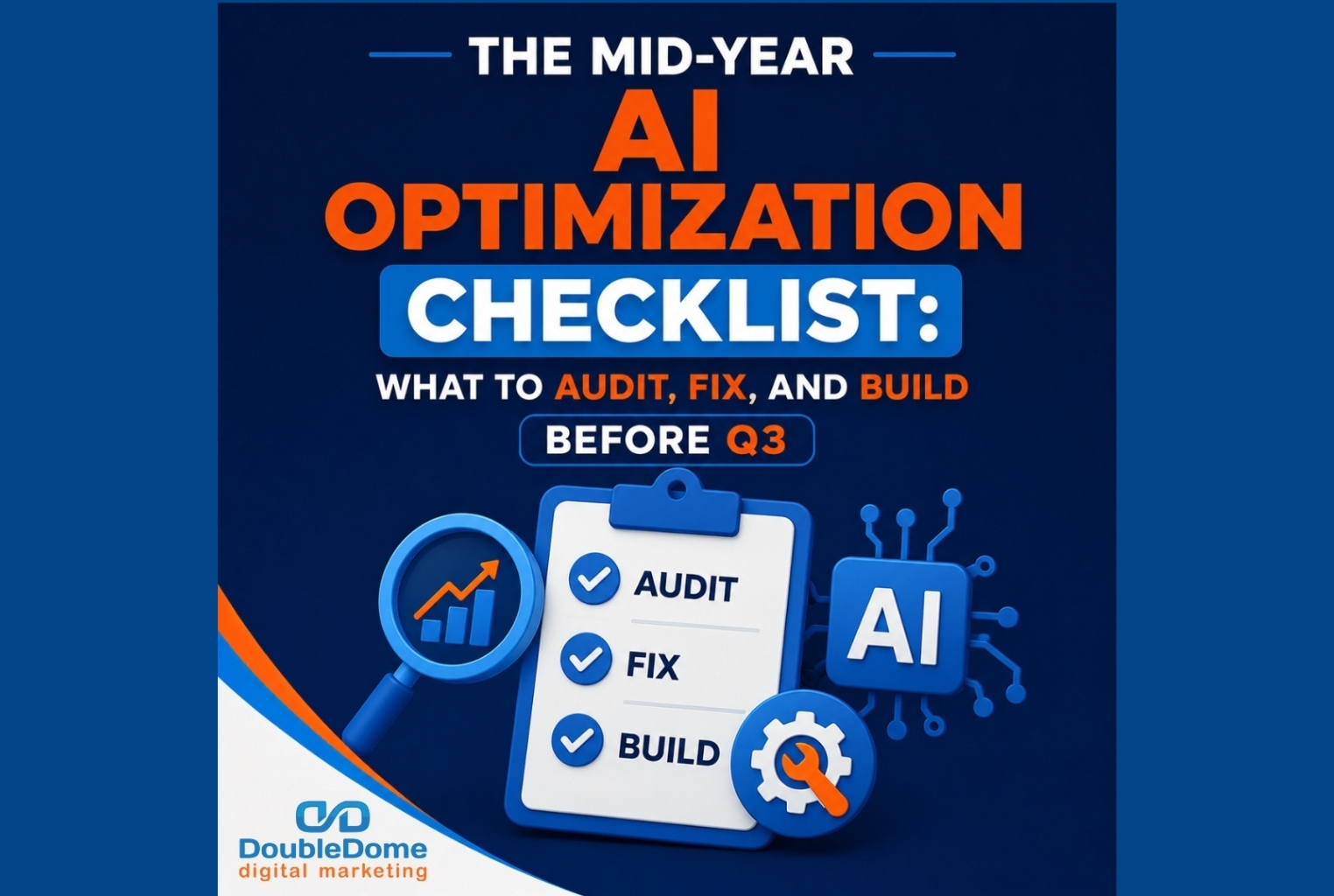
If you are tired of agency fluff and want a simple dashboard that clearly demonstrates how your marketing dollars translate into closed-contract revenue, you need an automated lead engine that works while you sleep. You don’t need more random traffic—you need more customers. Winning the preferred answer slot inside ChatGPT, Google Gemini, and Perplexity requires checking your brand’s digital data signals through a machine-readable lens. Deploying a structured Mid-Year AI Optimization Checklist allows your team to find critical conversion leaks and claim full market ownership before the autumn sales surge begins.
Attribution can sometimes feel like a marketing game of Clue. Everyone has a theory, nobody is completely sure, and somehow Google Ads is always in the room.
The Five Strategic Steps of the Mid-Year AI Optimization Checklist
This operational framework is engineered to move your marketing past creative guesswork and align your digital assets with the strict parameters that modern large language models reward.
1. Run AI Brand Description Visibility Tests
- Why it matters: AI tools cannot recommend your business if they cannot accurately identify your core category focus or specialized regional expertise.
- What “done” looks like: Query ChatGPT, Google Gemini, and Perplexity with targeted, unbranded prompts (e.g., “Which corporate provider handles enterprise logistics infrastructure in Dallas?”). Note whether your brand is surfaced, verify the historical accuracy of the summarized text, and identify any competitor citations.
2. Audit Structured Data Implementation for Machine Readability
- Why it matters: While human visitors require a clean, intuitive layout, recommendation bots rely on explicit code validation. Confusing or incomplete website data will cause an algorithm to filter out your site.
- What “done” looks like: Run your primary service pages through a code validator. Ensure every asset is correctly wrapped in advanced, error-free JSON-LD schema (including detailed Organization, Service, Product, and FAQPage markup) to make your experience machine-readable.
3. Review Third-Party Citation Quality across External Nodes
- Why it matters: AI engines treat your own website content as self-reported marketing copy; they weight independent third-party data networks significantly higher to ensure their summaries are objective and factually accurate.
- What “done” looks like: Review your profiles on Google Business Profile, LinkedIn, Clutch, G2, and vertical-specific directories. Ensure your name, location, and service definitions are identical across every platform to streamline algorithmic entity resolution.
4. Evaluate Content Coverage Against Real Buyer Prompts
- Why it matters: Generative platforms prioritize content that displays high Information Gain—original data, unique case studies, and clear viewpoints. Safe, boilerplate text that repeats broad industry definitions will be hidden as duplicate noise.
- What “done” looks like: Compile a list of the top 10 complex questions your buyers ask during active sales cycles. Map your existing content library against these prompts, then rewrite any underperforming pages to take a definitive, authoritative stance supported by proprietary performance metrics.
5. Check Review Platform Freshness and Velocity
- Why it matters: Recommendation engines weight recent, context-rich sentiment higher than older data. A business with fresh, detailed reviews detailing specific project variables will consistently outpace competitors with stagnant profiles.
- What “done” looks like: Implement an automated review acquisition workflow within your CRM system to continuously gather detailed customer feedback. Ensure your profiles receive new, descriptive sentiment weekly, detailing project timelines, software stacks, and financial outcomes.
SEO is more like planting an orchard than buying groceries. The payoff can be substantial, but nobody gets apples tomorrow.
Action Priority Guide: Traditional Tactics vs. AI Optimization
To help your team prioritize their time, the matrix below details how traditional marketing habits compare to the data requirements of conversational discovery engines:
| Audit Action Area | The Legacy Playbook Focus | The Mid-Year AI Optimization Checklist Standard |
| Data Tracking Approach | Relying on unvetted browser tracking pixels that are blocked by modern privacy laws. | Integrating secure, server-side data logs and direct CRM milestone mapping. |
| Content Quality Signal | Stuffing landing pages with repetitive keywords designed for basic traffic clicks. | Developing human-first, deep technical context filled with proprietary data tables. |
| Reputation Management | Reactively watching reviews or treating feedback as an administrative chore. | Proactively managing external portfolios as an active algorithmic authority signal. |
| Pipeline Risk Status | High vulnerability to bot click fraud and wasted ad spend on unqualified leads. | A predictable customer acquisition system built to capture high-intent buyers. |
Outsourcing Technical Overhead to Scale Profitable Revenue
Building an optimized, privacy-compliant lead generation system requires deep technical precision. For an active executive focused on scaling operations, forcing your internal team to manually keep pace with changing tracking protocols, schema updates, and programmatic ad parameters is an inefficient use of resources. You shouldn’t have to waste time playing data detective with your attribution data when your true goal is driving growth.
We step in as the technical backbone of your company’s marketing department. We remove the technical headaches of search architecture and ad account parameters, providing you with absolute transparency through a straightforward, honest dashboard. This checklist takes a day to run and produces a clear H2 AI optimization priority list. We run it with you and build the execution plan around what we find. Stop chasing clicks, eliminate bot waste, and start owning your market share with an asset you completely control.
Many websites collect leads the way a bucket collects water after someone forgot to put the bottom in.
Securing Your Autumn Sales Pipeline
The digital interfaces where your buyers research solutions will continue to move incredibly fast, but the underlying mechanics of customer acquisition remain constant: authority drives revenue. Executing a calculated Mid-Year AI Optimization Checklist guarantees that your enterprise stops renting temporary traffic loops and starts building a resilient digital asset. By structuring your specialized market expertise around what both human executives and AI recommendation bots reward, you convert standard search presence into a scalable corporate revenue system.
If you are ready to eliminate bad leads, remove the guesswork from your monthly digital spend, and look at clear, auditable reporting that connects your marketing channels directly to bottom-line growth, let’s open the curtain together.
Book an AI Optimization Strategy Session with DoubleDome today.
Frequently Asked Questions
Why do ChatGPT and Google Gemini ignore my website’s primary content?
AI recommendation engines prioritize independent third-party reviews, unstructured cross-web sentiment references, and advanced schema markup over self-reported homepage text to ensure their synthesized answers remain objective.
How quickly will a mid-year AI optimization sprint show measurable lead generation results?
When you combine high-authority external citations with clean JSON-LD structured data and intent-matched content hub updates, automated retrieval models can often index and reflect your updated authority data within 30 to 45 days.
Will modifying our old content pages hurt our traditional Google rankings?
No, a clean optimization sweep preserves your existing URL architectures and baseline keyword index paths while enhancing layout speeds, mobile responsiveness, and data verification to actively improve your overall organic visibility.