
By admin
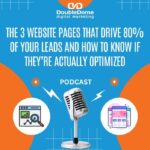

In this episode, we explore why businesses shouldn’t spread conversion optimization efforts across every page of their website.
For many B2B service businesses, the majority of qualified leads come from just a few critical pages: the homepage, primary service page, and contact or booking page.
Instead of spending time and budget making small changes across dozens of low-impact pages, high-leverage page optimization focuses resources where conversions actually happen.
The result is a more focused approach to conversion rate optimization, stronger user experiences, and a clearer path from website traffic to qualified leads.
Why High-Leverage Page Optimization Matters
Managing a website can quickly become an endless list of potential improvements.
There are blog posts to update, navigation elements to adjust, images to replace, pages to redesign, and technical issues to address.
But not every page has the same business value.
Optimizing a low-traffic informational page while a high-converting service page has a confusing call-to-action is not an efficient use of resources.
High-leverage page optimization starts with a simple question:
Which pages have the greatest potential impact on revenue?
Once those pages are identified, optimization efforts can be concentrated where they are most likely to improve pipeline performance.
What Is High-Leverage Page Optimization?
High-leverage page optimization is a focused conversion optimization strategy that prioritizes the website pages responsible for generating the greatest share of qualified leads.
For many B2B service businesses, these pages include:
- Homepage
- Primary service page
- Contact or booking page
These pages serve different purposes within the buyer journey.
The homepage establishes positioning and directs visitors.
The service page helps prospects evaluate whether your company is the right fit.
The contact page removes friction and facilitates the final conversion.
Optimizing these pages first can create a much greater impact than making minor improvements across dozens of secondary pages.
The Core Three Pages
1. The Homepage
The homepage is often the first major touchpoint for direct visitors, brand searches, referrals, and returning prospects.
Its primary job isn’t necessarily to close the sale immediately.
It needs to quickly communicate:
- What the company does
- Who it serves
- What problem it solves
- Why prospects should trust it
- Where visitors should go next
Homepage Optimization Checklist
Clear Above-the-Fold Positioning
Within seconds, visitors should understand what you offer and who you help.
If someone has to scroll or read several paragraphs before figuring out what the company does, the page is creating unnecessary friction.
Clear Conversion Pathways
Visitors should have obvious routes toward important services and conversion opportunities.
Avoid forcing prospects to navigate through complicated menus simply to find the information they’re looking for.
Proof and Social Validation
Trust signals should appear early in the experience.
These may include:
- Client logos
- Testimonials
- Case studies
- Verified performance data
- Industry credentials
- Trust indicators
The goal is to reduce uncertainty and give prospects a reason to continue exploring.
2. The Primary Service Page
The primary service page is where prospects evaluate whether your company can solve their specific problem.
This page should provide significantly more than a generic description of the service.
It should help answer:
- What exactly do you provide?
- How does your process work?
- Who is the service designed for?
- What makes your approach different?
- What results can customers expect?
- What evidence supports your claims?
Service Page Optimization Checklist
Provide Information Gain
Your content should provide useful information that prospects can’t easily find on dozens of competing websites.
Consider including:
- Proprietary processes
- Detailed methodologies
- Original insights
- Case studies
- Examples
- FAQs
- Industry-specific information
Generic marketing language rarely creates meaningful differentiation.
Use Machine-Readable Information
Important service information should be structured in ways that search engines and AI systems can understand.
Appropriate structured data can help communicate details about:
- Services
- Organizations
- Frequently asked questions
- Locations
- Other relevant entities
The objective is to make your capabilities clear to both human visitors and machine-based discovery systems.
Provide Low-Friction Micro-Conversions
Not every visitor is ready to schedule a consultation.
Give earlier-stage prospects other ways to engage.
Examples include:
- Diagnostic tools
- Benchmark reports
- Downloadable guides
- Case studies
- Calculators
- Educational resources
These micro-conversions create additional opportunities to capture interest without forcing every visitor into a high-commitment action.
3. The Contact or Booking Page
The contact page is where high-intent visitors often take the final step.
Even small amounts of friction can cause prospects to abandon the conversion process.
Contact Page Optimization Checklist
Audit Your Form
Only request information that is genuinely necessary.
Long forms can discourage completion, particularly when visitors are accessing the page from mobile devices.
Review every field and ask:
Do we really need this information before someone can contact us?
If not, consider removing it.
Set Expectations
Tell visitors what happens after they submit the form.
For example:
- When will someone respond?
- Who will contact them?
- What happens during the initial conversation?
- How quickly can they expect a response?
Clear expectations can reduce uncertainty and improve the overall experience.
Provide Direct Contact Alternatives
Some high-value prospects may prefer to speak with someone directly rather than complete a form.
Consider providing:
- Phone number
- Email address
- Business hours
- Scheduling options
- Other relevant contact methods
Give visitors more than one way to begin the conversation.
Stop Optimizing Everything at Once
A common CRO mistake is trying to improve every page simultaneously.
This can result in:
- Scattered resources
- Slow implementation
- Difficult reporting
- Minimal impact
- Unclear priorities
A focused high-leverage page optimization strategy creates a hierarchy of importance.
Start with the pages that have the greatest potential impact.
Then expand optimization efforts as the data supports additional investment.
Focused Optimization vs. Diffused Optimization
A diffused approach might involve changing headlines across dozens of blog posts, updating images throughout the site, or redesigning templates that generate very little traffic.
A focused approach concentrates resources on the homepage, primary service page, and contact page.
The difference is strategic.
Diffused optimization asks:
“What can we improve?”
High-leverage page optimization asks:
“What improvement is most likely to affect revenue?”
That distinction can dramatically improve how CRO resources are allocated.
Use Analytics to Identify Your Highest-Leverage Pages
Don’t rely entirely on assumptions.
Use your analytics platform to identify which landing pages generate conversions.
Review:
- Landing page traffic
- Conversion rates
- Form submissions
- Phone calls
- Engagement
- Assisted conversions
- Lead quality
- Revenue contribution
The goal is to identify the pages that already play an important role in your acquisition process.
Those pages should receive priority.
Protect Paid Advertising Investment
Website optimization becomes especially important when businesses are paying for traffic.
If Google Ads or another advertising channel sends valuable prospects to a poorly optimized service page, the problem isn’t necessarily the advertising campaign.
The conversion experience may be the weak point.
Every paid visitor represents an investment.
High-leverage page optimization helps ensure that those visitors arrive on pages designed to communicate value, establish trust, and make the next action easy.
Improving the destination page can increase the value of existing traffic without requiring additional advertising spend.
SEO and Conversion Optimization Work Together
SEO generates visibility.
Conversion optimization determines what happens after visitors arrive.
A page can rank well and still perform poorly as a business asset.
That’s why SEO and CRO shouldn’t operate independently.
A strong service page should simultaneously:
- Target relevant search intent
- Provide useful information
- Demonstrate expertise
- Support AI discovery
- Establish credibility
- Create clear conversion opportunities
The objective isn’t simply to generate traffic.
It’s to turn relevant traffic into meaningful business opportunities.
Prepare High-Leverage Pages for AI Discovery
Search behavior is changing as conversational AI platforms increasingly answer questions before users visit traditional search results.
That makes the quality and structure of your core pages even more important.
Your primary service pages should clearly communicate:
- What your business does
- What services you provide
- Who you serve
- Where you operate
- What makes your approach different
- What evidence supports your expertise
Clear content, useful information, and appropriate structured data can make these pages easier for automated systems to interpret.
Connect Optimization to Revenue
Pageviews and engagement metrics are useful, but they aren’t the ultimate objective.
A stronger measurement framework connects website activity to business outcomes:
Page Visit → Conversion → Qualified Lead → Opportunity → Customer → Revenue
This helps determine whether your optimization efforts are actually producing business value.
For example, a small increase in traffic may be less valuable than a significant improvement in the conversion rate of an already high-intent service page.
That’s the fundamental idea behind high-leverage page optimization.
Why High-Leverage Page Optimization Matters in 2026
Businesses have more ways to attract visitors than ever before.
SEO, paid search, AI discovery, social media, referrals, and other channels can all send prospects to your website.
But acquiring more traffic isn’t necessarily the best path to growth.
If your highest-value pages aren’t optimized, increasing traffic simply sends more visitors into the same conversion problems.
Improving the pages that already have strong commercial intent can often create more value from the traffic you’re already paying for or earning.
Signs You Need High-Leverage Page Optimization
Your website may benefit from a focused optimization strategy if:
- Most qualified leads come from only a few pages.
- Your homepage doesn’t clearly explain your value proposition.
- Your primary service pages contain generic content.
- High-intent visitors aren’t converting.
- Contact forms contain unnecessary fields.
- Your website receives traffic but generates too few leads.
- Paid advertising sends visitors to weak landing pages.
- Your analytics show significant drop-off on important conversion pages.
- You are spending more on traffic without improving conversion rates.
- Your team is trying to optimize dozens of pages at once.
These are signs that your website may benefit more from focused optimization than broad, unfocused changes.
Key Takeaways
- Not every website page has equal business value.
- The homepage, primary service page, and contact page are often critical conversion assets.
- High-leverage page optimization focuses resources on pages with the greatest potential impact.
- Clear messaging helps visitors quickly understand your value proposition.
- Strong service pages should provide meaningful information gain.
- Structured data can help search engines and AI systems interpret important information.
- Micro-conversions give prospects lower-friction ways to engage.
- Simplifying contact forms can reduce conversion friction.
- Paid advertising becomes more valuable when traffic reaches optimized pages.
- CRO should ultimately be measured by qualified leads, opportunities, and revenue.
Final Thoughts
You don’t necessarily need to optimize every page on your website.
You need to optimize the pages that matter most.
A focused high-leverage page optimization strategy identifies the website’s most important conversion engines and concentrates resources where they can produce the greatest business impact.
Instead of asking:
“What should we change on the website?”
Ask:
“Which pages are most responsible for generating revenue, and how can we make them perform better?”
That shift turns website optimization from an endless list of tasks into a focused growth strategy.